




- sagi habasov
- •
- 7 Min Read
- •
- 4 minutes ago


Key Points
- Anthropic is targeting a fully diluted valuation of approximately $1.4 trillion through its planned IPO, with an offering of up to $64.4 billion and a separate $26 billion private placement.
- The company's third-quarter revenue reached approximately $17 billion, while its annualized revenue run rate approached $81 billion by October 31, demonstrating rapid commercial expansion.
- Nearly $895 billion in infrastructure and computing commitments, alongside operating losses and intensifying AI competition, raise questions about the sustainability of its growth model and proposed valuation.

The artificial intelligence investment boom is approaching a significant valuation test as Anthropic prepares one of the largest public offerings in financial-market history. The company behind Claude is seeking a fully diluted valuation of approximately $1.4 trillion, placing its IPO at the center of a broader debate over whether the commercial potential of generative AI can justify the enormous capital required to develop and operate increasingly advanced models. The offering comes amid changing investor expectations, with earlier valuation discussions reaching approximately $2 trillion.
Record IPO Ambitions Meet More Cautious Valuation Expectations
Anthropic’s November 10 filing outlined plans to offer approximately 825 million shares at an indicative price range of $70 to $78 per share, potentially generating up to $64.4 billion in proceeds. A separate $26 billion private placement involving major technology and semiconductor companies could bring total fundraising to approximately $90.4 billion.
The distinction between the company’s basic and fully diluted valuation is important. At the upper end of the proposed price range, its implied market capitalization based on outstanding shares is approximately $1 trillion, while the fully diluted valuation rises toward $1.4 trillion after accounting for employee equity awards and other securities. Although this represents a substantial valuation, it is below some earlier market expectations. The adjustment suggests that institutional investors are increasingly weighing the cost of AI infrastructure and the timing of potential profitability against expectations for long-term technological growth.
Rapid Revenue Expansion Contrasts With Infrastructure Costs
Anthropic’s commercial expansion provides an important foundation for its IPO ambitions. Third-quarter revenue approached $17 billion, compared with approximately $1.4 billion in the corresponding period a year earlier. Its annualized revenue run rate reached roughly $81 billion by October 31, reflecting growing enterprise adoption and demand for Claude-based products.
However, revenue growth has been accompanied by substantial expenditure. Third-quarter operating expenses reached approximately $17.5 billion, while the company recorded an operating loss of around $567 million. Its infrastructure and computing commitments approached $895 billion, underscoring the scale of investment required to maintain its competitive position.
These figures illustrate the capital-intensive nature of frontier AI development. Sustaining revenue expansion while controlling computing expenses, infrastructure commitments, and pricing pressure will be central to the company’s ability to establish durable profitability.
AI Competition and Market Sentiment Shape the IPO Outlook
The proposed offering also comes as investors reassess valuations across the artificial intelligence sector. Competition from OpenAI, Google, and lower-cost open-weight models could place pressure on pricing and customer retention. Anthropic has already acknowledged that lower prices on newer models and contractual customer discounts affected third-quarter revenue growth.
The company’s reliance on continued infrastructure investment also introduces execution and financing risks. Regulatory restrictions, energy availability, semiconductor supply, and potential changes in enterprise AI spending could influence future expansion. Furthermore, the concentration of capital commitments among major technology partners raises questions about the relationship between strategic investment and commercial independence.
The IPO could establish an important valuation benchmark for the wider AI industry, but its longer-term significance will depend on investor demand after pricing and the company’s ability to translate technological adoption into sustainable cash generation. For global institutional investors, including Israeli asset allocators with exposure to technology and semiconductor equities, the offering may influence expectations across the broader AI investment ecosystem. A successful debut could reinforce confidence in AI’s commercial potential, while weaker demand or a more cautious valuation could encourage further scrutiny of infrastructure spending, capital efficiency, and the financial returns expected from the next generation of artificial intelligence.
Comparison, examination, and analysis between investment houses
Leave your details, and an expert from our team will get back to you as soon as possible
* This article, in whole or in part, does not contain any promise of investment returns, nor does it constitute professional advice to make investments in any particular field.
To read more about the full disclaimer, click here
- omer bar
- •
- 7 Min Read
- •
- ago 3 hours
SKN | Nvidia Shares Slide as FBI Inquiry Into CEO Jensen Huang Raises New China and AI Chip Risks
The controversy surrounding Nvidia (NASDAQ: NVDA) has introduced a new source of uncertainty for the artificial intelligence industry, placing
- ago 3 hours
- •
- 7 Min Read

The controversy surrounding Nvidia (NASDAQ: NVDA) has introduced a new source of uncertainty for the artificial intelligence industry, placing

- Arik Arkadi Sluzki
- •
- 7 Min Read
- •
- ago 15 hours
SKN | Banks Tighten Scrutiny of AI Debt as Market Selloff Raises Credit Risks
Banks and credit investors are reassessing their exposure to artificial intelligence-related debt as the recent technology selloff forces a
- ago 15 hours
- •
- 7 Min Read

Banks and credit investors are reassessing their exposure to artificial intelligence-related debt as the recent technology selloff forces a

- Lior mor
- •
- 8 Min Read
- •
- ago 15 hours
SKN | Meta Launches Muse Ember as Its Lowest-Cost AI Model, Targeting Enterprise Adoption
Meta Platforms is expanding its artificial intelligence portfolio with the launch of Muse Ember, a lower-cost model designed to
- ago 15 hours
- •
- 8 Min Read
Meta Platforms is expanding its artificial intelligence portfolio with the launch of Muse Ember, a lower-cost model designed to

- orshu
- •
- 7 Min Read
- •
- ago 15 hours
SKN | Technology Remains the Key Driver of U.S. Stocks as AI Selloff Tests Market Momentum
Technology stocks remain the most important force shaping the direction of the U.S. equity market even after a sharp
- ago 15 hours
- •
- 7 Min Read
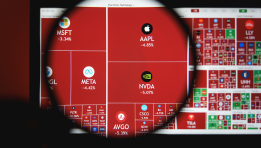
Technology stocks remain the most important force shaping the direction of the U.S. equity market even after a sharp
