





- omer bar
- •
- 8 Min Read
- •
- 18 seconds ago


Key Points
- Treasury Challenges IMF Forecasts: David Zervos, counselor to the U.S. Treasury Secretary, criticized the International Monetary Fund's forecasting record after the institution warned that economic growth alone would not put U.S. debt on a sustainable path.
- IMF Calls for Fiscal Action: Managing Director Kristalina Georgieva has argued that the United States needs additional fiscal measures to address rising debt, despite strong economic growth.
- Debt and Bond Yields Under Scrutiny: U.S. government debt has surpassed $40 trillion, while 10-year Treasury yields remain above 5%, intensifying debate over borrowing costs, deficits and long-term fiscal sustainability.
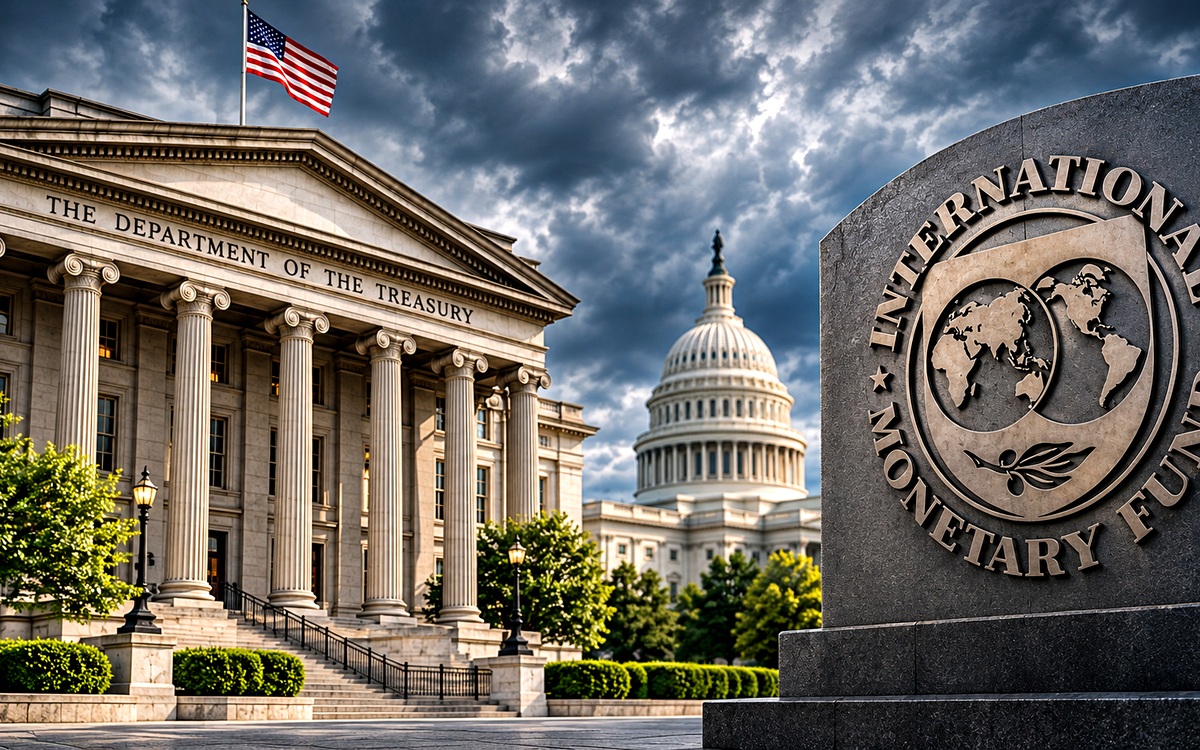
Treasury Pushes Back Against IMF’s Fiscal Warning
The U.S. Treasury has challenged the International Monetary Fund’s warnings about the country’s rising federal debt, arguing that the institution’s forecasting record should be considered when evaluating its recommendations.
David Zervos, a newly appointed counselor to the Treasury Secretary and former chief market strategist at Jefferies, responded to recent IMF comments by questioning the reliability of its past economic projections. In remarks to CNBC on Thursday, Zervos said the IMF’s forecasts had been inconsistent in several major economic episodes and suggested its latest assessment should be treated cautiously.
His comments followed warnings from IMF Managing Director Kristalina Georgieva, who said during the IMF-World Bank annual meetings in Bangkok that strong U.S. economic growth would not be sufficient by itself to place the country’s mounting debt on a sustainable trajectory.
The disagreement highlights a broader debate over whether economic expansion can reduce the debt burden without additional tax increases, spending restraint or other fiscal adjustments.
Economic Forecasting Becomes Part of the Debate
Zervos cited several historical examples to support his criticism of the IMF’s forecasting record.
He pointed to the institution’s 2008 World Economic Outlook, which projected global growth of approximately 3% before the global economy experienced a contraction the following year. He also referenced the IMF’s outlook for Southeast Asia before the 1997 financial crisis, its assessments of Russia’s economy in 2022, and its optimism about Argentina following a major bailout package.
Zervos further criticized the IMF’s earlier assessment that U.S. inflation would be transitory. He argued that these episodes demonstrate why the institution’s current warnings should be considered in the context of its past forecasting performance.
The examples represent Zervos’s interpretation of the IMF’s record. They do not, by themselves, resolve the underlying question of how quickly U.S. debt can stabilize relative to economic output.
U.S. Debt and Interest Costs Raise Fiscal Concerns
The debate follows the U.S. government’s debt surpassing $40 trillion in August. Treasury Secretary Scott Bessent previously argued that the country could grow its way out of a rising debt-to-GDP ratio, a position that Georgieva subsequently challenged.
Economists have warned that growing interest payments and persistent budget deficits could increase the risk of an unsustainable debt trajectory. However, they remain divided over whether the United States faces an imminent fiscal crisis or whether the risks can be managed through economic growth and policy adjustments.
The level of Treasury yields adds another dimension to the discussion. With 10-year yields above 5%, the cost of financing government borrowing remains a key concern for investors assessing the federal government’s long-term financial position.
Higher interest costs can absorb a greater share of government revenue, potentially leaving less room for public services and other spending priorities.
IMF Extends Fiscal Warnings to Other Economies
The IMF’s concerns are not limited to the United States. Georgieva has also urged other major economies to strengthen their public finances, including France, where she called for greater fiscal discipline.
Meanwhile, the Institute of International Finance reported that global debt reached a record $365 trillion in the first half of the year. The organization warned that political cycles and short-term responses to debt challenges could undermine governments’ ability to fund public services.
These developments underline the wider challenge facing policymakers as borrowing costs, debt levels and public spending commitments rise.
Investors Watch the Fiscal Policy Debate
The dispute between the Treasury and the IMF leaves investors weighing competing views on the U.S. fiscal outlook. Economic growth may support government revenues, but the relationship between growth, borrowing costs and debt accumulation remains central to long-term sustainability.
Investors will be monitoring Treasury yields, budget deficits, interest expenses and future policy proposals for evidence of how the government intends to manage its debt burden.
Comparison, examination, and analysis between investment houses
Leave your details, and an expert from our team will get back to you as soon as possible
* This article, in whole or in part, does not contain any promise of investment returns, nor does it constitute professional advice to make investments in any particular field.
To read more about the full disclaimer, click here
- omer bar
- •
- 6 Min Read
- •
- ago 15 hours
SKN | Dollar Hits 18-Month High as Hot Inflation Revives Fed Rate-Hike Bets
The U.S. dollar reached an 18-month high on Wednesday after hotter-than-expected inflation data temporarily strengthened expectations for a Federal
- ago 15 hours
- •
- 6 Min Read

The U.S. dollar reached an 18-month high on Wednesday after hotter-than-expected inflation data temporarily strengthened expectations for a Federal

- Ronny Mor
- •
- 6 Min Read
- •
- ago 16 hours
SKN | Fed Beige Book Signals Intensifying Price Pressures as Fuel Costs Rise
The U.S. economy is showing a difficult combination of persistent inflation pressures and limited labor-market movement, according to the
- ago 16 hours
- •
- 6 Min Read

The U.S. economy is showing a difficult combination of persistent inflation pressures and limited labor-market movement, according to the

- sagi habasov
- •
- 6 Min Read
- •
- ago 16 hours
SKN | Nasdaq Falls Sharply as Hotter U.S. Inflation Revives Federal Reserve Rate-Hike Fears
U.S. stocks ended sharply lower on Wednesday as hotter-than-expected September inflation altered expectations for the Federal Reserve’s interest-rate path.
- ago 16 hours
- •
- 6 Min Read

U.S. stocks ended sharply lower on Wednesday as hotter-than-expected September inflation altered expectations for the Federal Reserve’s interest-rate path.
- omer bar
- •
- 7 Min Read
- •
- ago 1 day
SKN | Will Walmart’s Bold Healthcare Shift Redefine Employee Retention in the US Labor Market?
A Counter-Trend Strategy in the Labor Market In a move set to establish a new corporate benchmark across the retail
- ago 1 day
- •
- 7 Min Read

A Counter-Trend Strategy in the Labor Market In a move set to establish a new corporate benchmark across the retail

