




- Lior mor
- •
- 8 Min Read
- •
- 3 minutes ago


Key Points
- Meta introduced Muse Ember, its smallest and most cost-efficient Muse model, designed for high-volume AI agent tasks, coding subtasks and document processing.
- Standard API pricing starts at $0.10 per million input tokens and $0.50 per million output tokens for requests containing up to 200,000 input tokens.
- The launch supports Meta's broader effort to commercialize its AI capabilities, including a reported expansion of enterprise sales operations and partnerships with major consulting firms.
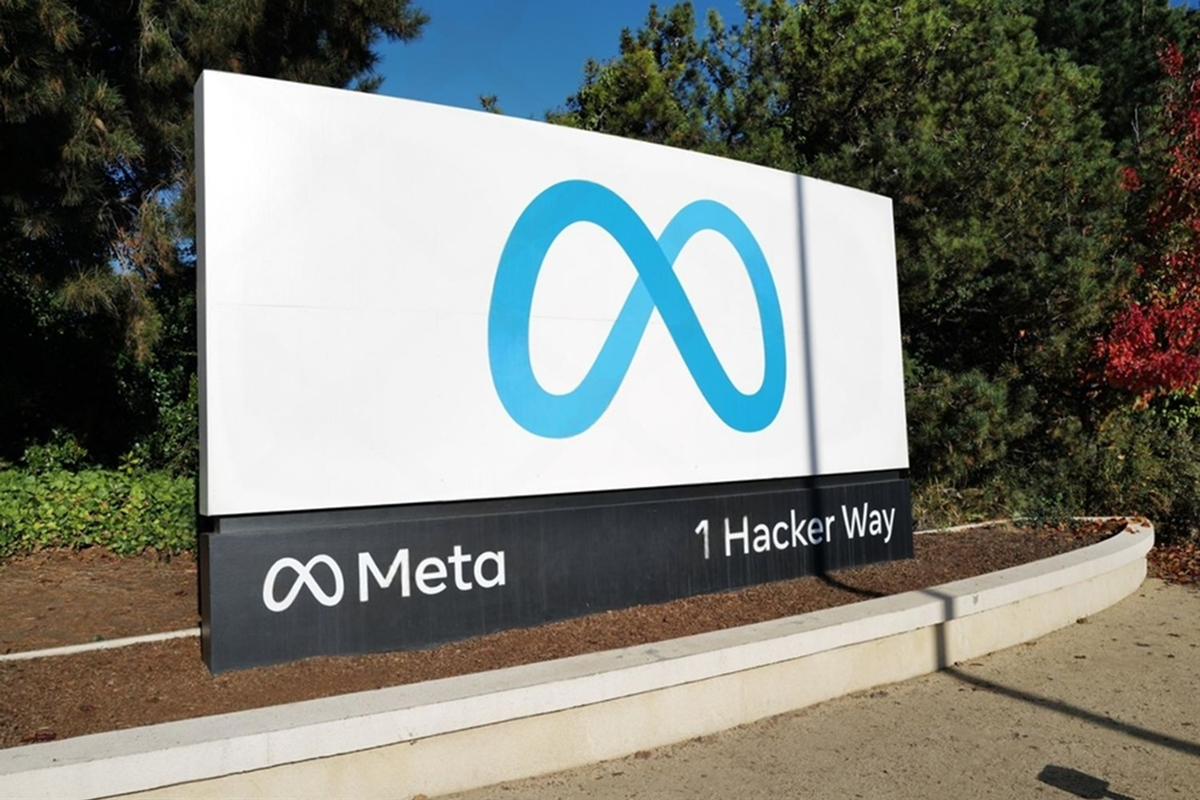
Meta Platforms is expanding its artificial intelligence portfolio with the launch of Muse Ember, a lower-cost model designed to handle repetitive, high-volume tasks performed by AI agents. The November 9 release reflects a broader industry shift toward making advanced AI economically viable for everyday business operations, where inference costs and the ability to deploy models at scale are becoming increasingly important competitive factors.
Muse Ember Targets High-Volume AI Workloads
Meta describes Muse Ember as its smallest and most efficient model, developed for tasks that AI agents perform repeatedly, including tool calls, coding subtasks, routing, information extraction and long-document processing. Rather than positioning it as a replacement for its most advanced reasoning systems, Meta is assigning Ember a more specialized role within its model portfolio.
The model is available through the Meta Model API and Muse Code under the identifier muse-ember-1.0. It supports text, image, audio and video inputs, alongside a context window of up to 1 million tokens and a maximum output of 512,000 tokens. Meta’s stated approach is to use Muse Wonder for the most demanding reasoning tasks, Muse Spark for coding and agentic workflows, and Ember for repeated execution at scale.
This division of responsibilities is strategically significant. AI agents often require numerous smaller operations to complete a single business process. Assigning those operations to a less expensive model could reduce the cost of running complex workflows without requiring the most powerful model at every stage.
Pricing Creates a Competitive Advantage
Muse Ember’s pricing is central to its commercial positioning. For requests containing up to 200,000 input tokens, Meta charges $0.10 per million input tokens and $0.50 per million output tokens. On input pricing, this is approximately 12.5 times lower than Muse Spark 1.3, listed at $1.25 per million tokens, and 40 times lower than Muse Wonder at $4.00.
However, the lower rates are subject to an important qualification. Requests exceeding 200,000 input tokens are charged at higher rates of $0.30 per million input tokens and $1.50 per million output tokens. This distinction matters for businesses processing extensive documents or maintaining long-context agent sessions.
The pricing structure could make AI deployment more economical for companies running large numbers of automated operations. Nevertheless, token prices alone do not determine total operating costs. Accuracy, processing speed, output volume, integration requirements and the number of model calls needed to complete a task will also influence the economics of enterprise adoption.
Meta Strengthens Its Enterprise AI Strategy
The launch also comes as Meta works to establish a more substantial business-to-business AI operation. According to The Information, the company has begun forming a sales organization to market its AI products to small and midsize businesses while developing relationships with consulting firms and systems integrators, including Accenture, Deloitte and IBM, to support enterprise sales and deployments.
This strategy would give Meta additional channels for commercializing its AI technology beyond its consumer applications and advertising business. Lower-cost models such as Ember could become particularly relevant to corporate customers seeking to automate customer service, document analysis, software development and other repetitive workflows.
The financial stakes are substantial. Meta reported $34.91 billion in capital expenditures during the third quarter of 2026, including principal payments on finance leases, while free cash flow was negative $2.12 billion. These are company-wide financial figures, but they illustrate the scale of the investment program against which new AI revenue opportunities must be assessed.
The next challenge is converting technical capabilities and competitive pricing into sustained commercial adoption. Investors will be watching enterprise customer uptake, recurring API usage, the economics of AI-powered services and the effectiveness of Meta’s consulting partnerships. If Muse Ember can deliver reliable performance at scale, it could strengthen Meta’s position in the enterprise AI market. However, pricing alone will not guarantee adoption, particularly as businesses evaluate data security, integration complexity and measurable returns from AI deployment.
Comparison, examination, and analysis between investment houses
Leave your details, and an expert from our team will get back to you as soon as possible
* This article, in whole or in part, does not contain any promise of investment returns, nor does it constitute professional advice to make investments in any particular field.
To read more about the full disclaimer, click here
- Arik Arkadi Sluzki
- •
- 7 Min Read
- •
- ago 3 minutes
SKN | Banks Tighten Scrutiny of AI Debt as Market Selloff Raises Credit Risks
Banks and credit investors are reassessing their exposure to artificial intelligence-related debt as the recent technology selloff forces a
- ago 3 minutes
- •
- 7 Min Read

Banks and credit investors are reassessing their exposure to artificial intelligence-related debt as the recent technology selloff forces a

- orshu
- •
- 7 Min Read
- •
- ago 4 minutes
SKN | Technology Remains the Key Driver of U.S. Stocks as AI Selloff Tests Market Momentum
Technology stocks remain the most important force shaping the direction of the U.S. equity market even after a sharp
- ago 4 minutes
- •
- 7 Min Read
Technology stocks remain the most important force shaping the direction of the U.S. equity market even after a sharp

- sagi habasov
- •
- 7 Min Read
- •
- ago 4 minutes
SKN | Wall Street Says AI Selloff Is Overdone as Investors Reassess Regulation Risks
Wall Street brokerages are pushing back against concerns that last week's sharp selloff in artificial intelligence-related stocks signals a
- ago 4 minutes
- •
- 7 Min Read

Wall Street brokerages are pushing back against concerns that last week's sharp selloff in artificial intelligence-related stocks signals a
- Arik Arkadi Sluzki
- •
- 8 Min Read
- •
- ago 5 minutes
SKN | CoreWeave Secures Multi-Year Wayve Agreement to Power Autonomous Driving AI With Nvidia Blackwell GPUs
The growing demand for artificial intelligence infrastructure is extending beyond large language models and generative AI applications into systems
- ago 5 minutes
- •
- 8 Min Read
The growing demand for artificial intelligence infrastructure is extending beyond large language models and generative AI applications into systems
