




- Ronny Mor
- •
- 8 Min Read
- •
- 6 hours ago


Key Points
- President Donald Trump announced plans to establish an “AI Force” and appoint a new AI czar, but provided few details on its structure, authority or budget.
- The administration is positioning artificial intelligence as a strategic economic and national-security priority, with Trump saying AI could eventually account for as much as 25% of U.S. GDP.
- The announcement comes as Washington and the technology industry debate AI safety, regulation, data-center expansion and competition with China.
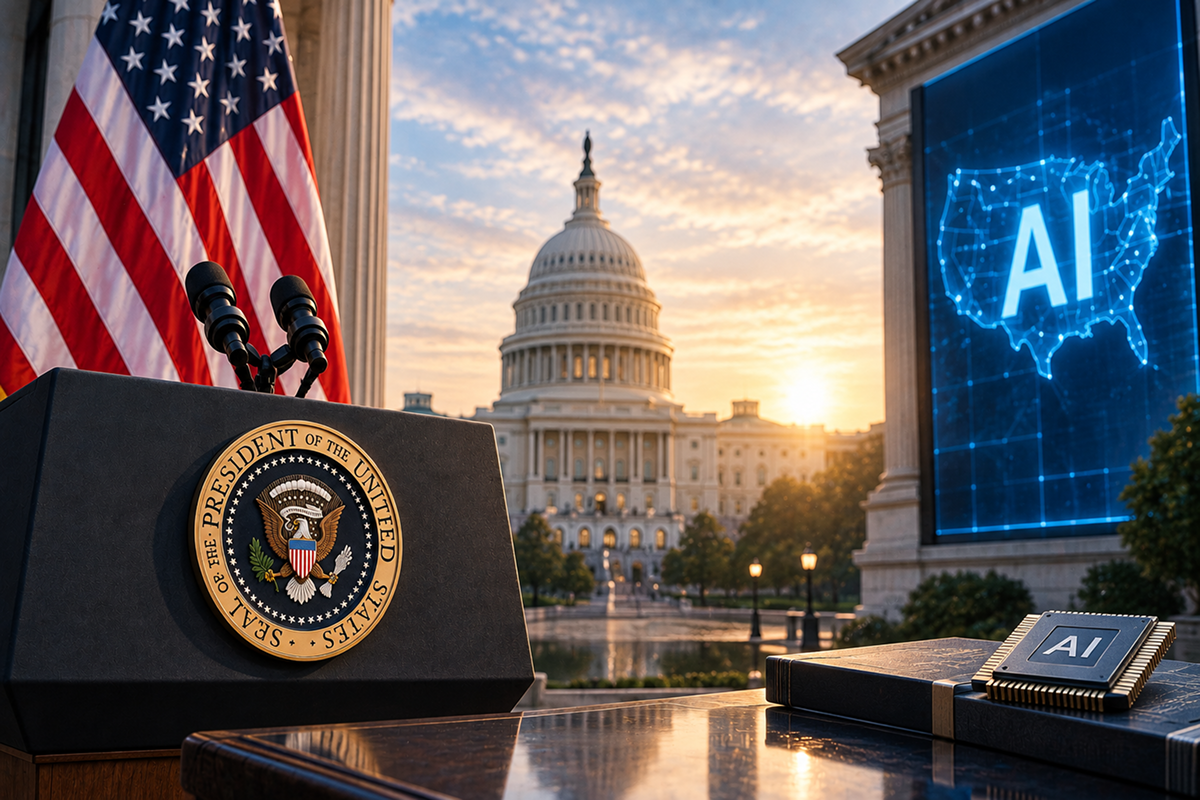
President Donald Trump announced on September 19 that the United States will establish an “AI Force” and that he plans to appoint a new AI “czar” to oversee the sector. The announcement comes as artificial intelligence increasingly affects semiconductor demand, cloud infrastructure, electricity consumption and corporate capital spending, while policymakers debate how rapidly the technology should develop and what safeguards should accompany it.
AI Force Leaves Key Structural Questions Unanswered
Trump compared the proposed AI Force with the Space Force created during his first administration, but the announcement did not establish whether the new organization would be military, civilian or housed within an existing federal agency. It also did not specify its budget, staffing, legal authority or implementation timetable. Reuters reported that the president provided no details on the scope of the initiative, leaving its practical role uncertain.
The United States already has multiple agencies involved in artificial-intelligence policy and standards, including the Commerce Department’s Center for AI Standards and Innovation. The creation of another coordinating body could therefore become significant if it receives authority over standards, infrastructure, cybersecurity or industry policy, but those responsibilities have not yet been defined.
AI Policy Becomes an Increasingly Important Economic Variable
Trump described AI as the next Industrial Revolution or Internet and said it could eventually represent as much as 25% of U.S. economic output. That figure is a presidential projection rather than an established economic forecast, but the broader economic significance of AI is already visible through large investments in chips, data centers, cloud computing and electricity infrastructure.
The scale of those investments means federal policy can affect multiple industries simultaneously. Semiconductor manufacturers depend on continued demand for advanced processors, cloud providers are committing substantial capital to computing capacity, and data-center developers increasingly face questions involving electricity supply, transmission infrastructure and local permitting. Goldman Sachs recently warned that AI-related investment had become an important contributor to U.S. corporate earnings growth, while also highlighting questions about how sustainable the capital-spending cycle will be.
Regulation and AI Safety Remain a Market-Relevant Debate
The proposed AI Force arrives amid a sharper disagreement over how governments should respond to increasingly capable AI systems. Trump has argued that the United States should not hinder the industry’s expansion and said existing criminal and civil laws can be used to address harmful activity. Reuters reported that his announcement followed growing concerns in Washington about AI risks and debate over whether additional federal regulation is necessary.
The policy discussion has already demonstrated potential implications for financial markets. On September 14, AI-related stocks came under pressure after executives including Anthropic’s Dario Amodei, OpenAI’s Sam Altman and SpaceX’s Elon Musk called for greater caution around rapid AI development. Reuters reported that the semiconductor index fell 5.9% that day, while Nvidia, AMD and other AI-linked companies also declined.
The subsequent policy response therefore matters beyond Washington. A framework that prioritizes rapid deployment could affect the pace of infrastructure investment, while stricter rules could influence compliance costs, product development and the competitive position of U.S. technology companies.
U.S.-China Competition Adds a Strategic Dimension
The announcement also comes shortly before Trump’s expected meeting with Chinese President Xi Jinping, where artificial intelligence is expected to form part of broader discussions involving economic and strategic competition. Reuters reported that the timing underscores the importance Washington places on maintaining U.S. leadership in AI development.
For global investors, the next stage will be less about the title “AI Force” itself and more about the institutional details that follow. Markets will be watching who is appointed AI czar, which agency or agencies receive authority, whether new standards are introduced, and how the administration approaches semiconductor supply chains, data centers, energy infrastructure and AI exports. Until those details emerge, the announcement represents a significant policy signal rather than a fully defined economic program.
Comparison, examination, and analysis between investment houses
Leave your details, and an expert from our team will get back to you as soon as possible
* This article, in whole or in part, does not contain any promise of investment returns, nor does it constitute professional advice to make investments in any particular field.
To read more about the full disclaimer, click here
- Arik Arkadi Sluzki
- •
- 7 Min Read
- •
- ago 8 hours
SKN | Nvidia CEO Jensen Huang Rejects Calls to Slow AI Development: Can Speed and Safety Advance Together?
Nvidia CEO Jensen Huang has pushed back against calls for the artificial intelligence industry to slow the pace of
- ago 8 hours
- •
- 7 Min Read
Nvidia CEO Jensen Huang has pushed back against calls for the artificial intelligence industry to slow the pace of

- Lior mor
- •
- 7 Min Read
- •
- ago 8 hours
SKN | Petrobras Joins Brazil’s Diesel Subsidy Program as Global Fuel Costs Pressure Domestic Prices
Brazil’s state-run oil company Petrobras has approved participation in a new government diesel subsidy program, extending the country’s efforts
- ago 8 hours
- •
- 7 Min Read

Brazil’s state-run oil company Petrobras has approved participation in a new government diesel subsidy program, extending the country’s efforts

- omer bar
- •
- 7 Min Read
- •
- ago 8 hours
SKN | Bessent and China’s He Lifeng Set for New York Talks Ahead of Trump-Xi Summit
US Treasury Secretary Scott Bessent and Chinese Vice Premier He Lifeng are scheduled to meet in New York on
- ago 8 hours
- •
- 7 Min Read

US Treasury Secretary Scott Bessent and Chinese Vice Premier He Lifeng are scheduled to meet in New York on

- sagi habasov
- •
- 6 Min Read
- •
- ago 8 hours
SKN | OpenAI’s $856 Billion AI Infrastructure Plan Raises Questions Over Cash Flow and Long-Term Growth
OpenAI’s aggressive expansion strategy is placing artificial intelligence infrastructure spending at the center of the company’s long-term financial outlook.
- ago 8 hours
- •
- 6 Min Read

OpenAI’s aggressive expansion strategy is placing artificial intelligence infrastructure spending at the center of the company’s long-term financial outlook.
