





- omer bar
- •
- 7 Min Read
- •
- 5 minutes ago


Key Points
- US Treasury Secretary Scott Bessent and Chinese Vice Premier He Lifeng are scheduled to meet Sunday at JPMorgan’s New York headquarters.
- The talks will cover AI security, trade and broader economic issues ahead of the planned Trump-Xi summit in Washington.
- The meeting comes as Washington and Beijing seek to manage trade tensions and establish areas of cooperation in strategically important industries.

US Treasury Secretary Scott Bessent and Chinese Vice Premier He Lifeng are scheduled to meet in New York on Sunday, opening another high-level round of US-China economic discussions just days before President Donald Trump is due to host Chinese President Xi Jinping in Washington. The meeting places trade, artificial intelligence security and broader economic relations at the center of negotiations between the world’s two largest economies.
According to a person familiar with the planning, the meeting is scheduled for 10:30 a.m. ET at JPMorgan Chase headquarters in Manhattan. The bank is providing its building as a secure venue amid heightened security in New York during the United Nations General Assembly, rather than participating in the negotiations.
Economic Talks Set the Stage for Trump-Xi Meeting
The Bessent-He meeting comes immediately before the planned Trump-Xi summit, giving the two economic officials an opportunity to address issues that could shape the agenda for the leaders’ discussions. Reuters reported that the Trump-Xi meeting is expected to cover trade, artificial intelligence, critical minerals and other economic matters.
For financial markets, the significance lies in whether Washington and Beijing can establish greater clarity around trade conditions. Tariffs and restrictions affecting cross-border commerce have created uncertainty for companies operating across manufacturing, technology and consumer markets.
The two governments have also been discussing areas where commercial arrangements could reduce friction. The discussions therefore extend beyond individual tariff measures to broader questions about market access, supply chains and the economic relationship between the two countries.
AI Security Adds a Strategic Dimension
Artificial intelligence is an increasingly important part of the bilateral economic relationship. Both the United States and China are major developers of advanced AI systems, while governments are simultaneously examining the technology’s security implications.
Including AI security in the Treasury-level discussions indicates that economic diplomacy is increasingly overlapping with technology policy. Questions surrounding AI development, deployment and safeguards have implications for technology companies, investors and industries adopting increasingly capable systems.
The discussions also come as Washington considers additional measures related to AI and national security. President Trump said on Saturday that he plans to create an AI force and appoint a new AI adviser, although details of the proposed structure were not immediately provided.
Critical Minerals and Trade Remain Important
Trade negotiations are also expected to remain focused on strategically important supply chains. Critical minerals and rare earth materials have become central to discussions between Washington and Beijing because they are essential to advanced manufacturing, electronics, energy technologies and defense-related industries.
Reuters reported that potential goals for the upcoming summit include securing Chinese rare-earth export licenses and maintaining the existing trade truce. Beijing, meanwhile, has sought relief from certain US technology restrictions.
These issues make the economic dialogue relevant beyond bilateral trade statistics. Changes in access to critical materials or technology can affect production costs and investment planning across global industries.
Markets Await Signals From Washington and Beijing
The Sunday meeting is expected to provide an important indication of the issues that may reach the leaders’ table later in the week. Previous meetings between Bessent and He have focused on trade and economic relations, providing an established channel for negotiations between Washington and Beijing.
Going forward, investors will monitor developments in tariffs, critical-mineral supply, AI policy and other economic measures. The ability of the two sides to produce concrete agreements or clearer policy signals could influence global trade expectations and the outlook for technology and manufacturing supply chains.
Comparison, examination, and analysis between investment houses
Leave your details, and an expert from our team will get back to you as soon as possible
* This article, in whole or in part, does not contain any promise of investment returns, nor does it constitute professional advice to make investments in any particular field.
To read more about the full disclaimer, click here
- Arik Arkadi Sluzki
- •
- 7 Min Read
- •
- ago 5 minutes
SKN | Nvidia CEO Jensen Huang Rejects Calls to Slow AI Development: Can Speed and Safety Advance Together?
Nvidia CEO Jensen Huang has pushed back against calls for the artificial intelligence industry to slow the pace of
- ago 5 minutes
- •
- 7 Min Read
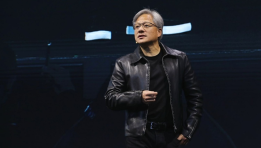
Nvidia CEO Jensen Huang has pushed back against calls for the artificial intelligence industry to slow the pace of

- Lior mor
- •
- 7 Min Read
- •
- ago 5 minutes
SKN | Petrobras Joins Brazil’s Diesel Subsidy Program as Global Fuel Costs Pressure Domestic Prices
Brazil’s state-run oil company Petrobras has approved participation in a new government diesel subsidy program, extending the country’s efforts
- ago 5 minutes
- •
- 7 Min Read
Brazil’s state-run oil company Petrobras has approved participation in a new government diesel subsidy program, extending the country’s efforts

- sagi habasov
- •
- 6 Min Read
- •
- ago 5 minutes
SKN | OpenAI’s $856 Billion AI Infrastructure Plan Raises Questions Over Cash Flow and Long-Term Growth
OpenAI’s aggressive expansion strategy is placing artificial intelligence infrastructure spending at the center of the company’s long-term financial outlook.
- ago 5 minutes
- •
- 6 Min Read

OpenAI’s aggressive expansion strategy is placing artificial intelligence infrastructure spending at the center of the company’s long-term financial outlook.

- orshu
- •
- 6 Min Read
- •
- ago 3 hours
SKN | KOSPI Composite Index (^KS11) Rallies 2.66% Daily to 6,894.23 as 3.14% Weekly Gain Holds Above 6,830 Low
The KOSPI Composite Index (^KS11) finished the trading session on September 18, 2026, sharply higher, advancing 2.66% (178.82 points)
- ago 3 hours
- •
- 6 Min Read
The KOSPI Composite Index (^KS11) finished the trading session on September 18, 2026, sharply higher, advancing 2.66% (178.82 points)

