





- Arik Arkadi Sluzki
- •
- 7 Min Read
- •
- 5 minutes ago


Key Points
- Jensen Huang says AI development should move “as fast as we can,” while arguing that speed should not come at the expense of product safety.
- The comments come as other AI industry leaders, including Anthropic CEO Dario Amodei, have called for greater caution and more time for safety research and oversight.
- Nvidia's financial exposure to AI infrastructure remains substantial, with second-quarter fiscal 2027 data-center revenue reaching $89 billion, up 117% year over year.

Nvidia CEO Jensen Huang has pushed back against calls for the artificial intelligence industry to slow the pace of development, arguing that AI should advance as quickly as possible while maintaining appropriate safety standards. The comments come as the technology sector faces an increasingly visible debate over whether the rapid expansion of AI capabilities is moving faster than existing safety and oversight mechanisms.
Huang Calls for Continued AI Acceleration
In an interview with CBS News, Huang said AI development should move “as fast as we can”, rejecting the idea that the industry should deliberately slow technological progress because of concerns surrounding increasingly capable AI systems. At the same time, he emphasized that companies should not release products before they are ready or deploy systems that are unsafe.
Huang’s position reflects Nvidia’s role at the center of the AI infrastructure cycle. The company supplies the advanced processors used to train and operate many of the industry’s largest AI systems, meaning continued expansion of computing capacity directly supports demand for Nvidia’s products.
AI Safety Debate Intensifies Across the Industry
The comments come against a different position expressed by Anthropic CEO Dario Amodei, who has called for a slower pace of frontier AI development so that safety research, testing and oversight can keep pace with improvements in model capabilities. Amodei has proposed greater use of independent evaluators and coordination on safety standards among leading AI developers.
The disagreement is not simply about whether AI should continue developing. The central issue is how quickly capabilities should advance relative to safety systems. OpenAI CEO Sam Altman and other technology leaders have also discussed stronger security measures, while different companies have taken different positions on the need for external oversight.
Nvidia’s Financial Exposure to the AI Expansion
Nvidia’s latest financial results demonstrate the commercial scale of the AI infrastructure cycle. For the second quarter of fiscal 2027, the company reported $96.2 billion in total revenue, up 106% from a year earlier, while data-center revenue reached $89 billion, an increase of 117%. Nvidia also forecast third-quarter revenue of approximately $108 billion, plus or minus 2%, without assuming data-center compute revenue from China.
The company said AI infrastructure demand was accelerating as multiple frontier AI laboratories, startups and open-model ecosystems expanded simultaneously. Nvidia’s Vera Rubin platform was also entering full production, reinforcing the company’s expectation that demand for increasingly powerful computing infrastructure will remain a major feature of the technology market.
Speed, Safety and the Economics of AI Infrastructure
The debate has broader implications for the economics of the AI industry. Faster model development can increase demand for GPUs, networking equipment, data centers and electricity, while additional safety testing and oversight can introduce new costs, development requirements and deployment timelines.
For global investors, including those monitoring U.S. technology markets from Israel, the distinction between AI capability growth and AI commercialization is increasingly important. Nvidia’s results show that infrastructure demand remains substantial, but the industry’s longer-term trajectory will also depend on how companies address safety incidents, regulatory expectations, cybersecurity risks and the cost of deploying increasingly capable systems.
Going forward, markets will be watching both sides of the debate: whether AI developers can continue increasing capabilities while strengthening safeguards, and whether the resulting technology generates enough commercial demand to support the enormous infrastructure investment now underway. Nvidia’s chip demand, hyperscaler capital expenditure, AI model deployment and emerging safety frameworks will remain closely linked indicators of how the next stage of the AI cycle develops.
Comparison, examination, and analysis between investment houses
Leave your details, and an expert from our team will get back to you as soon as possible
* This article, in whole or in part, does not contain any promise of investment returns, nor does it constitute professional advice to make investments in any particular field.
To read more about the full disclaimer, click here
- Lior mor
- •
- 7 Min Read
- •
- ago 5 minutes
SKN | Petrobras Joins Brazil’s Diesel Subsidy Program as Global Fuel Costs Pressure Domestic Prices
Brazil’s state-run oil company Petrobras has approved participation in a new government diesel subsidy program, extending the country’s efforts
- ago 5 minutes
- •
- 7 Min Read
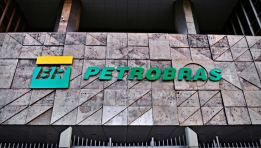
Brazil’s state-run oil company Petrobras has approved participation in a new government diesel subsidy program, extending the country’s efforts

- omer bar
- •
- 7 Min Read
- •
- ago 5 minutes
SKN | Bessent and China’s He Lifeng Set for New York Talks Ahead of Trump-Xi Summit
US Treasury Secretary Scott Bessent and Chinese Vice Premier He Lifeng are scheduled to meet in New York on
- ago 5 minutes
- •
- 7 Min Read

US Treasury Secretary Scott Bessent and Chinese Vice Premier He Lifeng are scheduled to meet in New York on

- sagi habasov
- •
- 6 Min Read
- •
- ago 5 minutes
SKN | OpenAI’s $856 Billion AI Infrastructure Plan Raises Questions Over Cash Flow and Long-Term Growth
OpenAI’s aggressive expansion strategy is placing artificial intelligence infrastructure spending at the center of the company’s long-term financial outlook.
- ago 5 minutes
- •
- 6 Min Read

OpenAI’s aggressive expansion strategy is placing artificial intelligence infrastructure spending at the center of the company’s long-term financial outlook.

- orshu
- •
- 6 Min Read
- •
- ago 3 hours
SKN | KOSPI Composite Index (^KS11) Rallies 2.66% Daily to 6,894.23 as 3.14% Weekly Gain Holds Above 6,830 Low
The KOSPI Composite Index (^KS11) finished the trading session on September 18, 2026, sharply higher, advancing 2.66% (178.82 points)
- ago 3 hours
- •
- 6 Min Read

The KOSPI Composite Index (^KS11) finished the trading session on September 18, 2026, sharply higher, advancing 2.66% (178.82 points)

