SKN | Jobs Super-Week and Apple Earnings to Dictate Early-November Market Momentum
Global financial markets launch into the first full week of November 2026 facing a formidable intersection of corporate mega-cap results and top-tier macroeconomic employment data. Following October’s volatility, institutional investors across global financial centers and the domestic Israeli ecosystem are evaluating whether private sector resilience can endure persistent borrowing rates. The upcoming batch of earnings reports paired with pivotal labor market updates will establish whether equity valuations can maintain their premium as year-end approaches. Monetary Policy Decisions and International Liquidity Adjustments Central bank interest rate decisions anchor international attention as key monetary authorities navigate divergent inflation and growth trajectories. On Tuesday, November 3, the Reserve Bank of Australia is projected to raise its official cash rate to 4.85 percent, up

SKN | The Historic 75-Month Bond Slump: Why Fixed-Income Recovery Remains Elusive for Global Allocators
The U.S. bond market has reached an unprecedented milestone of structural pain, remaining trapped in a drawdown that has now extended to 75 consecutive months. Benchmarked against the Bloomberg U.S. Aggregate Bond Index, total returns have failed to reclaim their August 2020 peak, marking the longest period of negative real and nominal performance in recorded fixed-income history. This protracted downturn underscores the profound shift in the global interest-rate environment, where persistent inflation pressures, aggressive central bank tightening, and record sovereign debt issuance have structurally broken decades of low-yield assumptions. A Regime Shift Far Exceeding Historical Precedent The sheer duration of the current drawdown dwarfs any previous contraction in the post-Bretton Woods era. Historically, bond market pullbacks—including the aggressive rate hikes

SKN | Apple Stands Alone: Why the iPhone Giant Is the Only Magnificent Seven Stock Beating the S&P 500
Apple Inc. has decoupled from its megacap peers in 2026, establishing itself as the only member of Wall Street’s “Magnificent Seven” to outperform the benchmark S&P 500 index this year. While the broader market has advanced roughly 12% year-to-date, Apple has gained approximately 28%, pushing its market capitalization above $5 trillion and allowing it to rival Nvidia as the world’s most valuable enterprise. The divergence highlights a significant shift in market psychology, as institutional allocators increasingly penalize unconstrained artificial intelligence capital expenditure in favor of disciplined balance sheets that protect immediate shareholder returns. The AI Storm Shelter: Free Cash Flow vs. Unchecked Capex The primary catalyst behind Apple’s relative outperformance is its refusal to engage in the multi-hundred-billion-dollar infrastructure spending
SKN | Tanker Hit by Projectiles Off Saudi Coast: Will Escalating Gulf Maritime Attacks Spark an Oil Shock?
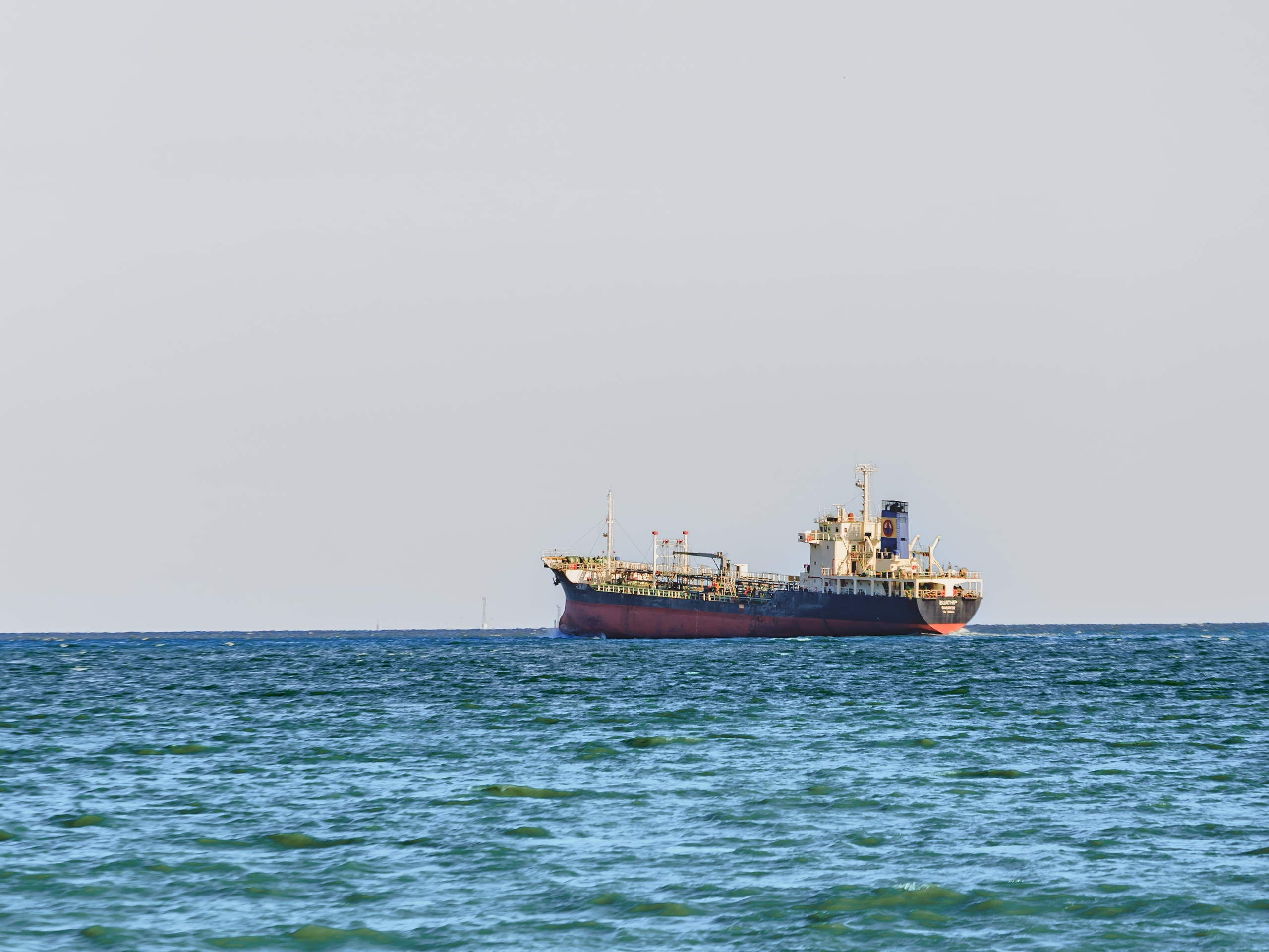
A commercial tanker traveling southeast through the Persian Gulf was struck on its port side by two unidentified projectiles late Sunday, November 1, approximately 72 nautical miles east of the Saudi Arabian coastal port of Ras Al-Khafji. The United Kingdom Maritime Trade Operations (UKMTO) agency reported that all crew members were accounted for and that no immediate environmental impact or cargo leakage had been detected following the strike, which occurred at 23:47 UTC. The incident marks the tenth maritime security event reported across the Persian Gulf, the Strait of Hormuz, and the Gulf of Oman since October 31, underscoring severe vulnerability across primary global hydrocarbon export lanes. Maritime Chokepoint Pressures and War-Risk Surcharges The strike off Ras Al-Khafji represents a
SKN | Jobs Super-Week and Apple Earnings to Dictate Early-November Market Momentum
Global financial markets launch into the first full week of November 2026 facing a formidable intersection of corporate mega-cap results and top-tier macroeconomic employment data. Following October’s volatility, institutional investors across global financial centers and the domestic Israeli ecosystem are evaluating whether private sector resilience can endure persistent borrowing rates. The upcoming batch of earnings reports paired with pivotal labor market updates will establish whether equity valuations can maintain their premium as year-end approaches. Monetary Policy Decisions and International Liquidity Adjustments Central bank interest rate decisions anchor international attention as key monetary authorities navigate divergent inflation and growth trajectories. On Tuesday, November 3, the Reserve Bank of Australia is projected to raise its official cash rate to 4.85 percent, up
SKN | The Historic 75-Month Bond Slump: Why Fixed-Income Recovery Remains Elusive for Global Allocators
The U.S. bond market has reached an unprecedented milestone of structural pain, remaining trapped in a drawdown that has now extended to 75 consecutive months. Benchmarked against the Bloomberg U.S. Aggregate Bond Index, total returns have failed to reclaim their August 2020 peak, marking the longest period of negative real and nominal performance in recorded fixed-income history. This protracted downturn underscores the profound shift in the global interest-rate environment, where persistent inflation pressures, aggressive central bank tightening, and record sovereign debt issuance have structurally broken decades of low-yield assumptions. A Regime Shift Far Exceeding Historical Precedent The sheer duration of the current drawdown dwarfs any previous contraction in the post-Bretton Woods era. Historically, bond market pullbacks—including the aggressive rate hikes
SKN | Apple Stands Alone: Why the iPhone Giant Is the Only Magnificent Seven Stock Beating the S&P 500
Apple Inc. has decoupled from its megacap peers in 2026, establishing itself as the only member of Wall Street’s “Magnificent Seven” to outperform the benchmark S&P 500 index this year. While the broader market has advanced roughly 12% year-to-date, Apple has gained approximately 28%, pushing its market capitalization above $5 trillion and allowing it to rival Nvidia as the world’s most valuable enterprise. The divergence highlights a significant shift in market psychology, as institutional allocators increasingly penalize unconstrained artificial intelligence capital expenditure in favor of disciplined balance sheets that protect immediate shareholder returns. The AI Storm Shelter: Free Cash Flow vs. Unchecked Capex The primary catalyst behind Apple’s relative outperformance is its refusal to engage in the multi-hundred-billion-dollar infrastructure spending
SKN | Tanker Hit by Projectiles Off Saudi Coast: Will Escalating Gulf Maritime Attacks Spark an Oil Shock?
A commercial tanker traveling southeast through the Persian Gulf was struck on its port side by two unidentified projectiles late Sunday, November 1, approximately 72 nautical miles east of the Saudi Arabian coastal port of Ras Al-Khafji. The United Kingdom Maritime Trade Operations (UKMTO) agency reported that all crew members were accounted for and that no immediate environmental impact or cargo leakage had been detected following the strike, which occurred at 23:47 UTC. The incident marks the tenth maritime security event reported across the Persian Gulf, the Strait of Hormuz, and the Gulf of Oman since October 31, underscoring severe vulnerability across primary global hydrocarbon export lanes. Maritime Chokepoint Pressures and War-Risk Surcharges The strike off Ras Al-Khafji represents a
SKN | Washington Floats Resumption of Russian Gas Transit via Ukraine: Can Geopolitical Realpolitik Reshape European Energy?
U.S. diplomatic representatives have floated a contentious proposal to restore Russian natural gas transit through Ukrainian pipeline infrastructure as part of an overarching framework to facilitate an energy ceasefire and peace settlement in Eastern Europe. The initiative, raised during high-level consultations involving American envoys, Ukrainian leadership, and European policymakers, envisions restarting pipeline flows that ceased following earlier contract expirations. Coming at a time when global energy markets are navigating heightened volatility from Middle Eastern supply risks, the prospect of reintroducing Russian pipeline supply to the continent introduces significant pricing uncertainty across European natural gas hubs and global commodity networks. Diplomatic Incentives Clash with European Decoupling Targets The U.S. proposal to revive Ukrainian gas transit seeks to deploy commercial revenues and

SKN | Oil Eases as Diplomatic Overtures Offset Escalation Fears: Can Regional Talks Deflate the Crude Premium?
Crude oil futures turned lower on Monday, November 2, 2026, as international commodity desks weighed renewed diplomatic initiatives to de-escalate Middle Eastern tensions against lingering physical supply risks. International benchmark Brent crude slipped over 1% toward $114.00 per barrel, while U.S. West Texas Intermediate (WTI) declined toward $101.30, pausing after an intensive rally that lifted energy contracts to multi-month highs. The retreat reflects tactical de-risking among speculative allocators following disclosures of fresh mediation frameworks between Washington, regional Arab intermediaries, and Tehran, providing temporary respite to global inflation gauges. Backchannel Overtures Trigger Tactical Unwinding of War Premiums The downward move in benchmark contracts gathered momentum after regional reports confirmed renewed communication channels aimed at establishing a de-escalation framework prior to the

SKN | Asian Equities Bend Under AI Capex Fatigue as Markets Brace for Critical Apple Earnings Test
Asian share markets retreated on Monday, November 2, 2026, as institutional investors extended their reassessment of the generative artificial intelligence investment boom into a new trading month. Following a turbulent October in which Wall Street’s tech-heavy Nasdaq logged its steepest monthly decline in eighteen months, regional hardware and semiconductor bourses fell under selling pressure. The ongoing de-risking highlights how market scrutiny has pivoted from gross infrastructure expansion toward corporate balance-sheet durability, leaving trading desks heavily focused on upcoming financial disclosures from Apple Inc. to gauge end-market consumer resilience. Capex Fatigue and Credit Spread Widening Pressure Tech Multiples The downward drift across Asian bourses reflects compounding anxiety over cash burn at leading cloud hyperscalers. Sizable capital outlays detailed by mega-cap technology




SKN | Jobs Super-Week and Apple Earnings to Dictate Early-November Market Momentum
Global financial markets launch into the first full week of November 2026 facing a formidable intersection of corporate mega-cap results and top-tier macroeconomic employment data. Following October’s volatility, institutional investors across global financial centers and the domestic Israeli ecosystem are evaluating whether private sector resilience can endure persistent borrowing rates. The upcoming batch of earnings reports paired with pivotal labor market updates will establish whether equity valuations can maintain their premium as year-end approaches. Monetary Policy Decisions and International Liquidity Adjustments Central bank interest rate decisions anchor international attention as key monetary authorities navigate divergent inflation and growth trajectories. On Tuesday, November 3, the Reserve Bank of Australia is projected to raise its official cash rate to 4.85 percent, up
SKN | The Historic 75-Month Bond Slump: Why Fixed-Income Recovery Remains Elusive for Global Allocators
The U.S. bond market has reached an unprecedented milestone of structural pain, remaining trapped in a drawdown that has now extended to 75 consecutive months. Benchmarked against the Bloomberg U.S. Aggregate Bond Index, total returns have failed to reclaim their August 2020 peak, marking the longest period of negative real and nominal performance in recorded fixed-income history. This protracted downturn underscores the profound shift in the global interest-rate environment, where persistent inflation pressures, aggressive central bank tightening, and record sovereign debt issuance have structurally broken decades of low-yield assumptions. A Regime Shift Far Exceeding Historical Precedent The sheer duration of the current drawdown dwarfs any previous contraction in the post-Bretton Woods era. Historically, bond market pullbacks—including the aggressive rate hikes
SKN | Apple Stands Alone: Why the iPhone Giant Is the Only Magnificent Seven Stock Beating the S&P 500
Apple Inc. has decoupled from its megacap peers in 2026, establishing itself as the only member of Wall Street’s “Magnificent Seven” to outperform the benchmark S&P 500 index this year. While the broader market has advanced roughly 12% year-to-date, Apple has gained approximately 28%, pushing its market capitalization above $5 trillion and allowing it to rival Nvidia as the world’s most valuable enterprise. The divergence highlights a significant shift in market psychology, as institutional allocators increasingly penalize unconstrained artificial intelligence capital expenditure in favor of disciplined balance sheets that protect immediate shareholder returns. The AI Storm Shelter: Free Cash Flow vs. Unchecked Capex The primary catalyst behind Apple’s relative outperformance is its refusal to engage in the multi-hundred-billion-dollar infrastructure spending
SKN | Tanker Hit by Projectiles Off Saudi Coast: Will Escalating Gulf Maritime Attacks Spark an Oil Shock?
A commercial tanker traveling southeast through the Persian Gulf was struck on its port side by two unidentified projectiles late Sunday, November 1, approximately 72 nautical miles east of the Saudi Arabian coastal port of Ras Al-Khafji. The United Kingdom Maritime Trade Operations (UKMTO) agency reported that all crew members were accounted for and that no immediate environmental impact or cargo leakage had been detected following the strike, which occurred at 23:47 UTC. The incident marks the tenth maritime security event reported across the Persian Gulf, the Strait of Hormuz, and the Gulf of Oman since October 31, underscoring severe vulnerability across primary global hydrocarbon export lanes. Maritime Chokepoint Pressures and War-Risk Surcharges The strike off Ras Al-Khafji represents a
Market News & Breaking Updates

SKN | Big Tech’s AI Infrastructure Spending Reaches $201.9 Billion as Free Cash Flow Turns Negative
The largest US technology companies are committing unprecedented amounts of capital to artificial intelligence infrastructure, but the expansion is increasingly weighing on their ability to generate free cash flow. Combined capital expenditure by Amazon, Alphabet, Meta, and Microsoft reached $201.9 billion in the third quarter of 2026, while their aggregate free cash flow turned negative, highlighting the growing financial demands of the global AI race. AI Infrastructure Investment Pushes Capital Expenditure to a Record According to figures published by The Kobeissi Letter and attributed to Koyfin, the four companies recorded combined capital expenditure of $201.9 billion in Q3 2026, an increase of $36.9 billion from the previous quarter. The amount has more than doubled over the preceding 12 months

SKN | Gold ETF GLD Records $1.8 Billion in October Outflows as Investor Demand Weakens
Investor demand for gold-backed exchange-traded funds is showing signs of volatility, with SPDR Gold Shares (GLD) experiencing a substantial withdrawal of capital in October. The $1.8 billion outflow marks the fund’s largest monthly withdrawal since June and comes after a year of alternating inflows and redemptions, highlighting changing investor positioning in the precious-metals market. October Withdrawals Reverse Recent Inflows According to figures published by The Kobeissi Letter, based on Koyfin data, GLD recorded approximately $1.8 billion in net outflows during October. This represents its third-largest monthly withdrawal since February 2024 and follows two consecutive months of positive flows. The monthly figures show that GLD attracted approximately $4.9 billion in August and another $1.9 billion in September. Those inflows followed

SKN | KOSPI Slides 3.48% to 5,730.74, Despite Retaining a 4.78% Weekly Gain
The KOSPI Composite Index (^KS11) experienced a significant setback on October 30, falling 3.48%, equivalent to 206.92 points, to finish at 5,730.74. Despite the sharp daily decline, the benchmark retained a 4.78% gain over the preceding five trading sessions, indicating that the latest weakness has not erased its broader weekly advance. Market sentiment remained influenced by developments across the semiconductor industry, expectations for artificial intelligence-related investment, and changing monetary policy conditions in South Korea and other major economies. For international investors, including Israeli institutional asset managers monitoring Asian equity exposure, the KOSPI remains an important indicator of South Korea’s export competitiveness and position within the global technology supply chain. Sharp Daily Decline Within a Positive Weekly Performance The benchmark