




- Lior mor
- •
- 6 Min Read
- •
- 11 seconds ago


Key Points
- Economic growth exceeds forecasts: The US economy expanded at an annualized rate of 3.4% in the third quarter of 2026, up from 2.2% in the second quarter and above expectations of 3.2%.
- AI-related investment drives expansion: Private domestic investment surged 19.4%, supported by strong spending on equipment, particularly computers and peripheral equipment.
- Trade and housing weigh on growth: Exports declined 5.7%, imports rose 19.7%, and residential investment contracted 3.3%, partially offsetting strength in other parts of the economy.
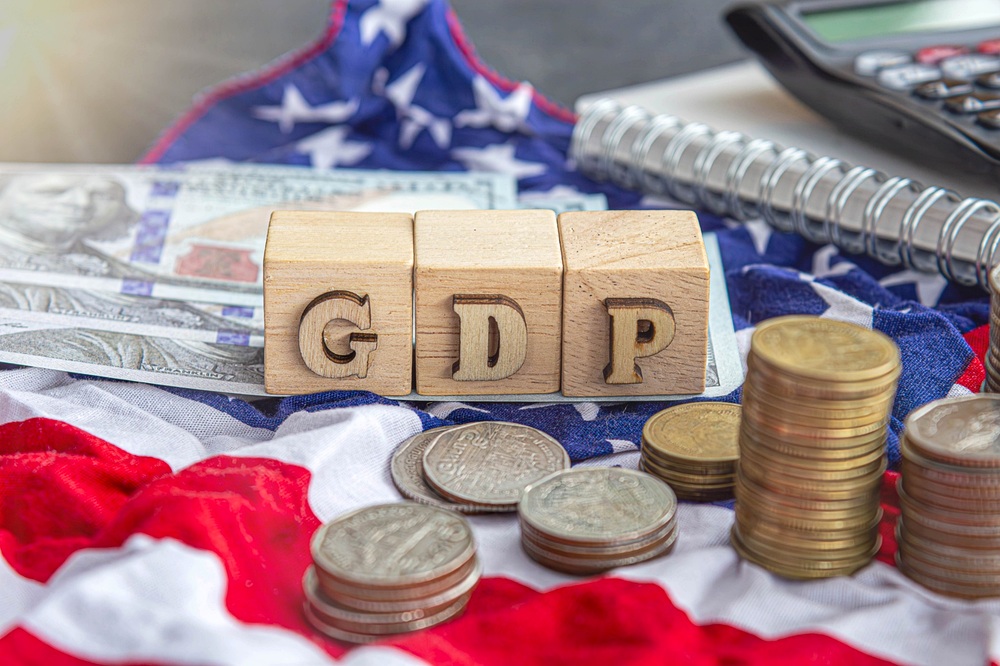
US Economic Growth Strengthens in Q3
The US economy expanded at an annualized rate of 3.4% in the third quarter of 2026, marking its strongest growth in a year. The result exceeded the 3.2% forecast and accelerated from the 2.2% growth recorded in the second quarter.
The stronger performance reflected increased investment, resilient consumer spending and contributions from government activity and private inventories. The figures indicate that economic activity remained robust during the quarter, despite weakness in housing and international trade.
Private Investment Accelerates Amid AI Spending
Private domestic investment increased 19.4%, compared with 4.6% in the previous quarter, making it the largest upward contributor to growth.
Equipment investment surged 20.9%, accelerating from 13.4% in the second quarter, with computers and peripheral equipment playing a particularly important role. Investment in intellectual property products rose 8.4%, while spending on structures increased 5.4%, rebounding from 0.1%.
Strong investment in artificial intelligence infrastructure appears to have been an important factor behind the acceleration. Spending on computing equipment and related assets has become a significant component of business investment as companies expand their technological capabilities.
Consumer Spending Remains Resilient
Personal consumption expenditure grew 3.8%, matching the previous quarter’s pace. Spending on goods increased 3%, slowing from 4.5%, while services spending accelerated to 4.1% from 3.4%.
Healthcare-related services, including hospitals and outpatient care, as well as prescription drugs, contributed to services spending.
The continued expansion in consumer demand provided another source of support for overall economic growth, helping offset weakness in other sectors.
Government activity also increased 5.3%, compared with a 0.1% contraction in the second quarter. Sales of crude oil from the Strategic Petroleum Reserve were identified as a leading contributor. Private inventories added 1.61 percentage points to GDP growth.
Housing and Net Exports Remain Weak
Residential investment returned to contraction, falling 3.3% after increasing 2.8% in the previous quarter.
International trade also weighed on the economy. Exports declined 5.7%, reversing a 5% increase in the second quarter, while imports rose 19.7%, compared with 12.6% previously.
The combination of falling exports and rising imports reduced the contribution from net trade, offsetting some of the gains from domestic investment and consumption.
What Investors Should Watch Next
Investors will be monitoring whether strong business investment and consumer spending can sustain economic growth in the coming quarters. The contribution from AI-related equipment spending will remain important, particularly as businesses continue expanding computing capacity.
Housing weakness and the deterioration in net trade also warrant attention. Further developments in these areas could influence the composition of growth, while the durability of consumer demand will help determine whether the economy maintains its current momentum.
Comparison, examination, and analysis between investment houses
Leave your details, and an expert from our team will get back to you as soon as possible
* This article, in whole or in part, does not contain any promise of investment returns, nor does it constitute professional advice to make investments in any particular field.
To read more about the full disclaimer, click here
- sagi habasov
- •
- 7 Min Read
- •
- ago 2 hours
SKN | ECB Holds Rates Steady as Rising Energy Costs Strengthen Case for December Hike
The European Central Bank left interest rates unchanged on Thursday in a widely anticipated decision, but its warning over
- ago 2 hours
- •
- 7 Min Read

The European Central Bank left interest rates unchanged on Thursday in a widely anticipated decision, but its warning over

- omer bar
- •
- 8 Min Read
- •
- ago 14 hours
SKN | The Fed’s AI Conundrum: Can Prolonged Restrictive Rates Derail the Tech Capex Boom?
The historic surge in capital spending dedicated to artificial intelligence has emerged as an unexpected friction point in central bank
- ago 14 hours
- •
- 8 Min Read
The historic surge in capital spending dedicated to artificial intelligence has emerged as an unexpected friction point in central bank
- sagi habasov
- •
- 6 Min Read
- •
- ago 17 hours
SKN | Dollar Falls After Fed Holds Rates Steady as Currency Markets Reprice Policy Expectations
The U.S. dollar weakened against major currencies on Wednesday after the Federal Reserve held interest rates steady, reinforcing expectations
- ago 17 hours
- •
- 6 Min Read

The U.S. dollar weakened against major currencies on Wednesday after the Federal Reserve held interest rates steady, reinforcing expectations
- sagi habasov
- •
- 6 Min Read
- •
- ago 17 hours
SKN | Fed Holds Rates Steady as Persistent Inflation Keeps Future Hikes in Play
The Federal Reserve left U.S. interest rates unchanged on Wednesday, as expected, adopting a wait-and-see approach while policymakers assess
- ago 17 hours
- •
- 6 Min Read

The Federal Reserve left U.S. interest rates unchanged on Wednesday, as expected, adopting a wait-and-see approach while policymakers assess
