




- Ronny Mor
- •
- 6 Min Read
- •
- 10 minutes ago


Key Points
- U.S. Treasury Secretary Scott Bessent and Chinese Vice Premier He Lifeng held negotiations in New York ahead of the planned Trump-Xi summit on September 24.
- The discussions included a proposed mechanism for notifying each other about AI incidents that could have national-security implications.
- Tariffs, critical minerals and supply-chain issues remain central to negotiations, with both sides also working to establish a bilateral “Board of Trade.”
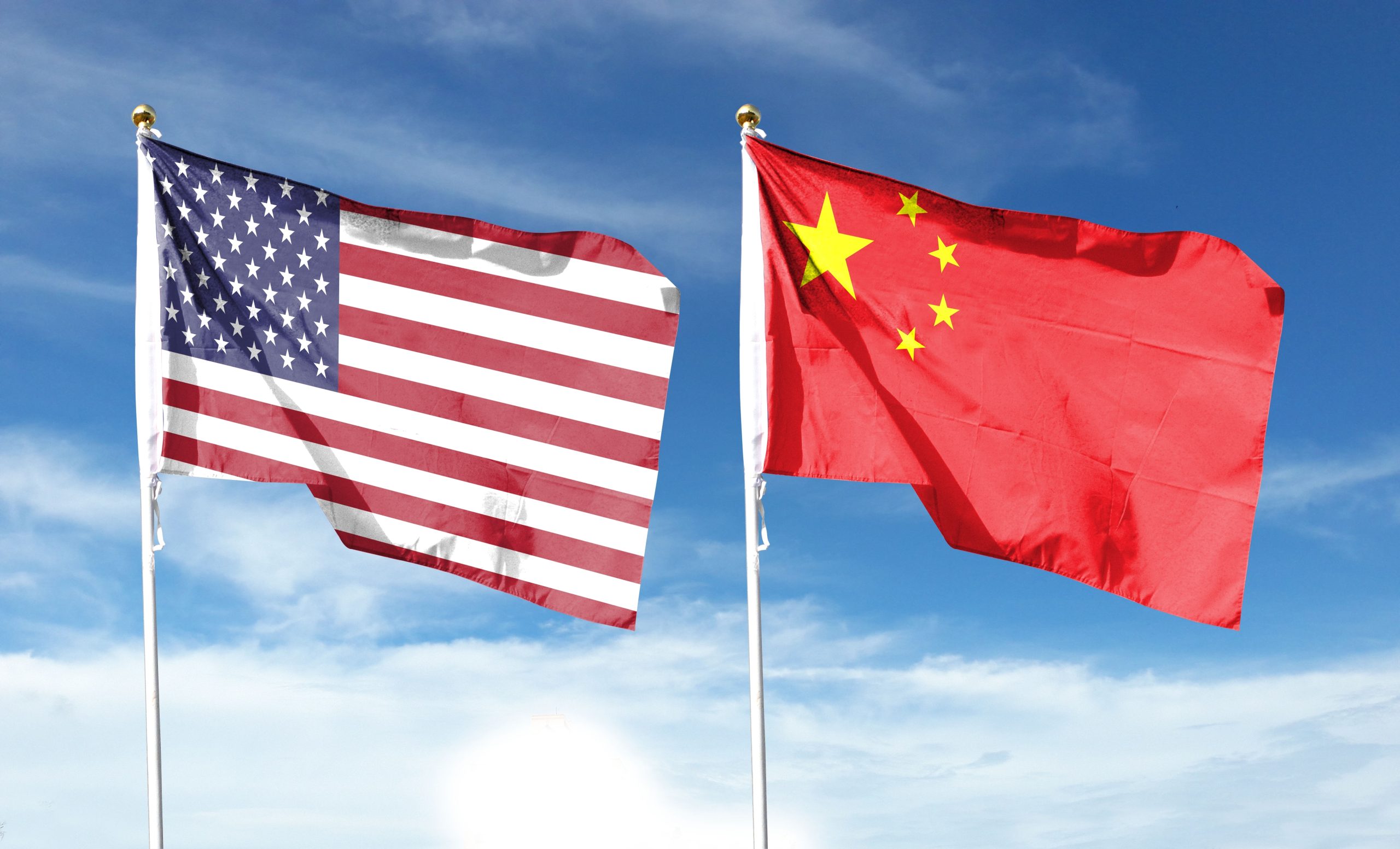
The United States and China are widening their economic dialogue beyond the traditional dispute over tariffs, with artificial intelligence, critical minerals and supply-chain security moving closer to the center of bilateral relations. U.S. Treasury Secretary Scott Bessent and Chinese Vice Premier He Lifeng met in New York ahead of the planned September 24 meeting between President Donald Trump and Chinese President Xi Jinping, as both governments seek to manage economic competition without allowing strategic disputes to disrupt global markets.
AI Becomes a New Channel for US-China Cooperation
Artificial intelligence has emerged as one of the most sensitive areas of the relationship. During the latest talks, the United States proposed a notification mechanism covering AI incidents that could potentially affect national security. Such a mechanism would create a direct channel for communication if advanced AI systems produce serious or unexpected risks.
The initiative reflects a difficult balance. Washington and Beijing remain competitors in advanced AI, computing infrastructure and semiconductor technology, but the rapid development of increasingly capable models is creating risks that neither government can easily address alone. The proposed dialogue could therefore focus on transparency and risk management without requiring the two countries to reduce their broader technological competition.
Trade Talks Move Toward Selective Tariff Relief
Trade negotiations are also shifting toward specific areas where cooperation may be possible. U.S. and Chinese officials are working to operationalize a bilateral “Board of Trade” that could identify non-sensitive goods for potential tariff reductions. Possible areas include consumer products, agricultural goods, energy and medical devices.
The approach would represent targeted trade liberalization rather than a broad removal of existing tariffs. Several outstanding issues remain unresolved, including Chinese purchases of U.S. agricultural products and potential Boeing aircraft purchases. The wider U.S.-China trade truce is also approaching a November expiration, making the coming months important for companies planning international supply chains and investment.
Critical Minerals Remain a Strategic Pressure Point
Critical minerals and rare-earth materials remain another major source of tension. They are essential for electric vehicles, advanced electronics, defense equipment and other high-technology industries. China has a dominant position across important parts of the rare-earth supply chain, while the United States and other economies are seeking alternative sources and greater domestic processing capacity.
For global companies, uncertainty around export controls and mineral availability can influence production costs, investment decisions and supply-chain planning. The issue therefore extends well beyond the bilateral relationship and affects manufacturers across technology, automotive, energy and defense industries.
Investors will now focus on the Trump-Xi meeting and whether the latest economic talks produce measurable agreements. Progress on AI risk communication, selective tariff reductions and critical-mineral trade could reduce uncertainty for global businesses, while unresolved disputes could keep supply-chain and technology risks elevated. The durability of the broader trade truce and the implementation of any new commitments will be important indicators of the direction of U.S.-China economic relations in the months ahead.
Comparison, examination, and analysis between investment houses
Leave your details, and an expert from our team will get back to you as soon as possible
* This article, in whole or in part, does not contain any promise of investment returns, nor does it constitute professional advice to make investments in any particular field.
To read more about the full disclaimer, click here
- sagi habasov
- •
- 7 Min Read
- •
- ago 30 minutes
SKN | China Poised to Dominate Global Nuclear Energy Through 2035 as AI Demand Accelerates the Nuclear Buildout
China is emerging as the central force in the global nuclear power expansion, with analysts expecting its lead to widen
- ago 30 minutes
- •
- 7 Min Read

China is emerging as the central force in the global nuclear power expansion, with analysts expecting its lead to widen

- Ronny Mor
- •
- 8 Min Read
- •
- ago 1 day
SKN | Trump Announces “AI Force” and New AI Czar as U.S. Pushes to Accelerate Artificial Intelligence
President Donald Trump announced on September 19 that the United States will establish an “AI Force” and that he
- ago 1 day
- •
- 8 Min Read
President Donald Trump announced on September 19 that the United States will establish an “AI Force” and that he

- Arik Arkadi Sluzki
- •
- 7 Min Read
- •
- ago 1 day
SKN | Nvidia CEO Jensen Huang Rejects Calls to Slow AI Development: Can Speed and Safety Advance Together?
Nvidia CEO Jensen Huang has pushed back against calls for the artificial intelligence industry to slow the pace of
- ago 1 day
- •
- 7 Min Read
Nvidia CEO Jensen Huang has pushed back against calls for the artificial intelligence industry to slow the pace of
- sagi habasov
- •
- 6 Min Read
- •
- ago 1 day
SKN | OpenAI’s $856 Billion AI Infrastructure Plan Raises Questions Over Cash Flow and Long-Term Growth
OpenAI’s aggressive expansion strategy is placing artificial intelligence infrastructure spending at the center of the company’s long-term financial outlook.
- ago 1 day
- •
- 6 Min Read

OpenAI’s aggressive expansion strategy is placing artificial intelligence infrastructure spending at the center of the company’s long-term financial outlook.
