




- orshu
- •
- 6 Min Read
- •
- 2 minutes ago


Key Points
- Gross interest expense on U.S. federal debt climbed $11 billion year-on-year in October 2026 to $115 billion, marking the highest October reading on record and a 505% surge since October 2022.
- Net interest outlays totaled $103.1 billion—consuming 27.9% of October’s $368.9 billion in federal receipts—as the monthly budget deficit widened 42.1% annually to $404.1 billion.
- For international allocators and Israeli institutional desks, accelerating sovereign debt-service costs reinforce upward term-premium pressure across global fixed-income benchmarks.
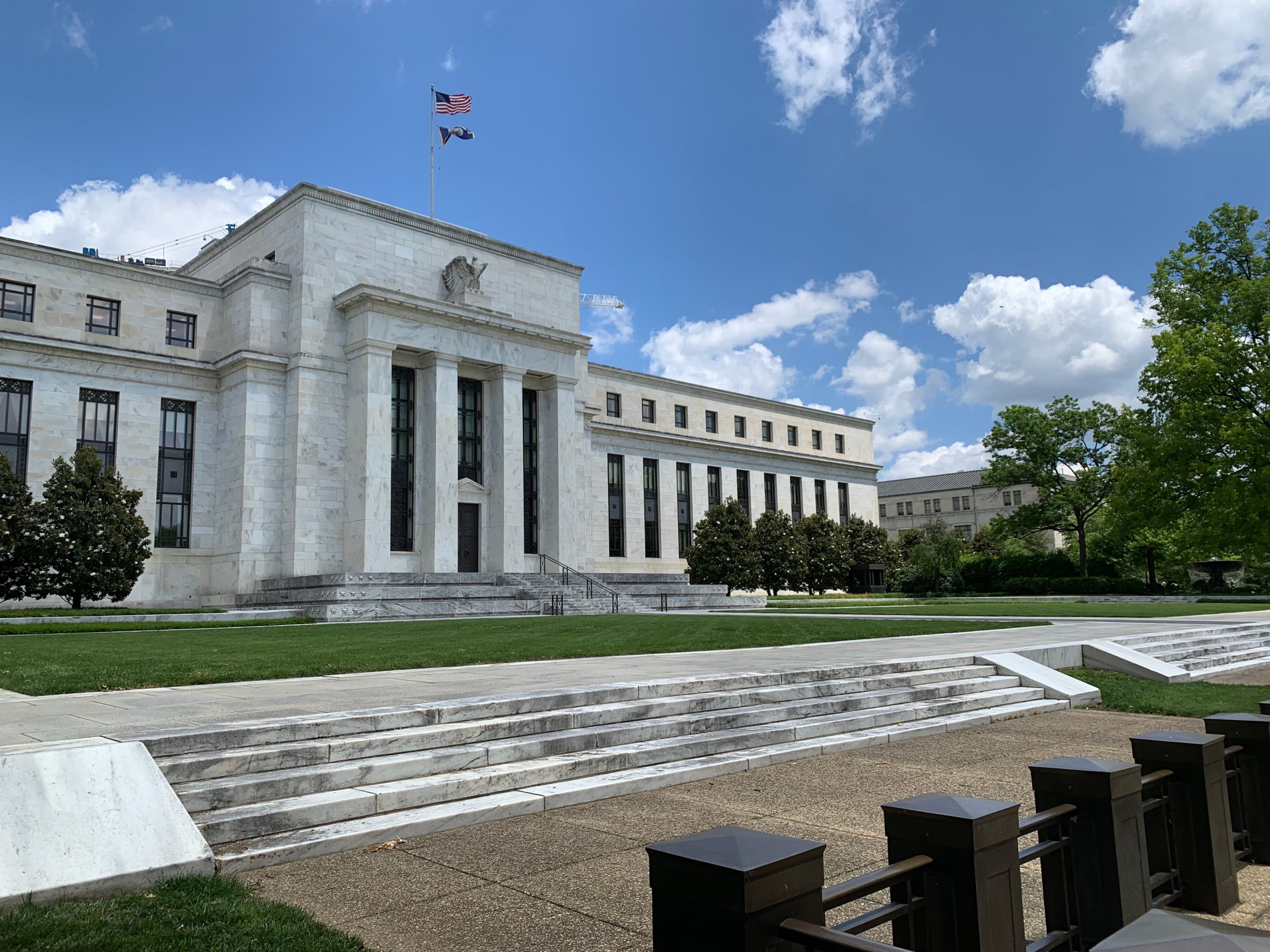
Gross interest expense on U.S. federal debt rose $11 billion year-on-year in October 2026 to $115 billion, marking the highest October reading on record as elevated borrowing rates compounded a rapidly expanding sovereign debt load. Released in the Treasury Department’s Monthly Treasury Statement for the opening month of fiscal year 2027, the milestone underscores mounting fiscal strain as Washington finances a widening deficit amid 10-year Treasury yields hovering near 5%.
Refinancing Rollovers and $32.7 Trillion Public Debt Drive Record Outlays
According to Treasury Department accounting for October 2026, gross interest payments rose for a second consecutive October, capping a cumulative $96 billion—or 505%—expansion compared to October 2022 levels. After accounting for intragovernmental offsets, net interest outlays reached $103.1 billion, up 13.4% from a year earlier and ranking as the federal government’s fourth-largest monthly expenditure behind Social Security, Medicare, and national defense. Against October tax receipts of $368.9 billion—down 8.8% year-on-year—net interest payments consumed nearly 28 cents of every dollar collected by the Treasury, while total monthly outlays rose 12.2% to $773.0 billion, driving the October deficit to $404.1 billion.
The structural driver behind this surge is the dual impact of debt accumulation and refinancing at higher coupons. Federal debt held by the public reached $32.7 trillion at the close of October—an increase of $2.2 trillion over the past 12 months—while total gross national debt stands near $40.2 trillion, approaching the $41.1 trillion statutory debt limit. As low-yielding pandemic-era notes mature and roll over into auctions priced against sticky U.S. inflation and hawkish Federal Reserve policy expectations, debt-service costs continue to compound even without new discretionary spending initiatives.
Term-Premium Repricing and Transmission Channels for Israeli Desks
Escalating U.S. debt-service obligations carry direct implications for global bond markets and institutional asset allocation. With Congressional Budget Office projections estimating that cumulative net interest payments will reach $16.2 trillion over the next decade, fixed-income investors are demanding higher term premiums to absorb heavy Treasury auction supply. This fiscal supply overhang has helped keep 10-year U.S. Treasury yields anchored near 5.0%–5.14% and reinforced broad U.S. dollar strength, tightening global financial conditions.
For Israeli institutional pension managers and treasury desks on the Tel Aviv Stock Exchange (TASE), Washington’s fiscal trajectory serves as a critical benchmark for sovereign duration risk. Domestic institutional allocators—who balance substantial U.S. Treasury and dollar-denominated credit holdings against local debt—are closely monitoring cross-border yield spreads. With the New Israeli Shekel (NIS) consolidating near 3.17 per dollar, local multi-asset desks are emphasizing disciplined duration management, favoring intermediate domestic sovereign bonds (Shahar) and inflation-linked government notes (Galil) to insulate portfolios against upward global yield volatility.
Outlook: November Treasury Auctions, Debt-Limit Deadlines, and December FOMC
Moving toward year-end, market participants will scrutinize bid-to-cover ratios and foreign central bank participation across upcoming U.S. Treasury note and bond auctions to gauge institutional appetite for growing sovereign issuance. Key catalysts to watch include congressional budget negotiations ahead of the December 11 continuing resolution expiration, the trajectory toward the $41.1 trillion statutory debt ceiling, and the Federal Reserve’s December 9 interest-rate decision. If sticky inflation forces the central bank to tighten policy further while deficits remain elevated, federal interest costs will continue consuming a growing share of fiscal capacity into 2027.
Comparison, examination, and analysis between investment houses
Leave your details, and an expert from our team will get back to you as soon as possible
* This article, in whole or in part, does not contain any promise of investment returns, nor does it constitute professional advice to make investments in any particular field.
To read more about the full disclaimer, click here
- Arik Arkadi Sluzki
- •
- 5 Min Read
- •
- ago 6 hours
SKN | Fed’s Hammack Backs Slow, Steady Rate Hikes as Inflation Pressures Build
Federal Reserve Bank of Cleveland President Beth Hammack reiterated her preference for a slow and steady approach to interest-rate
- ago 6 hours
- •
- 5 Min Read
Federal Reserve Bank of Cleveland President Beth Hammack reiterated her preference for a slow and steady approach to interest-rate

- Ronny Mor
- •
- 8 Min Read
- •
- ago 1 day
SKN | US Budget Deficit Surges to $404 Billion in October as Defense Spending and Debt Interest Costs Increase
The United States has opened fiscal 2027 with a substantial deterioration in its budget balance, highlighting the growing challenge
- ago 1 day
- •
- 8 Min Read

The United States has opened fiscal 2027 with a substantial deterioration in its budget balance, highlighting the growing challenge
- Ronny Mor
- •
- 6 Min Read
- •
- ago 2 days
SKN | Fed’s Collins Backs Gradual Rate Hikes as Inflation and Growth Risks Remain Balanced
Federal Reserve Bank of Boston President Susan Collins said the U.S. central bank should continue raising interest rates at
- ago 2 days
- •
- 6 Min Read
Federal Reserve Bank of Boston President Susan Collins said the U.S. central bank should continue raising interest rates at

- sagi habasov
- •
- 7 Min Read
- •
- ago 3 days
SKN | Fed’s Warsh Weighs AI’s Impact as U.S. Grows Wary of the Technology Boom
The Federal Reserve is taking a closer look at the economic consequences of artificial intelligence as the technology’s rapid
- ago 3 days
- •
- 7 Min Read
The Federal Reserve is taking a closer look at the economic consequences of artificial intelligence as the technology’s rapid
