




- Lior mor
- •
- 8 Min Read
- •
- 2 minutes ago


Key Points
- Retail Sales Growth: US retail sales increased 0.2% in October, matching economists' expectations, while September's gain was revised upward to 0.8%.
- Underlying Spending Remains Strong: Core retail sales, excluding automobiles, gasoline, building materials and food services, advanced 0.6%, exceeding the expected 0.4% increase.
- Import Inflation Accelerates: Import prices rose 1.1% in October, above the 0.7% forecast, reinforcing expectations that the Federal Reserve will continue raising interest rates.

US Retail Sales Show Moderate Growth
US retail sales increased 0.2% in October as consumers reduced purchases of motor vehicles and furniture but continued spending across other categories. The results matched economists’ expectations and followed an unrevised 0.8% increase in September, according to the Commerce Department.
On an annual basis, retail sales were up 6.8% in October. The figures are not adjusted for inflation, making the underlying strength of consumer demand an important consideration as rising prices continue to pressure household budgets.
The data suggest that consumers remain active despite higher living costs. However, spending patterns indicate that households are increasingly adjusting their budgets to manage inflation. Higher-income consumers have provided much of the support, benefiting from stock market gains, while other households have increasingly relied on credit cards and savings.
The personal saving rate fell to a nearly four-year low in September, highlighting pressure on household finances. The recent technology-led stock market decline could also make some consumers more cautious about spending.
Spending Patterns Reveal Uneven Demand
Several retail categories recorded declines during October. Receipts at motor vehicle dealers fell 1.6%, while furniture store sales declined 2.3%. Electronics and appliance store sales were unchanged, and clothing retailers and sporting goods, hobby, musical instrument and book stores also reported decreases.
Other categories provided support. Building material store sales increased 0.5%, while nonstore retailers recorded a 1.2% jump. Receipts at food services and drinking places rose 0.2%.
The broader measure of underlying demand was stronger. Retail sales excluding automobiles, gasoline, building materials and food services increased 0.6% in October, following an upwardly revised 0.5% gain in September.
Economists had expected this core measure to rise 0.4%. Because it corresponds more closely with the consumer spending component of gross domestic product, the stronger result points to continued resilience in household demand.
Consumer spending grew at an annualized rate of 3.8% in the third quarter, while the overall economy expanded at a 3.4% pace.
Import Prices Add to Inflation Concerns
A separate Labor Department report showed import prices increased 1.1% in October, exceeding economists’ expectations for a 0.7% rise. Prices had also advanced 1.1% in September.
The increase was driven partly by a 3.6% rise in fuel costs, following a 6.3% jump in September. Petroleum and natural gas prices also increased, while imported food prices declined 0.2%.
Excluding fuel and food, import prices climbed 0.9%, accelerating from a 0.5% increase in September. Imported capital goods prices rose 1.5%, including a 1.7% increase in nonelectrical machinery costs, potentially reflecting demand associated with the expansion of AI infrastructure.
Imported automotive vehicles, parts and engines increased 0.4%, while consumer goods prices excluding automobiles rose 0.5%.
The Labor Department did not provide year-over-year import price figures because the previous year’s federal government shutdown prevented data collection in October 2025.
Federal Reserve Rate Expectations Strengthen
The combination of resilient consumer spending and stronger-than-expected import prices adds to the inflation concerns facing the Federal Reserve.
Recent government reports have also shown stronger-than-expected consumer prices and firmer producer inflation. Financial markets have priced in a 25-basis-point rate increase in December, followed by another increase in January, according to CME’s FedWatch tool.
The Fed left its benchmark overnight interest rate unchanged within a range of 3.75% to 4.00% last month.
Following the latest reports, US stocks opened lower, Treasury yields increased and the dollar was little changed against a basket of currencies.
What Investors Should Watch Next
The coming inflation and economic reports will help determine whether consumer demand remains strong enough to sustain economic growth while keeping price pressures elevated. Investors will be monitoring import costs, household spending patterns and further evidence of inflation across consumer and producer prices.
The balance between resilient consumption and persistent inflation remains central to the Federal Reserve’s policy outlook. If price pressures continue to exceed expectations, the prospect of additional interest-rate increases could influence Treasury yields, equity valuations and borrowing costs.
Comparison, examination, and analysis between investment houses
Leave your details, and an expert from our team will get back to you as soon as possible
* This article, in whole or in part, does not contain any promise of investment returns, nor does it constitute professional advice to make investments in any particular field.
To read more about the full disclaimer, click here
- orshu
- •
- 6 Min Read
- •
- ago 14 hours
SKN | U.S. Federal Debt Interest Costs Reach Record $115 Billion in October: Will Rising Debt Service Crowd Out Fiscal Flexibility?
Gross interest expense on U.S. federal debt rose $11 billion year-on-year in October 2026 to $115 billion, marking the highest
- ago 14 hours
- •
- 6 Min Read
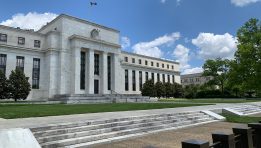
Gross interest expense on U.S. federal debt rose $11 billion year-on-year in October 2026 to $115 billion, marking the highest

- Arik Arkadi Sluzki
- •
- 5 Min Read
- •
- ago 21 hours
SKN | Fed’s Hammack Backs Slow, Steady Rate Hikes as Inflation Pressures Build
Federal Reserve Bank of Cleveland President Beth Hammack reiterated her preference for a slow and steady approach to interest-rate
- ago 21 hours
- •
- 5 Min Read
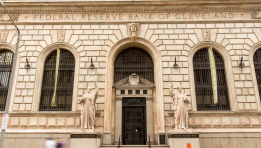
Federal Reserve Bank of Cleveland President Beth Hammack reiterated her preference for a slow and steady approach to interest-rate

- Ronny Mor
- •
- 8 Min Read
- •
- ago 2 days
SKN | US Budget Deficit Surges to $404 Billion in October as Defense Spending and Debt Interest Costs Increase
The United States has opened fiscal 2027 with a substantial deterioration in its budget balance, highlighting the growing challenge
- ago 2 days
- •
- 8 Min Read

The United States has opened fiscal 2027 with a substantial deterioration in its budget balance, highlighting the growing challenge
- Ronny Mor
- •
- 6 Min Read
- •
- ago 3 days
SKN | Fed’s Collins Backs Gradual Rate Hikes as Inflation and Growth Risks Remain Balanced
Federal Reserve Bank of Boston President Susan Collins said the U.S. central bank should continue raising interest rates at
- ago 3 days
- •
- 6 Min Read
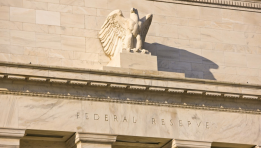
Federal Reserve Bank of Boston President Susan Collins said the U.S. central bank should continue raising interest rates at
