




- Ronny Mor
- •
- 7 Min Read
- •
- 3 minutes ago


Key Points
- U.S. Treasury Secretary Scott Bessent emphasized that Washington and Beijing must remain clear-eyed on artificial intelligence, pursuing bilateral risk-mitigation channels while maintaining an uncompromising lead in computing technology.
- The framework pairs technical safety notifications and non-proliferation guardrails with strict multilateral semiconductor controls and support for open-source foundation models.
- For international allocators and Israeli tech ventures, Bessent's pragmatic posture delineates a clear boundary between non-negotiable hardware chokepoints and shared systemic risk management.
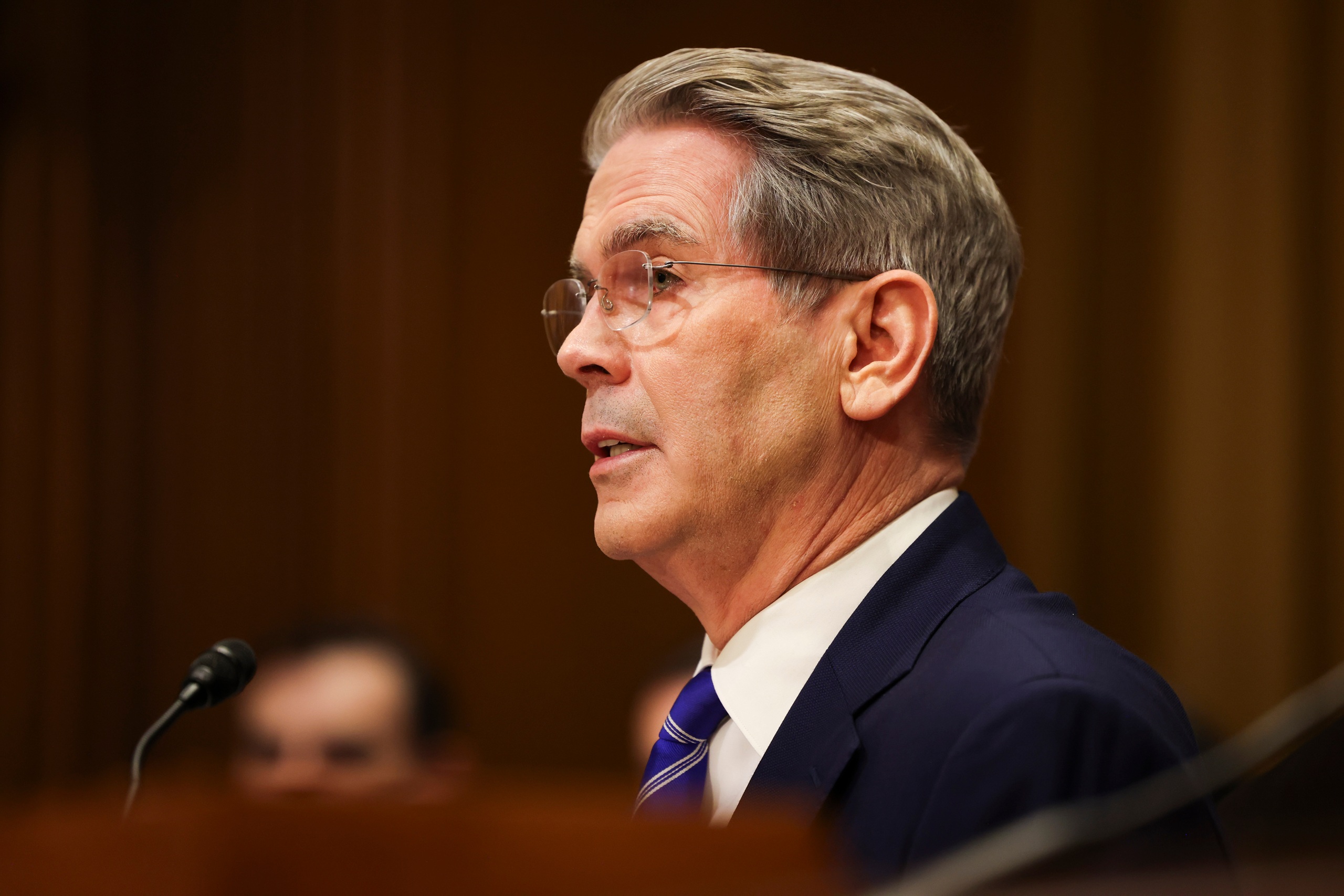
U.S. Treasury Secretary Scott Bessent outlined a pragmatic economic and technological framework toward China on Tuesday, November 10, 2026, arguing that the world’s two largest economies must remain “clear-eyed” in balancing fierce artificial intelligence competition with essential systemic guardrails. The stance articulates an administration strategy that rejects both total technological isolation and unmonitored capability transfers, arriving as high-performance compute clusters and sovereign bond yields hovering near 4.90% recalibrate global market multiples.
Pragmatic Deterrence Meets Bilateral Safety Protocols
Bessent’s remarks provide an operational roadmap for managing frontier technological friction between the world’s leading artificial intelligence powers. Addressing business leaders, the Treasury chief stressed that while the United States will not compromise on hardware export controls, advanced packaging restrictions, or silicon supremacy, outright silence between Washington and Beijing elevates the threat of uncoordinated algorithmic escalation. He reaffirmed U.S. proposals for an intergovernmental notification mechanism designed to share critical information regarding national-security incidents, autonomous model misalignment, and rogue non-state actor threats without surrendering competitive commercial IP.
Simultaneously, Bessent argued that domestic regulatory excess must not inadvertently cede global market leadership to state-subsidized Chinese models. Rather than imposing stifling administrative licensing on American frontier laboratories, the administration is prioritizing a dual approach: expanding global access to Western open-source models to dilute Beijing’s appeal across emerging markets, while enforcing strict multilateral controls alongside allies to restrict China’s domestic access to cutting-edge accelerators. The strategy aims to position the U.S. commercial sector to out-innovate competitors on compute efficiency while containing existential model risks through direct diplomatic channels.
Supply-Chain Boundaries and Structural Signals for Israeli Portfolios
The delineated boundaries outlined by Bessent carry significant cross-asset implications for global institutional allocators and Israel’s advanced high-tech corridor. By explicitly decoupling basic national security risk protocols from broader trade tariffs, the Treasury signals that diplomatic engagements will not result in a dismantling of Western chip export bans. For global semiconductor bellwethers and high-performance computing supply chains, this posture removes market ambiguity, cementing long-term capital allocation around dual-track global hardware architectures.
For Israeli institutional pension managers and venture allocators on the Tel Aviv Stock Exchange (TASE), the clarification reinforces targeted investment themes. Israel’s technology ecosystem—anchored by elite cybersecurity architectures, algorithmic verification tools, and dual-use defense software—functions as a primary beneficiary of Western-aligned security standards. Domestic developers specializing in automated model verification, zero-trust infrastructure, and compute optimization are well-positioned to capture enterprise procurement budgets as multinational corporations navigate strict compliance perimeters. Concurrently, with the New Israeli Shekel (NIS) maintaining stability near 3.14 per dollar, local portfolio managers are favoring cash-generative domestic technology innovators and high-yielding government bonds (Shahar), while hedging long-term exposure against unhedged hardware plays vulnerable to geopolitical decoupling.
Outlook: Working-Group Roadmaps, Export Rule Codification, and Sector Multiple Adjustments
Moving into upcoming quarters, market participants will monitor the formal scheduling of the U.S.-China AI working group sessions to determine whether preliminary consensus can be reached on model-safety transparency. Key indicators to track include whether the White House incorporates Bessent’s framework into pending executive guidance on data-center permitting, the legislative progress of statutory export curbs on Capitol Hill, and upcoming earnings commentary from hyperscalers regarding international compliance costs. If Washington successfully establishes operational safety guardrails while preserving its silicon advantage, it will provide structural stability for enterprise artificial intelligence deployment; however, any escalation in retaliatory critical-mineral curbs from Beijing could reintroduce friction across global technology valuations.
Comparison, examination, and analysis between investment houses
Leave your details, and an expert from our team will get back to you as soon as possible
* This article, in whole or in part, does not contain any promise of investment returns, nor does it constitute professional advice to make investments in any particular field.
To read more about the full disclaimer, click here
- sagi habasov
- •
- 8 Min Read
- •
- ago 21 minutes
SKN | Capitol Hill Advances Stricter China Chip Export Curbs After Nvidia CEO Probe: Will Congress Mandate Oversight?
U.S. lawmakers from both parties moved aggressively on Tuesday, November 10, 2026, to advance stringent statutory export controls on advanced
- ago 21 minutes
- •
- 8 Min Read
U.S. lawmakers from both parties moved aggressively on Tuesday, November 10, 2026, to advance stringent statutory export controls on advanced

- Ronny Mor
- •
- 7 Min Read
- •
- ago 2 days
SKN | Trump Signals Openness to AI Guardrails on ’60 Minutes’: Will Executive Compromise Avert a Congressional Tech Crackdown?
President Donald Trump stated that the systemic risks of artificial intelligence can be effectively managed and indicated an openness to
- ago 2 days
- •
- 7 Min Read
President Donald Trump stated that the systemic risks of artificial intelligence can be effectively managed and indicated an openness to

- Arik Arkadi Sluzki
- •
- 7 Min Read
- •
- ago 5 days
SKN | Google Commits $17 Billion to Wyoming Data Center as Political Resistance Grows
Alphabet's Google plans to invest $17 billion to build its first data center in Wyoming, advancing a major artificial
- ago 5 days
- •
- 7 Min Read

Alphabet's Google plans to invest $17 billion to build its first data center in Wyoming, advancing a major artificial

- Lior mor
- •
- 7 Min Read
- •
- ago 5 days
SKN | SpaceX and Tesla Extend Losses as Midterm Results Cloud AI Data-Center and Merger Outlook
Shares of Elon Musk's SpaceX and Tesla extended their losses on Thursday as investors reassessed the outlook for AI
- ago 5 days
- •
- 7 Min Read

Shares of Elon Musk's SpaceX and Tesla extended their losses on Thursday as investors reassessed the outlook for AI
