




- sagi habasov
- •
- 8 Min Read
- •
- 6 minutes ago


Key Points
- Bipartisan lawmakers on Capitol Hill are accelerating legislation—including the AI Overwatch Act—to grant Congress direct oversight and veto power over advanced semiconductor export licenses following foreign espionage allegations surrounding Nvidia CEO Jensen Huang.
- House committee chairmen have requested a closed-door briefing with Huang on November 18 to probe interactions with an executive tied to Singapore-based Megaspeed and evaluate whether export decisions were compromised.
- For international allocators and Israeli tech portfolios, statutory export tightening threatens to restrict global high-performance compute distribution while raising regulatory compliance hurdles.
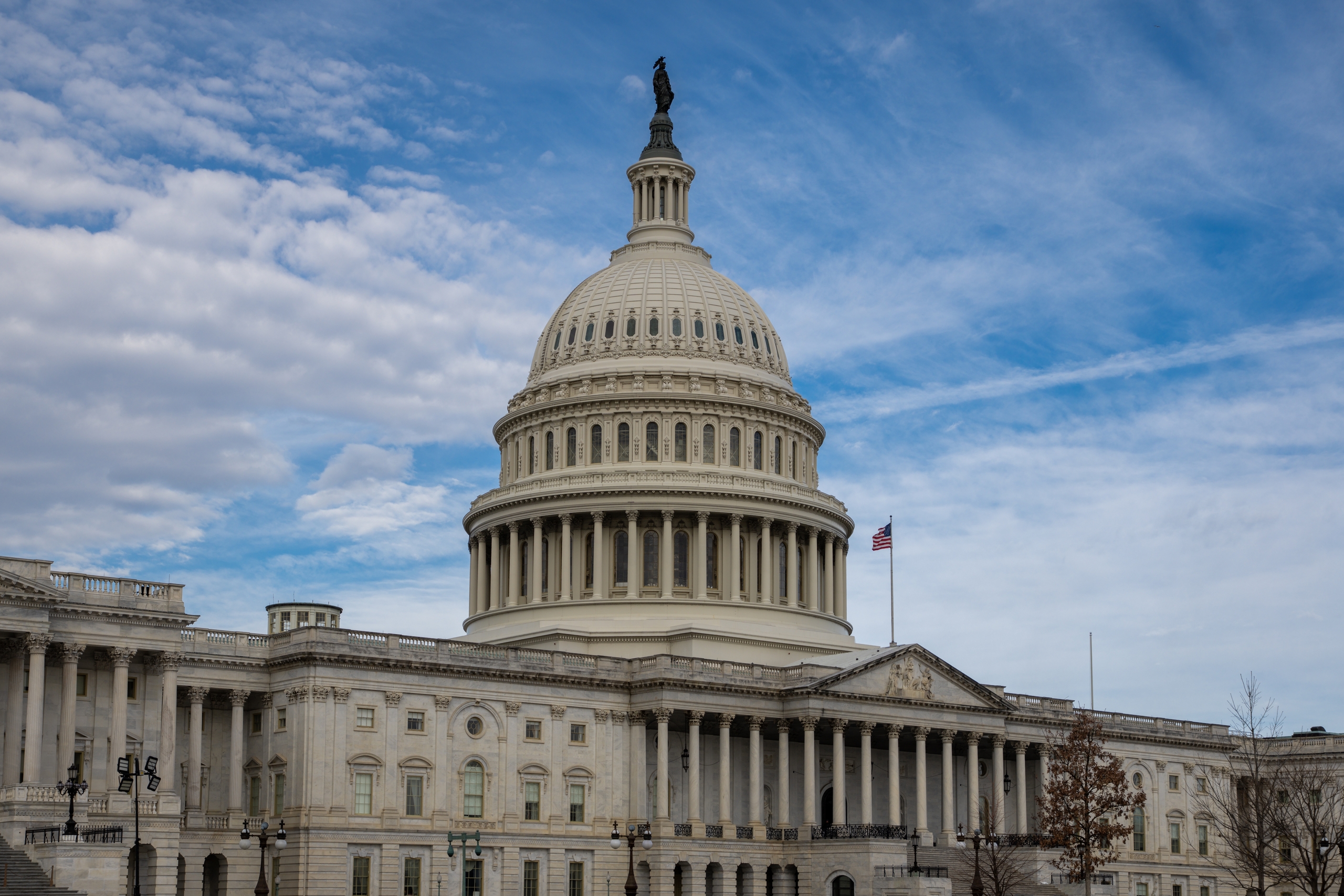
U.S. lawmakers from both parties moved aggressively on Tuesday, November 10, 2026, to advance stringent statutory export controls on advanced artificial intelligence semiconductors, capitalizing on mounting national security concerns surrounding Nvidia Corp. Chief Executive Jensen Huang. The legislative push seeks to attach binding chip restrictions to the must-pass National Defense Authorization Act (NDAA), granting Congress direct authority to review and block Department of Commerce export licenses for high-performance computing hardware bound for overseas hubs. Arriving in the wake of the U.S. midterm elections and ongoing volatility across technology equities, the congressional offensive signals an end to discretionary administrative licensing, threatening to institutionalize stricter barriers between Western silicon developers and Asian distribution channels.
Bipartisan Momentum on the AI Overwatch Act and Closed-Door Subpoena Threats
The primary legislative vehicle gaining traction across Capitol Hill is the bipartisan AI Overwatch Act, championed by lawmakers including Senators Elizabeth Warren and Jim Banks alongside House China Select Committee Chairman John Moolenaar. The proposed statute would strip unilateral export licensing power from the Bureau of Industry and Security (BIS), establishing a congressional review mechanism for cutting-edge graphical processing unit (GPU) sales and mandating stringent chain-of-custody tracking to prevent secondary diversion through Southeast Asian neoclouds. Lawmakers argue that existing administrative guardrails proved insufficient to deter offshore evasion schemes, asserting that technological supremacy requires strict statutory oversight.
Heightening the corporate pressure on Nvidia, three Republican House committee chairs—John Moolenaar, Brian Mast, and Rick Crawford—demanded that Huang attend a classified, closed-door briefing on November 18. The inquiry focuses on his documented interactions with Alice Huang, a former executive at Singapore-based Megaspeed whom U.S. intelligence agencies suspect of operating as an asset for Beijing’s Ministry of State Security. While Nvidia’s board stated that an ongoing internal review has found no evidence that trade secrets or national security were breached, lawmakers across the aisle, including incoming Senate leadership, have warned of formal subpoenas if executive leadership does not clarify how corporate lobbying for relaxed China export rules was formulated.
Supply-Chain Realignment and Transmission Channels for Israeli Portfolios
The push for statutory export curbs introduces structural friction for global asset allocators and Israel’s advanced technology sector. If enacted, stricter export controls will reduce legitimate APAC commercial revenue for U.S. fabless giants and impose comprehensive cloud-attestation mandates on international data center operators. For semiconductor bellwethers trading at elevated multiples against 10-year Treasury yields hovering near 4.90%, the elimination of potential China-facing revenues—even through modified architecture variants—compresses long-term addressable market projections and increases regulatory compliance overhead.
For Israeli institutional pension managers and high-tech allocators on the Tel Aviv Stock Exchange (TASE), the tightening regulatory perimeter carries two distinct implications. On one hand, Israel’s deep integration into Nvidia’s research and development ecosystem—anchored by Mellanox high-speed interconnect technology and the Israel-1 supercomputing network—means local engineering divisions face more stringent data-isolation protocols and federal export compliance scrutiny. On the other hand, Israeli enterprise software, cybersecurity providers, and algorithmic efficiency developers listed locally stand to benefit; as hardware export quotas tighten, global enterprise demand is shifting toward software optimization that extracts maximum performance from existing compute clusters. With the New Israeli Shekel (NIS) maintaining stability near 3.14 per dollar, domestic fund managers are navigating this shift by rotating capital away from volatile multinational hardware suppliers toward defensive domestic sovereign bonds (Shahar) and cash-generative cybersecurity platforms.
Outlook: Briefing Deadlines, Defense Bill Amendments, and Q3 Earnings Tone
Moving into next week, market participants will monitor whether Huang formally agrees to the November 18 congressional briefing deadline or proposes alternative arrangements to address lawmakers’ concerns. Key catalysts to track include the final text of the fiscal 2027 NDAA amendments being negotiated by congressional leadership, public commentary from the White House regarding whether it will sign statutory chip curbs, and executive messaging during Nvidia’s fiscal third-quarter earnings release on November 17. If Congress codifies the AI Overwatch Act into law, it will permanently recalibrate global semiconductor distribution channels; conversely, a failure to attach export language to the defense bill would provide temporary breathing room for multinational chipmakers navigating an increasingly adversarial geopolitical climate.
Comparison, examination, and analysis between investment houses
Leave your details, and an expert from our team will get back to you as soon as possible
* This article, in whole or in part, does not contain any promise of investment returns, nor does it constitute professional advice to make investments in any particular field.
To read more about the full disclaimer, click here
- Ronny Mor
- •
- 7 Min Read
- •
- ago 2 days
SKN | Trump Signals Openness to AI Guardrails on ’60 Minutes’: Will Executive Compromise Avert a Congressional Tech Crackdown?
President Donald Trump stated that the systemic risks of artificial intelligence can be effectively managed and indicated an openness to
- ago 2 days
- •
- 7 Min Read
President Donald Trump stated that the systemic risks of artificial intelligence can be effectively managed and indicated an openness to

- Arik Arkadi Sluzki
- •
- 7 Min Read
- •
- ago 5 days
SKN | Google Commits $17 Billion to Wyoming Data Center as Political Resistance Grows
Alphabet's Google plans to invest $17 billion to build its first data center in Wyoming, advancing a major artificial
- ago 5 days
- •
- 7 Min Read

Alphabet's Google plans to invest $17 billion to build its first data center in Wyoming, advancing a major artificial

- Lior mor
- •
- 7 Min Read
- •
- ago 5 days
SKN | SpaceX and Tesla Extend Losses as Midterm Results Cloud AI Data-Center and Merger Outlook
Shares of Elon Musk's SpaceX and Tesla extended their losses on Thursday as investors reassessed the outlook for AI
- ago 5 days
- •
- 7 Min Read
Shares of Elon Musk's SpaceX and Tesla extended their losses on Thursday as investors reassessed the outlook for AI

- sagi habasov
- •
- 7 Min Read
- •
- ago 5 days
SKN | U.S. Data-Center Curbs Could Put Major AI Infrastructure Projects Under Pressure After Democratic Gains
Democratic victories in several key U.S. states are increasing expectations of tighter oversight for data-center development, creating a new
- ago 5 days
- •
- 7 Min Read

Democratic victories in several key U.S. states are increasing expectations of tighter oversight for data-center development, creating a new
