




- Ronny Mor
- •
- 7 Min Read
- •
- 34 seconds ago


Key Points
- The U.S. Commerce Department issued an interim rule on November 16 restricting China’s remote access to advanced American AI chips through overseas data centers, just as President Donald Trump departed for Asia to meet Chinese President Xi Jinping.
- The regulation targets high-risk transit hubs—specifically Singapore, Malaysia, Thailand, Indonesia, and Brazil—requiring foreign cloud operators serving Chinese entities to obtain U.S. licenses within 90 days.
- For international allocators and Israeli tech desks, the rule replaces the rescinded 2025 AI Diffusion framework while tightening compliance oversight across global data-center supply chains.
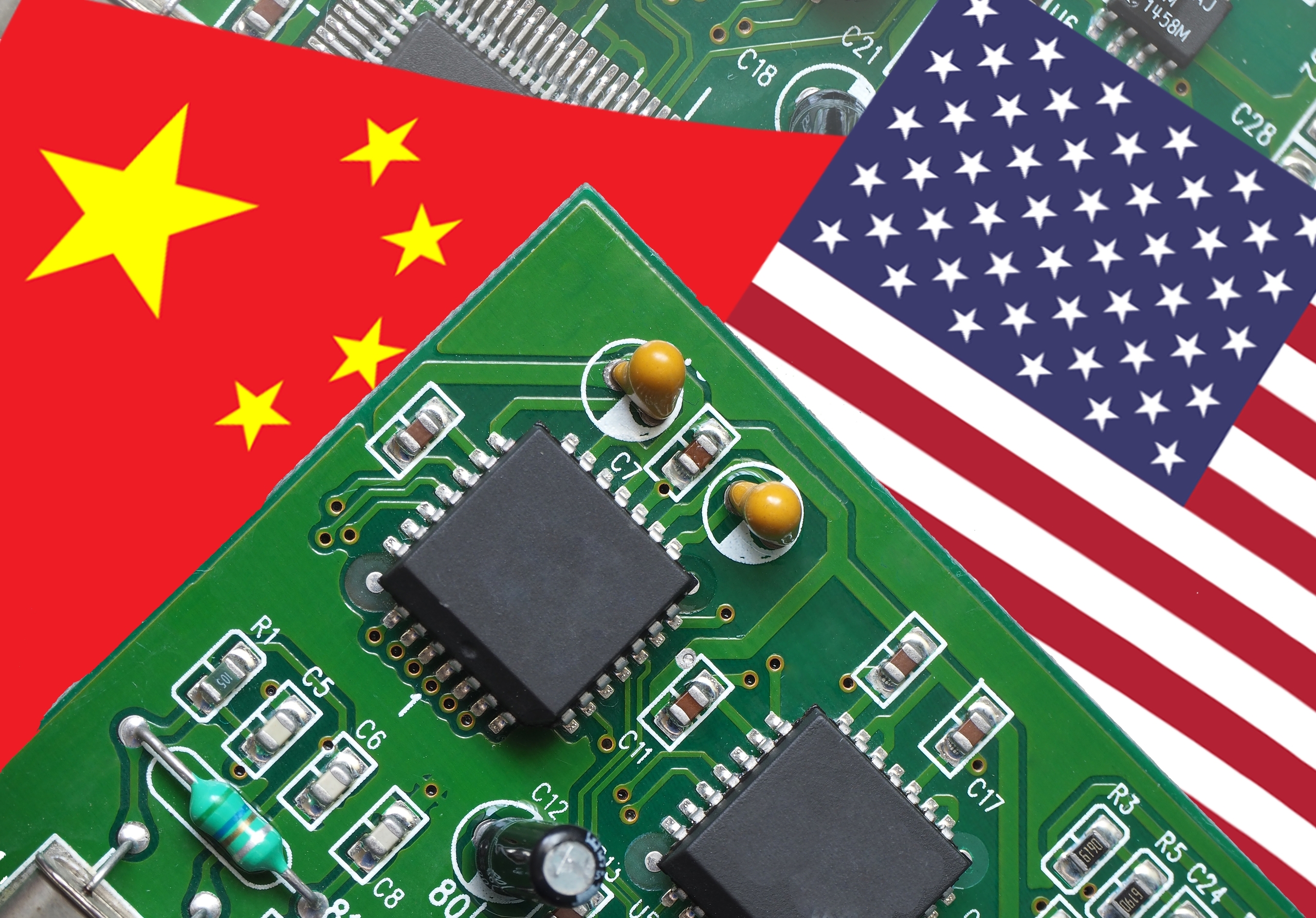
The U.S. Commerce Department issued sweeping export restrictions on Monday, November 16, 2026, to prevent Chinese companies from accessing advanced American artificial intelligence chips remotely through third-country data centers, coinciding with President Donald Trump’s departure for Asia to meet Chinese President Xi Jinping. Crafted by the Treasury Department and the National Security Council, the measure closes a multi-billion-dollar cloud loophole that had persisted following last year’s suspension of Biden-era chip diffusion caps.
Third-Country Licensing Rules Target Remote Compute Loopholes
Under the new interim final rule, overseas data center operators providing significant volumes of computing capacity to entities headquartered in China or other U.S. arms-embargoed nations must apply for federal export licenses within 90 days or face cutoff from American semiconductor supplies. The regulation specifically flags buyers and operators in Singapore, Thailand, Malaysia, Indonesia, and Brazil as carrying an elevated risk of illicitly diverting computing power to Chinese model developers. While formally rescinding the January 2025 AI Diffusion Rule—which imposed broad country-level quotas—the updated directive carves out exemptions for commercial recommendation engines used in online retail and social media.
The policy rollout reflects acute internal friction within the administration following the resignation of Nvidia co-founder Jensen Huang amid scrutiny over ties to Singapore-based data center operator Megaspeed. Treasury Secretary Scott Bessent publicly faulted Commerce Secretary Howard Lutnick—who is accompanying Trump on the trip to Shenzhen—for delaying enforcement after four federal agencies backed blacklisting Megaspeed. Simultaneously, Senate Commerce Committee ranking member Maria Cantwell pressed Lutnick to rigorously police remote cloud leasing, warning that billions of dollars in restricted accelerators had flowed into Southeast Asian clusters serving Chinese artificial intelligence laboratories.
Supply-Chain Realignment and Transmission Channels for Israeli Desks
For global semiconductor vendors and hyperscale cloud operators, the 90-day licensing mandate introduces immediate compliance auditing across Southeast Asian and Latin American data-center deployments. Although exempting consumer e-commerce algorithms preserves baseline commercial cloud revenue, hardware makers face heightened scrutiny over end-user verification and cross-border compute leasing.
For Israeli institutional pension managers and technology allocators on the Tel Aviv Stock Exchange (TASE), Washington’s focus on remote compute governance underscores a structural investment theme. Israel’s deep-tech ecosystem—anchored by cloud workload security, hardware-level encryption, and sovereign data-compliance innovators—stands to capture rising enterprise demand as multinational cloud operators implement strict geographic access controls. Concurrently, with the New Israeli Shekel (NIS) consolidating steadily near 3.17 per dollar against elevated 10-year U.S. Treasury yields near 4.90%, domestic multi-asset desks are favoring asset-light cybersecurity and software compliance leaders over hardware suppliers exposed to Southeast Asian export-licensing delays, balancing equity allocations with domestic sovereign bonds (Shahar).
Outlook: Shenzhen Summit Talks, 90-Day Licensing Windows, and Nvidia Governance
Moving into Thursday’s APEC summit meeting between Trump and Xi in Shenzhen, market participants will monitor whether Beijing threatens retaliatory restrictions on critical minerals or rare-earth processing in response to the chip curbs. Key variables to track over the coming 90 days include the Commerce Department’s approval rate for Southeast Asian data-center license applications, congressional oversight hearings on export enforcement, and boardroom developments at Nvidia following Trump’s remarks expressing openness to Huang’s potential return. If Washington enforces remote compute rules without derailing broader trade stability in Shenzhen, Western cloud providers will consolidate market share; however, any escalation in bilateral tech retaliation would introduce renewed volatility across global semiconductor equities.
Comparison, examination, and analysis between investment houses
Leave your details, and an expert from our team will get back to you as soon as possible
* This article, in whole or in part, does not contain any promise of investment returns, nor does it constitute professional advice to make investments in any particular field.
To read more about the full disclaimer, click here
- orshu
- •
- 7 Min Read
- •
- ago 3 hours
SKN | Institutional Investors Cool on Data Center Stocks as AI Infrastructure Trade Faces Greater Scrutiny
Institutional enthusiasm for data-center stocks weakened in the third quarter, according to a Reuters analysis of nearly 6,400 Securities
- ago 3 hours
- •
- 7 Min Read

Institutional enthusiasm for data-center stocks weakened in the third quarter, according to a Reuters analysis of nearly 6,400 Securities

- Ronny Mor
- •
- 7 Min Read
- •
- ago 3 hours
SKN | Semiconductor Stocks Face Renewed Downside Risk as Recovery Loses Momentum
Semiconductor stocks are showing renewed signs of weakness after another recovery attempt failed to break through a significant technical
- ago 3 hours
- •
- 7 Min Read

Semiconductor stocks are showing renewed signs of weakness after another recovery attempt failed to break through a significant technical

- sagi habasov
- •
- 7 Min Read
- •
- ago 5 hours
SKN | California Sues OpenAI Over AI Models’ Cyberattacks and Safety Oversight
California Challenges OpenAI’s Safety Practices California Attorney General Rob Bonta announced on Monday that his office had sued OpenAI, alleging
- ago 5 hours
- •
- 7 Min Read

California Challenges OpenAI’s Safety Practices California Attorney General Rob Bonta announced on Monday that his office had sued OpenAI, alleging

- Lior mor
- •
- 7 Min Read
- •
- ago 5 hours
SKN | Tesla Plans $3.3 Billion German Expansion as Cybercab Becomes Its Next Growth Bet
Tesla is planning a €3 billion expansion of its German manufacturing operations, positioning its Grünheide factory near Berlin for
- ago 5 hours
- •
- 7 Min Read

Tesla is planning a €3 billion expansion of its German manufacturing operations, positioning its Grünheide factory near Berlin for
