




- Ronny Mor
- •
- 6 Min Read
- •
- 17 hours ago


Key Points
- Fixed-income trading weakened at several major U.S. banks as elevated interest-rate volatility reduced demand for bond transactions.
- Bank of America’s unrealized bond portfolio losses widened to $109 billion in September from $85 billion in June.
- Citigroup bucked its peers, with FICC revenue rising 4%, supported by foreign exchange and spread products.
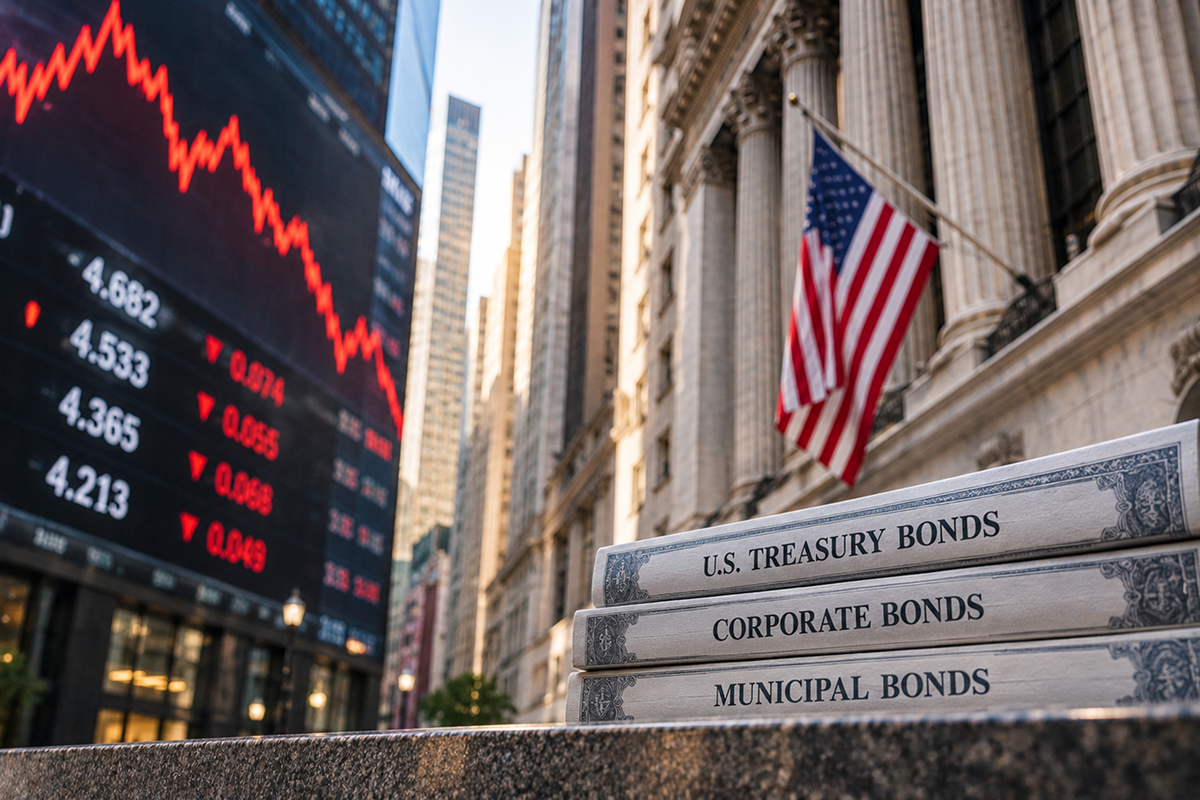
A sharp selloff across global bond markets has begun to affect Wall Street bank earnings, with several major institutions reporting weaker fixed-income trading during the latest quarter. The deterioration came as Treasury yields reached multi-decade highs and investors repeatedly adjusted expectations for the path of interest rates, creating an unusually volatile environment for the world’s largest bond markets.
Interest Rate Volatility Weighs on Bond Trading
The latest earnings results show how the bond-market selloff has moved beyond asset prices and into the operating performance of major financial institutions. Morgan Stanley, JPMorgan and Bank of America all recorded year-on-year declines in fixed-income trading revenue, reflecting weaker activity as investors responded to abrupt changes in interest-rate expectations.
During the quarter, Treasury yields reached multi-decade highs, while some trading sessions saw sharp movements in yields. Such conditions can create opportunities for trading desks, but they can also discourage clients from executing transactions when uncertainty around valuations and financing costs becomes particularly high.
Bank of America Bond Losses Increase
Bank of America provided another indication of the pressure created by higher yields. The bank’s unrealized losses on its bond portfolio widened to $109 billion in September, compared with $85 billion in June.
The increase reflects the impact of changing market values on bond holdings as interest rates rise. Although unrealized losses do not represent the same outcome as realized trading losses, the development remains relevant to investors assessing the sensitivity of large banking balance sheets to movements in Treasury yields and broader fixed-income markets.
Citigroup Delivers a Different Result
Not every major bank experienced the same decline. Citigroup’s FICC revenue increased 4%, supported by activity in foreign exchange and spread products. The result demonstrates that fixed-income, currency and commodities businesses can respond differently depending on the products and markets in which individual banks have stronger positions.
The divergence is important for assessing quarterly bank performance. While broad interest-rate volatility affected the sector, revenue outcomes also depended on client activity, product mix and the ability of individual trading desks to capture demand across different areas of the market.
Equity Strength May Not Be Permanent
The weaker bond-trading performance contrasts with the strong equities trading results reported by several Wall Street banks during the same period. However, Oppenheimer analyst Chris Kotowski warned that the strength in equity trading could prove fleeting, highlighting the uncertainty surrounding the sustainability of trading-driven earnings.
Going forward, investors will closely monitor Treasury yields, the intensity of interest-rate volatility and changes in expectations for monetary policy. The relationship between market turbulence and client trading activity will remain particularly important. If volatility persists at elevated levels, banks could continue experiencing uneven results across asset classes. At the same time, a stabilization in rates could encourage greater transaction activity in fixed income, potentially improving trading conditions. For global investors, the performance of major U.S. banks offers an important window into how changing bond-market conditions are affecting financial institutions more broadly.
Comparison, examination, and analysis between investment houses
Leave your details, and an expert from our team will get back to you as soon as possible
* This article, in whole or in part, does not contain any promise of investment returns, nor does it constitute professional advice to make investments in any particular field.
To read more about the full disclaimer, click here
- Ronny Mor
- •
- 6 Min Read
- •
- ago 26 minutes
SKN | Wall Street Banks Face Capital Markets Lull After Strong First Half of 2026
Wall Street’s largest banks are entering the second half of 2026 with a more cautious capital-markets backdrop after a
- ago 26 minutes
- •
- 6 Min Read
Wall Street’s largest banks are entering the second half of 2026 with a more cautious capital-markets backdrop after a

- Lior mor
- •
- 6 Min Read
- •
- ago 17 hours
SKN | TSMC Heads for Sixth Straight Record Profit as AI Chip Demand Surges
TSMC is expected to extend its record earnings streak on Thursday as accelerating artificial intelligence infrastructure investment continues to drive
- ago 17 hours
- •
- 6 Min Read
TSMC is expected to extend its record earnings streak on Thursday as accelerating artificial intelligence infrastructure investment continues to drive

- omer bar
- •
- 6 Min Read
- •
- ago 17 hours
SKN | Dollar Hits 18-Month High as Hot Inflation Revives Fed Rate-Hike Bets
The U.S. dollar reached an 18-month high on Wednesday after hotter-than-expected inflation data temporarily strengthened expectations for a Federal
- ago 17 hours
- •
- 6 Min Read

The U.S. dollar reached an 18-month high on Wednesday after hotter-than-expected inflation data temporarily strengthened expectations for a Federal

- sagi habasov
- •
- 6 Min Read
- •
- ago 17 hours
SKN | BlackRock Draws $205 Billion in Client Funds as Quarterly Profit Beats Estimates
BlackRock delivered stronger-than-expected third-quarter results as resilient U.S. equity markets supported asset growth and investor inflows. The world’s largest
- ago 17 hours
- •
- 6 Min Read
BlackRock delivered stronger-than-expected third-quarter results as resilient U.S. equity markets supported asset growth and investor inflows. The world’s largest
