




- orshu
- •
- 7 Min Read
- •
- 55 seconds ago


Key Points
- The KOSPI Composite Index closed at 4,968.48 on November 17, falling 132.02 points, or 2.59%.
- The decline pushed South Korea’s benchmark equity index below the psychologically significant 5,000 level for the first time since February 2026.
- The sell-off raises questions about near-term market sentiment and the resilience of South Korean equities amid changing global investment conditions.
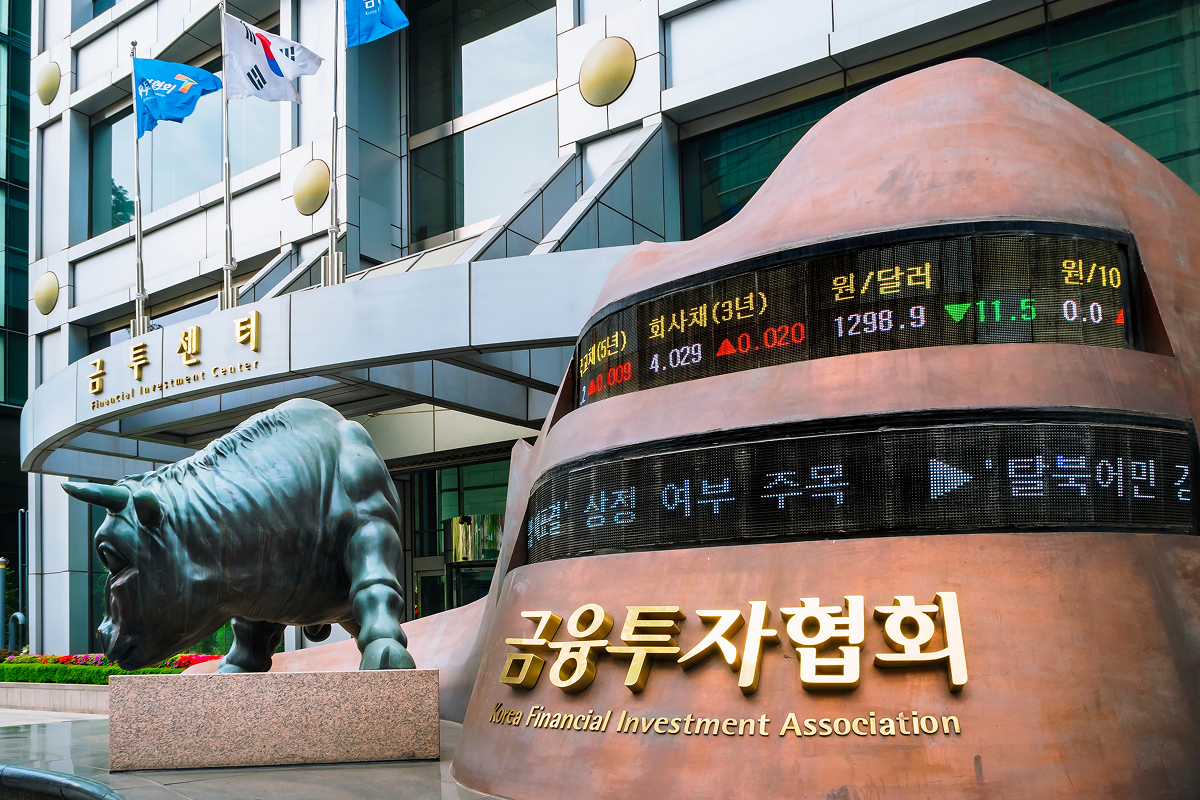
South Korea’s equity market experienced a significant setback on November 17, with the KOSPI Composite Index falling below the 5,000 threshold for the first time since February 2026. The decline highlights renewed pressure on one of Asia’s major equity markets and places investor attention on whether the latest weakness represents a temporary correction or a broader deterioration in market sentiment.
KOSPI Breaks Below a Key Psychological Level
The KOSPI closed at 4,968.48, down 132.02 points, equivalent to a decline of 2.59%. The previous closing level was 5,100.50, meaning the index surrendered more than 130 points during the trading session.
The move below 5,000 is significant beyond the numerical decline. Major index thresholds often serve as psychological reference points for investors, influencing market expectations and short-term trading decisions. A sustained move below this level could reinforce caution among market participants, particularly if subsequent sessions fail to establish a recovery.
Nevertheless, a single trading session does not establish a longer-term market trend. The duration and depth of the decline will be important in determining whether the breach represents a temporary setback or the beginning of a more persistent correction.
Intraday Weakness Signals Selling Pressure
The trading chart shows that the KOSPI faced difficulty maintaining its earlier levels throughout the session. After opening around the 5,000 region, the index briefly moved higher, approaching the 5,050–5,060 area during the morning. However, the upward movement failed to hold, and the benchmark gradually weakened during the afternoon.
By the final trading hours, the index had moved decisively below 5,000, ending the session close to its intraday lows. This pattern indicates that selling pressure persisted rather than being fully offset by late-session buying activity.
The closing decline of 2.59% also represents a meaningful daily move for a major national benchmark. However, the available market snapshot does not identify the sectors, individual companies or specific catalysts responsible for the decline. Further market data would be needed to determine whether the weakness was concentrated in particular industries or reflected broader selling across the Korean equity market.
What the Decline Means for South Korean Equities
South Korea occupies an important position in global financial markets, particularly through its exposure to technology, semiconductor manufacturing and international trade. Consequently, movements in the KOSPI can attract attention beyond domestic investors, as changes in Korean equity valuations may reflect broader expectations surrounding global demand, technology spending and regional economic conditions.
The breach of 5,000 also introduces a new reference point for market participants assessing the index’s near-term direction. Investors will be watching whether the benchmark can regain the threshold or whether it becomes an area of resistance during any recovery attempt. A sustained recovery above 5,000 could help stabilize sentiment, while continued weakness would increase attention on lower trading levels and the possibility of further volatility.
For international investors, the development also reinforces the importance of monitoring regional equity markets alongside movements in major US and European benchmarks. South Korea’s market performance can provide additional insight into how investors are positioning themselves toward Asian technology and export-oriented companies.
Looking ahead, the KOSPI’s ability to stabilize after its November 17 decline will be a key indicator of market confidence. The next sessions should provide greater clarity on whether investors view the move below 5,000 as an opportunity to reassess valuations or as a signal to reduce exposure to Korean equities. Sector performance, trading volumes, foreign investor activity and developments in global technology markets will be particularly important in evaluating the index’s next direction.
Comparison, examination, and analysis between investment houses
Leave your details, and an expert from our team will get back to you as soon as possible
* This article, in whole or in part, does not contain any promise of investment returns, nor does it constitute professional advice to make investments in any particular field.
To read more about the full disclaimer, click here
- sagi habasov
- •
- 8 Min Read
- •
- ago 20 seconds
SKN | SpaceX Targets a New AI Infrastructure Market as Orbital Computing Moves Toward Commercial Development
SpaceX is positioning itself to become a significant participant in the rapidly expanding artificial intelligence infrastructure market, with ambitions
- ago 20 seconds
- •
- 8 Min Read

SpaceX is positioning itself to become a significant participant in the rapidly expanding artificial intelligence infrastructure market, with ambitions

- Lior mor
- •
- 9 Min Read
- •
- ago 41 seconds
SKN | Google Secures 50 MW of Superhot Geothermal Power in $500 Million-Plus Deal to Support AI Data Centers
Google is expanding its long-term energy strategy through a new geothermal agreement with Quaise Energy, securing access to 50
- ago 41 seconds
- •
- 9 Min Read

Google is expanding its long-term energy strategy through a new geothermal agreement with Quaise Energy, securing access to 50

- orshu
- •
- 7 Min Read
- •
- ago 3 hours
SKN | European Markets Close Lower as Major Equity Indices Face Broad-Based Declines
European markets closed on November 17 with a broadly negative performance, as equity losses extended across major national and
- ago 3 hours
- •
- 7 Min Read
European markets closed on November 17 with a broadly negative performance, as equity losses extended across major national and
- orshu
- •
- 8 Min Read
- •
- ago 4 hours
SKN | Tel Aviv Stocks Stabilize as TA-35 Edges Higher and Trading Remains Mixed
Israeli Equities Show Limited Stabilization The Tel Aviv Stock Exchange delivered a mixed performance on November 17, with modest gains
- ago 4 hours
- •
- 8 Min Read
Israeli Equities Show Limited Stabilization The Tel Aviv Stock Exchange delivered a mixed performance on November 17, with modest gains
