




- orshu
- •
- 8 Min Read
- •
- 2 minutes ago


Key Points
- The Tel Aviv-35 gained 0.08% to 3,978.42 on November 17, while the Tel Aviv-125 edged up 0.01% to 3,869.15, indicating limited stabilization after the previous session's losses.
- Market performance remained mixed. The Tel Aviv-90 advanced 0.03%, while the Tel Aviv-SME60 declined 0.18% and the Tel Aviv-200 fell 0.10%. The Tel Aviv-20 recorded the strongest gain among the listed benchmarks at 0.38%.
- Stock turnover reached approximately NIS 4.32 billion, while bond turnover totaled approximately NIS 6.66 billion. Max Stock surged 10.15%, while Nice declined 5.36%.
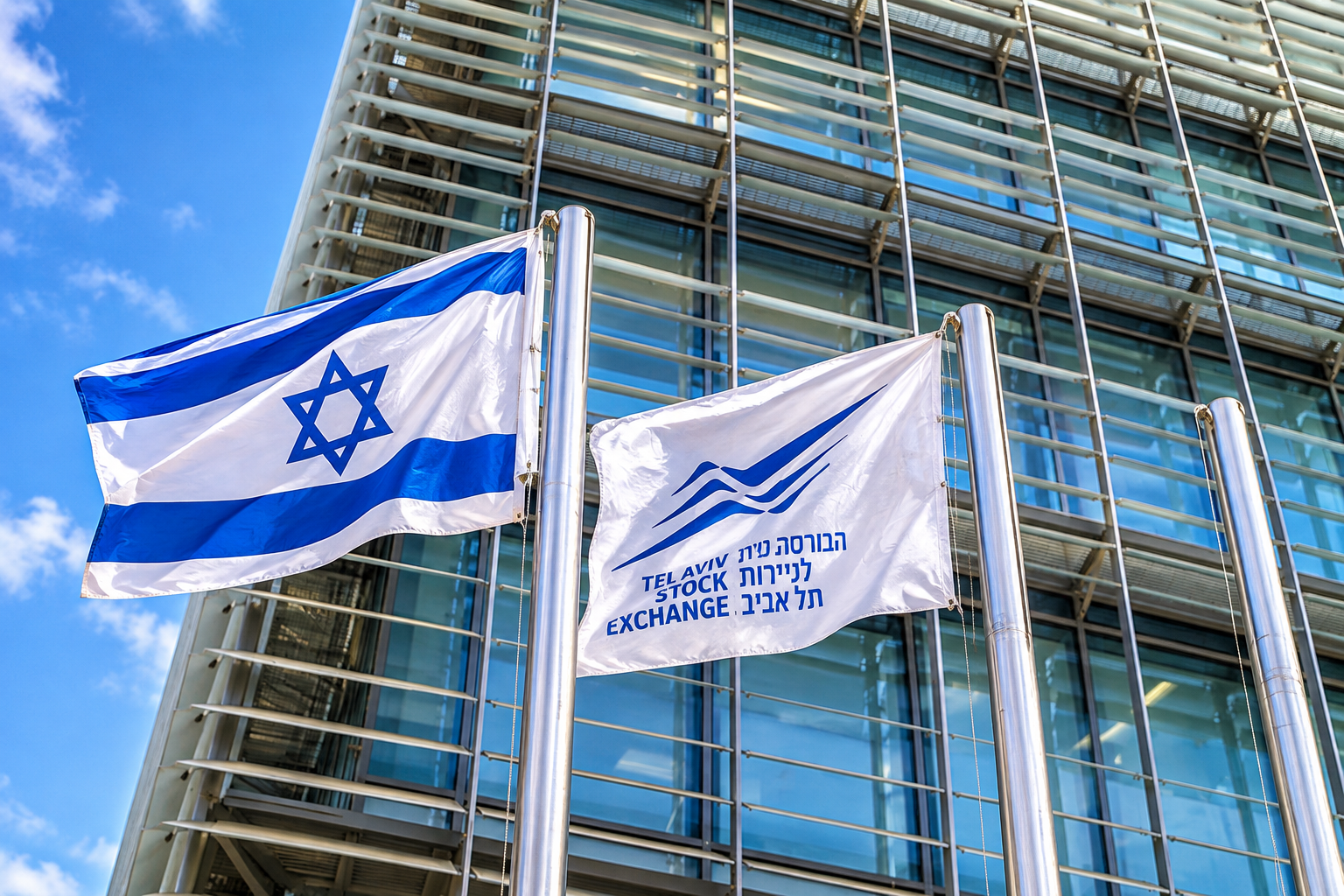
Israeli Equities Show Limited Stabilization
The Tel Aviv Stock Exchange delivered a mixed performance on November 17, with modest gains in the leading benchmarks following the previous session’s broad decline. The Tel Aviv-35 advanced 0.08% to 3,978.42, while the Tel Aviv-125 edged higher by 0.01% to 3,869.15. The Tel Aviv-90 also recorded a marginal gain of 0.03%, closing at 3,560.61.
The latest session suggests a pause in the recent selling pressure rather than a decisive recovery. The Tel Aviv-35 remained below the 4,000 level, while the Tel Aviv-125 continued to trade below 3,900.
Performance across the remaining benchmarks was divided. The Tel Aviv-20 gained 0.38% to 3,784.04, leading the listed indices. The Tel Aviv-90 and Banks index advanced 0.16% to 3,778.82. In contrast, the Tel Aviv-SME60 declined 0.18% to 1,167.56, while the Tel Aviv-200 lost 0.10% to 3,713.82. The Tel Aviv Sector-Balance index also decreased 0.10% to 4,423.05.
The narrow movements across the major benchmarks indicate that the market remained relatively cautious, with neither buyers nor sellers establishing a decisive direction.
Market Breadth Remains Negative
Advance-decline figures show that the modest gains in the leading indices were not accompanied by broad market participation.
The Tel Aviv-35 recorded 17 advancing securities against 18 declining securities. Within the Tel Aviv-125, 54 securities advanced while 70 declined. The Tel Aviv-90 registered 37 advances compared with 52 declines.
The broader indices also showed more declining than advancing securities. The Tel Aviv-200 recorded 80 advances and 117 declines, while the Tel Aviv-SME60 reported 23 advancing securities against 36 declining securities. The Tel Aviv Sector-Balance index registered 44 advances and 55 declines.
The Tel Aviv-20 was a notable exception, with 12 advancing securities and eight declining securities. The Tel Aviv-90 and Banks index recorded 41 advances against 53 declines.
Overall, the figures suggest that the slight gains in the headline indices were supported by selected constituents, while broader market participation remained tilted toward declining securities.
Trading Activity and Bond Turnover
Stock turnover reached approximately NIS 4.32 billion, based on reported activity of NIS 4.321 billion. Bond turnover totaled approximately NIS 6.66 billion, exceeding equity trading activity by around NIS 2.34 billion.
The higher bond turnover highlights the relative importance of fixed-income trading during the session. However, the available figures do not establish whether the activity reflected portfolio rebalancing, institutional transactions, or changes in investor positioning.
The supplied index table does not include individual index turnover figures, limiting comparisons of activity across the different equity benchmarks.
Individual Stocks Show Significant Divergence
Among the reported Tel Aviv-125 constituents, Max Stock surged 10.15% to 3,700, making it the strongest reported gainer. Nice declined 5.36% to 29,300, recording the largest reported decrease.
National recorded approximately NIS 339.02 million in turnover, making it a notable individual trading figure during the session.
The contrasting performances demonstrate that individual-stock movements remained substantial despite the limited changes in the headline indices. The supplied data does not identify the specific catalysts behind these movements.
What Investors Should Watch Next
The next sessions will help determine whether the Tel Aviv-35 can reclaim and sustain the 4,000 level and whether the Tel Aviv-125 can move back above 3,900. The performance of the Tel Aviv-90 will also be important in assessing whether mid-cap stocks can maintain their relative stability.
Market breadth remains a key indicator. A sustained improvement in advancing securities would provide stronger evidence of a broader recovery, while continued negative breadth could suggest that the latest gains remain concentrated in selected companies.
Investors may also monitor bond turnover, which remained substantially higher than equity activity, alongside individual-stock volatility and the performance of the banking and technology-related segments.
Closing Insights
The November 17 session brought limited stabilization to Israeli equities, with marginal gains in the Tel Aviv-35, Tel Aviv-125, and Tel Aviv-90. However, declining securities outnumbered advancing securities across most benchmarks, indicating that broader market weakness had not fully eased. With bond turnover reaching approximately NIS 6.66 billion, the next sessions will be important in determining whether the market can develop a more sustained recovery.
Comparison, examination, and analysis between investment houses
Leave your details, and an expert from our team will get back to you as soon as possible
* This article, in whole or in part, does not contain any promise of investment returns, nor does it constitute professional advice to make investments in any particular field.
To read more about the full disclaimer, click here
- orshu
- •
- 8 Min Read
- •
- ago 2 hours
SKN | US Markets Trade Lower as Dow Leads Declines While Brazil’s IBOVESPA Advances
US financial markets were trading predominantly lower on November 17, as modest declines across major equity benchmarks reflected a
- ago 2 hours
- •
- 8 Min Read

US financial markets were trading predominantly lower on November 17, as modest declines across major equity benchmarks reflected a
- orshu
- •
- 6 Min Read
- •
- ago 6 hours
SKN | Asian Markets Extend Declines on November 17, 2026 as KOSPI Falls 2.59% Below 5,000
Asian Markets Extend Regional Declines Asian markets recorded another broadly negative session on November 17, 2026, as selling pressure continued
- ago 6 hours
- •
- 6 Min Read

Asian Markets Extend Regional Declines Asian markets recorded another broadly negative session on November 17, 2026, as selling pressure continued
- orshu
- •
- 3 Min Read
- •
- ago 8 hours
SKN | European Markets Edge Lower as Major Benchmarks Record Modest Losses
Major European Equity Benchmarks Move Lower The declines were relatively consistent across the major European indexes, with the CAC 40,
- ago 8 hours
- •
- 3 Min Read

Major European Equity Benchmarks Move Lower The declines were relatively consistent across the major European indexes, with the CAC 40,

- Lior mor
- •
- 6 Min Read
- •
- ago 14 hours
SKN | Wall Street Tumbles 2.5% on Nasdaq Ahead of Nvidia Earnings and Anthropic IPO: Are AI Valuations Reaching a Breaking Point?
U.S. equities suffered a broad sell-off on Monday, November 16, 2026, with the Nasdaq Composite slumping 2.5% as renewed anxiety
- ago 14 hours
- •
- 6 Min Read

U.S. equities suffered a broad sell-off on Monday, November 16, 2026, with the Nasdaq Composite slumping 2.5% as renewed anxiety
