




- Lior mor
- •
- 6 Min Read
- •
- 3 hours ago


Key Points
- OPEC+ production rose by about 900,000 barrels per day in September to an average of 39.07 million barrels per day.
- Saudi Arabia reported an increase of more than 2 million barrels per day in September output despite disruptions to shipments through the Strait of Hormuz.
- OPEC raised its 2027 oil demand outlook, citing the need to rebuild global inventories.
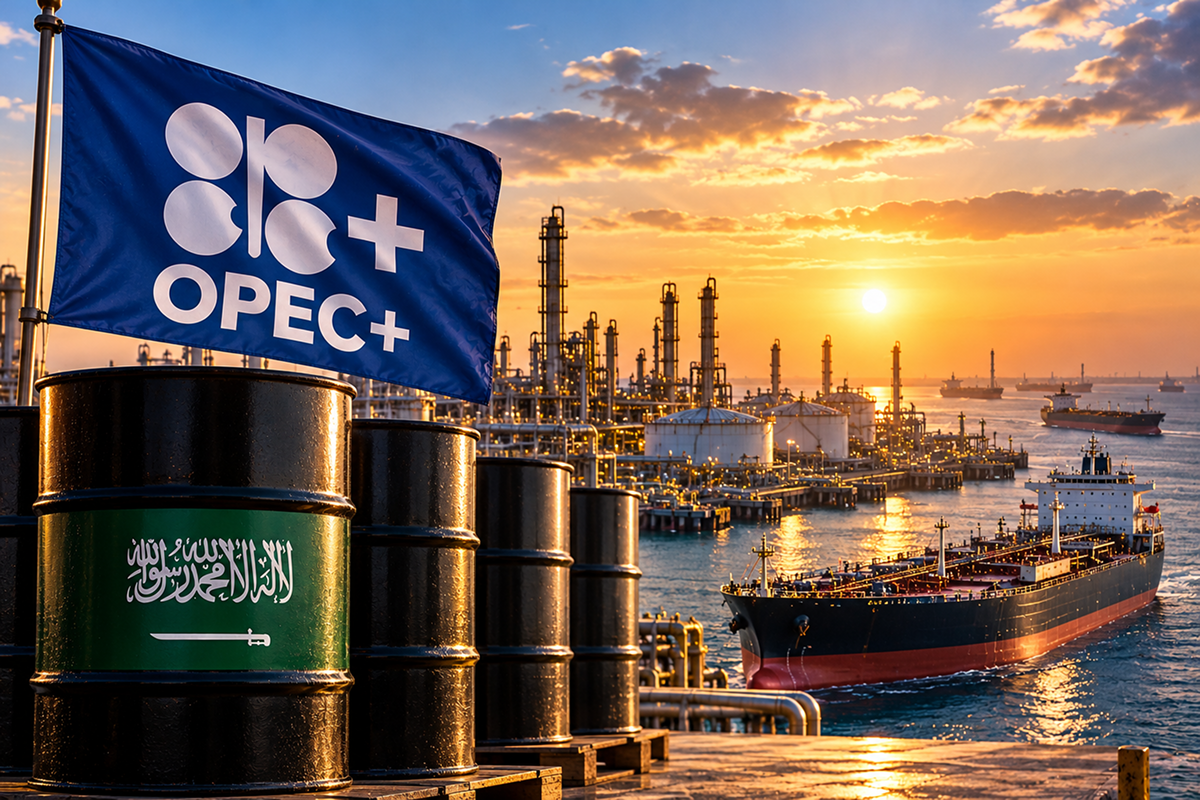
OPEC+ sharply increased oil production in September despite continued disruption to shipments through the Strait of Hormuz caused by the Iran war. The increase, led by Saudi Arabia, comes as energy markets balance physical supply risks against efforts by major producers to maintain adequate global oil availability.
OPEC+ Production Rises Sharply
OPEC said OPEC+, which combines the Organization of the Petroleum Exporting Countries with allied producers including Russia, pumped an average of 39.07 million barrels per day in September. That represented an increase of approximately 900,000 barrels per day from August, marking a significant monthly rise in production.
The scale of the increase is notable because the group was operating against a backdrop of continued logistical disruption. Shipments through the Strait of Hormuz remained affected by the Iran war, creating additional uncertainty around the movement of crude and other energy products through one of the world’s important oil transit routes.
Saudi Arabia Leads the Production Increase
Saudi Arabia was the main driver behind the production increase, reporting that its September output rose by more than 2 million barrels per day. The increase stands out against the broader supply disruption and demonstrates the importance of Saudi production capacity within the OPEC+ framework.
The divergence between higher production and transportation difficulties is particularly important for global energy markets. Higher crude output can support physical supply, but disruptions along key shipping routes can still complicate the delivery of that supply to international consumers. As a result, production figures alone do not fully determine near-term market conditions.
OPEC Raises 2027 Demand Outlook
Alongside the production data, OPEC raised its view of oil demand in 2027, pointing to the need to rebuild global inventories. The revision introduces a longer-term dimension to the group’s assessment, suggesting that additional supply may be required as consumption develops and inventories are replenished.
The inventory issue is significant because stock levels provide an important buffer against unexpected disruptions. A period of stronger production can help rebuild those buffers, potentially improving the resilience of global energy markets. At the same time, the continuing risks surrounding transportation routes mean that physical availability can remain sensitive to geopolitical developments.
Energy Markets Face a Complex Supply Balance
For global investors, the latest OPEC+ figures underline the tension between rising production and geopolitical supply risks. Saudi Arabia’s increase provides additional barrels to the market, while the Iran war and disruption around the Strait of Hormuz continue to create uncertainty over how efficiently crude can reach buyers.
Markets will therefore be watching subsequent OPEC+ production data, developments affecting the Strait of Hormuz and progress in rebuilding global inventories. The group’s upgraded 2027 demand outlook also places greater emphasis on the balance between future consumption and available supply. How that balance develops will remain important for crude prices, inflation expectations and the broader outlook for energy-intensive economies.
Comparison, examination, and analysis between investment houses
Leave your details, and an expert from our team will get back to you as soon as possible
* This article, in whole or in part, does not contain any promise of investment returns, nor does it constitute professional advice to make investments in any particular field.
To read more about the full disclaimer, click here
- Ronny Mor
- •
- 7 Min Read
- •
- ago 13 minutes
SKN | How Singapore’s Central Bank Manages Monetary Policy by Targeting the Currency, Not Interest Rates
Most central banks use interest rates as their main tool for controlling inflation, but Singapore takes a different approach. Since
- ago 13 minutes
- •
- 7 Min Read

Most central banks use interest rates as their main tool for controlling inflation, but Singapore takes a different approach. Since

- sagi habasov
- •
- 7 Min Read
- •
- ago 23 minutes
SKN | Middle East LNG Disruptions Tighten Global Gas Supply and Reshape Markets
The disruption of liquefied natural gas (LNG) exports from the Middle East is reshaping global gas markets, turning a period
- ago 23 minutes
- •
- 7 Min Read
The disruption of liquefied natural gas (LNG) exports from the Middle East is reshaping global gas markets, turning a period

- omer bar
- •
- 7 Min Read
- •
- ago 29 minutes
SKN | Guyana Oil Exports Set to Exceed 1 Million Barrels a Day, Boosting Global Supply
Guyana is approaching a milestone that could reshape its role in the global oil industry, with crude exports expected to
- ago 29 minutes
- •
- 7 Min Read

Guyana is approaching a milestone that could reshape its role in the global oil industry, with crude exports expected to

- Arik Arkadi Sluzki
- •
- 7 Min Read
- •
- ago 4 hours
SKN | Fed’s Williams Sees No Need for 2027 Rate Hike as Inflation Gradually Cools
New York Federal Reserve President John Williams said he currently sees no need for additional interest-rate increases in 2027,
- ago 4 hours
- •
- 7 Min Read

New York Federal Reserve President John Williams said he currently sees no need for additional interest-rate increases in 2027,
