




- Ronny Mor
- •
- 7 Min Read
- •
- 1 minute ago


Key Points
- Fed Governor Michael Barr said further policy adjustments are likely to be needed as inflation remains above target and economic growth stays firm.
- The S&P Global Composite PMI climbed to 58.4 in September, its highest level since July 2021, while business input-price pressures reached a nearly four-year high.
- Markets increased expectations for another Fed rate hike in October, while the 10-year Treasury yield moved back above 5% and 30-year mortgage rates reached a more than two-year high.
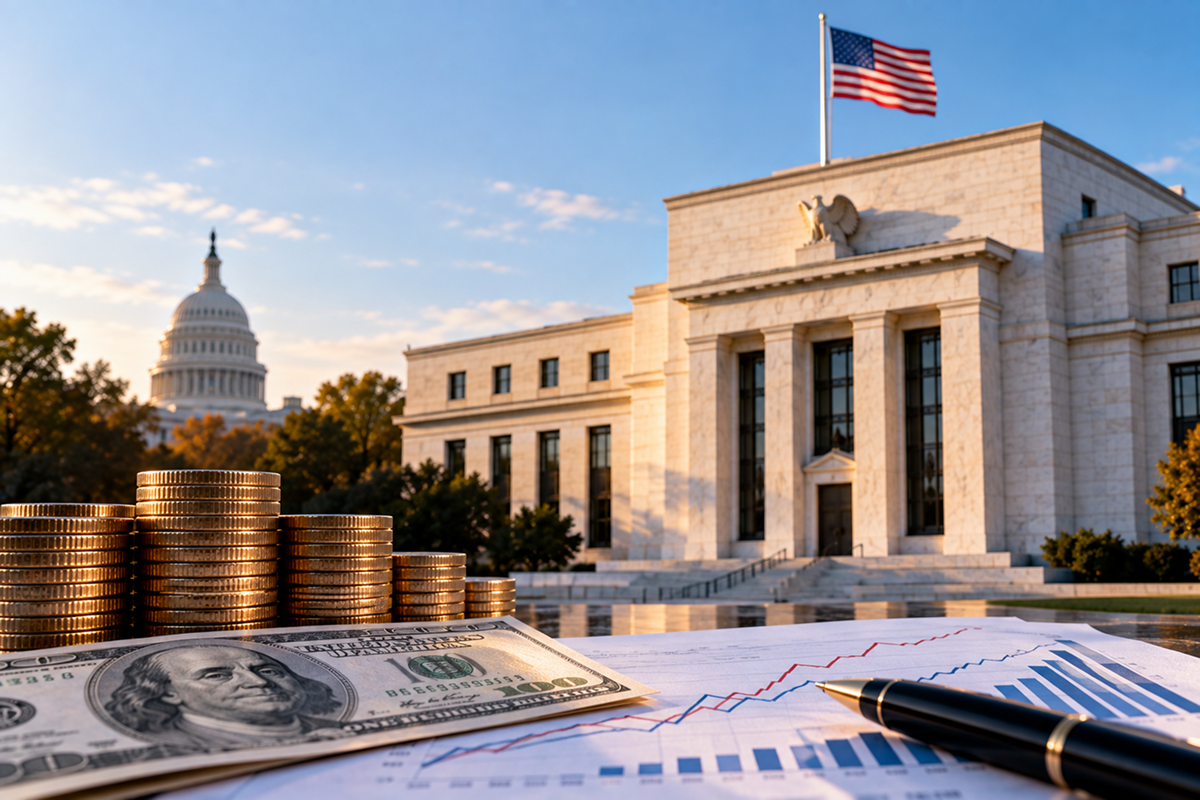
Rising inflation pressures and resilient U.S. economic activity are increasing the prospect of another Federal Reserve rate increase just days before the country enters the final stretch toward its November midterm elections. The combination of stronger business activity, higher energy costs and persistent price pressures has shifted market expectations toward another tightening move after the Fed raised its policy rate last week.
Strong Business Activity Complicates the Fed’s Policy Path
The latest economic data point to an economy that is maintaining considerable momentum. The S&P Global U.S. Composite PMI Output Index rose to 58.4 in September from 56.0 in August, its highest reading since July 2021. New orders also reached their strongest level since March 2022, while work backlogs climbed to their highest level since May 2022, indicating that demand is placing additional pressure on business capacity.
The same survey, however, showed a significant increase in costs. The measure of prices paid by businesses for inputs reached its highest level in nearly four years, while supplier delivery times lengthened sharply. The combination of stronger demand and higher input costs presents a more difficult environment for policymakers seeking to return inflation to the Federal Reserve’s 2% target.
Barr Signals Further Policy Adjustments
Fed Governor Michael Barr said Wednesday that further policy adjustments would likely be required to bring inflation back to target in a timely manner. Barr said inflation risks had increased while labor-market risks had receded, supporting the Federal Open Market Committee’s decision last week to raise the federal funds target range by a quarter percentage point to 3.75% to 4.00%.
Barr’s remarks are significant because they provide a relatively clear indication that the September increase may not be the final move in the current tightening cycle. At the September meeting, policymakers unanimously raised rates, while Reuters reported that 16 of 18 officials indicated they expected at least one additional increase before the end of 2026.
Energy Costs Add a Second Inflation Channel
Energy markets are adding another layer of pressure. Brent crude rose about 2% to $101.09 a barrel on Wednesday as disruptions associated with the conflict involving Iran continued to affect supply. U.S. diesel prices also moved above $6.50 a gallon on average, creating potential second-round effects because diesel is widely used by trucks, farms and industrial equipment.
Chicago Fed President Austan Goolsbee separately warned that the central bank may need to treat the current energy shock as potentially persistent rather than assuming prices will quickly normalize. “So we better be careful,” he said, highlighting the risk that temporary supply disruptions could become embedded in broader inflation expectations.
Bond Yields and Mortgage Rates Reflect the Shift
Financial markets have already begun adjusting to the possibility of additional tightening. Short-term interest-rate futures were pricing approximately a 70% probability of another rate increase at the October 27–28 meeting, up from around 55% earlier Wednesday. The benchmark 10-year Treasury yield also moved back above 5%, reaching its highest level since 2007, while the average 30-year fixed mortgage rate rose to 7.12%, its highest level in more than two years.
The timing creates an additional policy sensitivity because the next Fed decision comes shortly before the November 3 U.S. midterm elections. The central bank’s mandate remains focused on inflation and employment rather than electoral considerations, but higher borrowing costs and affordability pressures could become more visible in the economy as the election approaches. Investors will therefore be watching inflation data, energy prices, Treasury yields and labor-market conditions closely as the Fed determines whether another rate increase is warranted.
Comparison, examination, and analysis between investment houses
Leave your details, and an expert from our team will get back to you as soon as possible
* This article, in whole or in part, does not contain any promise of investment returns, nor does it constitute professional advice to make investments in any particular field.
To read more about the full disclaimer, click here
- orshu
- •
- 7 Min Read
- •
- ago 41 seconds
SKN | ECB Sees Limited Wage Pressure Despite Surging Inflation, Keeping Rate Outlook in Focus
The European Central Bank is seeing limited evidence that this year's sharp energy-price shock is translating into significantly higher
- ago 41 seconds
- •
- 7 Min Read
The European Central Bank is seeing limited evidence that this year's sharp energy-price shock is translating into significantly higher

- omer bar
- •
- 7 Min Read
- •
- ago 57 seconds
SKN | Dollar Nears Two-Month High as Fed Rate Hike Expectations and Inflation Risks Rise
The U.S. dollar advanced to a nearly two-month high on Wednesday as investors reassessed the Federal Reserve's interest-rate path
- ago 57 seconds
- •
- 7 Min Read

The U.S. dollar advanced to a nearly two-month high on Wednesday as investors reassessed the Federal Reserve's interest-rate path
- omer bar
- •
- 6 Min Read
- •
- ago 11 minutes
SKN | U.S. 30-Year Treasury Yield Surges Above 5.4% as Bond Market Comes Under Renewed Pressure
Long-Term Treasury Yields Are Moving Higher The 30-year Treasury market experienced a significant selloff during the September 23 session. The
- ago 11 minutes
- •
- 6 Min Read

Long-Term Treasury Yields Are Moving Higher The 30-year Treasury market experienced a significant selloff during the September 23 session. The

- Arik Arkadi Sluzki
- •
- 7 Min Read
- •
- ago 52 minutes
SKN | Is 6% the New Threshold for U.S. Treasury Market Stress?
The 5% level on the benchmark U.S. 10-year Treasury yield was once regarded as a major psychological barrier for
- ago 52 minutes
- •
- 7 Min Read

The 5% level on the benchmark U.S. 10-year Treasury yield was once regarded as a major psychological barrier for
