





- Ronny Mor
- •
- 8 Min Read
- •
- 6 minutes ago


Key Points
- Project Braid, the Google-Blackstone AI cloud venture, is facing delays at several planned data-center sites as it prepares to deploy Google TPUs to customers.
- The venture remains targeted to deliver 500 MW of computing capacity in 2027, backed by Blackstone’s initial $5 billion equity commitment.
- Site-development problems highlight a broader constraint on AI infrastructure: chips alone are insufficient without power, transformers, cooling and data-center capacity.

Google and Blackstone’s $5 billion AI infrastructure venture is encountering delays at several planned data-center locations, according to the Bloomberg report cited in the source material. The setbacks come as the companies prepare to rent Google’s Tensor Processing Units, or TPUs, to customers from 2027, highlighting how physical infrastructure is increasingly becoming a limiting factor in the global AI buildout.
Project Braid’s Ambitious AI Infrastructure Plan
Project Braid was established as a joint venture designed to make Google’s proprietary AI processors available outside the traditional Google Cloud platform. Blackstone committed an initial $5 billion of equity, while Google is supplying TPUs as well as software and services. The venture originally targeted approximately 500 megawatts of capacity in 2027, with the intention of scaling significantly beyond the initial deployment.
The structure is strategically important for Google because it creates another commercial channel for its custom AI silicon. Google’s TPUs are designed specifically for AI training and inference and already power major workloads within the company’s own ecosystem. By placing those chips in a separate cloud business, Google can expand their availability while using external capital and infrastructure expertise to support the physical buildout.
Data-Center Construction Is Emerging as the Critical Bottleneck
The reported delays demonstrate that the AI infrastructure race is increasingly constrained by factors outside semiconductor manufacturing. One planned Wyoming location reportedly required Google to take over development after an earlier arrangement with Crusoe was abandoned, while another site lacked the necessary electrical transformers. In Texas, a freeze on new data-center projects has also disrupted development plans.
These issues reflect a broader challenge facing hyperscalers, neocloud operators and infrastructure investors. Securing advanced processors does not automatically translate into usable computing capacity. Operators must simultaneously obtain electricity, transmission connections, transformers, cooling systems, suitable land and regulatory approvals. Any disruption in one part of that chain can delay the entire deployment schedule.
Google’s TPU Strategy Gains Importance as AI Demand Accelerates
Despite the setbacks, Project Braid reportedly remains on track to deliver its targeted 500 MW of capacity and has identified 29 potential sites, with demand reportedly running ahead of expectations. That combination suggests that the immediate challenge is less about finding customers and more about converting contracted or anticipated demand into operational infrastructure.
For Google, the venture also represents a way to broaden the commercial reach of TPUs at a time when the AI-compute market remains heavily concentrated around Nvidia’s GPU ecosystem. Google has invested for years in its own accelerators, and expanding external access could create an additional revenue channel while giving AI developers another hardware option.
For Blackstone, meanwhile, Project Braid fits into a much larger strategy around digital infrastructure and data centers. The asset manager has been increasing its exposure to data centers and related power infrastructure, positioning private capital to finance the enormous physical investment required by the AI economy.
Execution Risk Could Become More Important Than Chip Supply
The reported decline in confidence around data-center delivery timelines is particularly significant. Executives involved in the project now reportedly assume that data-center developments have only about a 50% chance of hitting their original delivery dates, compared with roughly 90% three years ago. The shift illustrates how rapidly rising demand has increased pressure on construction schedules, grid connections and equipment supply chains.
For investors, the next phase of Project Braid will therefore be measured less by the headline size of its capital commitment and more by actual megawatts brought online. Site approvals, transformer availability, power contracts, construction milestones and the timing of customer deployments will provide a clearer indication of whether the venture can convert its planned infrastructure into operating capacity.
Project Braid’s delays do not necessarily undermine the long-term economics of AI infrastructure, particularly if customer demand continues to exceed available capacity. However, they underscore a structural risk across the sector: AI investment increasingly depends on the speed at which physical infrastructure can be built. Google and Blackstone’s ability to resolve site, power and equipment constraints while maintaining the 2027 capacity target will be an important test of whether private capital and hyperscaler technology can keep pace with the accelerating requirements of the AI economy.
Comparison, examination, and analysis between investment houses
Leave your details, and an expert from our team will get back to you as soon as possible
* This article, in whole or in part, does not contain any promise of investment returns, nor does it constitute professional advice to make investments in any particular field.
To read more about the full disclaimer, click here
- fidji
- •
- 7 Min Read
- •
- ago 2 minutes
SKN | Can SAP’s AI Platform Deliver the Breakthrough Investors Are Waiting For?
SAP Bets on a New AI Platform to Change the Narrative SAP is attempting to reset investor expectations around its
- ago 2 minutes
- •
- 7 Min Read

SAP Bets on a New AI Platform to Change the Narrative SAP is attempting to reset investor expectations around its

- orshu
- •
- 8 Min Read
- •
- ago 5 minutes
SKN | OPEC+ Loses Its Grip on Oil Markets: Has the Era of Cartel-Driven Pricing Changed?
OPEC+ remains one of the world's largest coordinated oil-producing groups, but its ability to directly control global crude prices
- ago 5 minutes
- •
- 8 Min Read
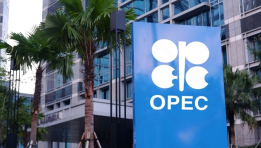
OPEC+ remains one of the world's largest coordinated oil-producing groups, but its ability to directly control global crude prices

- Arik Arkadi Sluzki
- •
- 8 Min Read
- •
- ago 5 minutes
SKN | ChatGPT Surpasses 1 Billion Monthly Mobile Users: Can OpenAI Convert Scale Into Enterprise Growth?
ChatGPT has crossed a major usage threshold, with Similarweb data indicating that monthly active users of its iPhone and
- ago 5 minutes
- •
- 8 Min Read

ChatGPT has crossed a major usage threshold, with Similarweb data indicating that monthly active users of its iPhone and

- Lior mor
- •
- 9 Min Read
- •
- ago 6 minutes
SKN | Reddit Says Google Search Still Needs Its Content: Can RDDT Turn Human Engagement Into Greater Bargaining Power?
Reddit is entering a strategically important phase in its relationship with Google as artificial intelligence reshapes how consumers discover
- ago 6 minutes
- •
- 9 Min Read

Reddit is entering a strategically important phase in its relationship with Google as artificial intelligence reshapes how consumers discover

