


- orshu
- •
- 5 Min Read
- •
- 7 months ago
Key Points
- Gold prices have climbed steadily, reaching around US$3,347 per ounce, supported by soft U.S. economic data and a weaker dollar.
- Deteriorating U.S. growth prospects and easing real yields are strengthening gold’s appeal as a non‑yield alternative in volatile markets.
- Investors remain attentive to how inflation, central‑bank policy, and currency trends will shape gold’s medium‑term outlook.
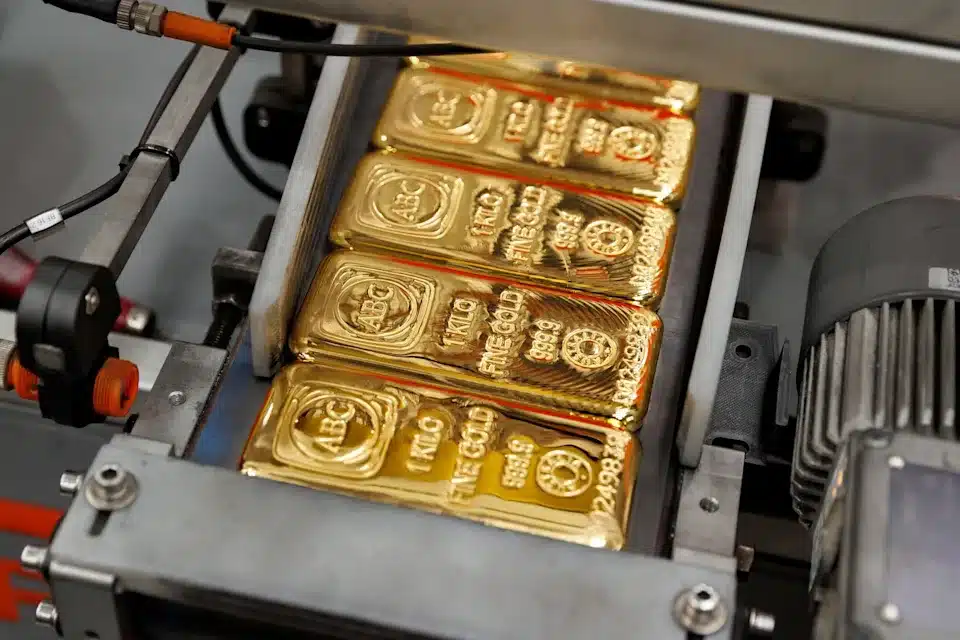
Gold extended its advance this week as softer‑than‑expected U.S. economic signals and a subdued dollar bolstered demand for the precious metal. With inflation pressures still present and interest‑rate expectations gradually shifting, gold is catching fresh attention among global and Israeli investors looking for macro‑hedge strategies.
Economic Weakness and Dollar Dynamics
Recent U.S. data suggest that the economy may be losing momentum. Indicators such as weaker GDP growth and cooling labor-market trends have weighed on the dollar and increased demand for non‑yielding assets like gold. The dollar’s retreat makes gold cheaper for international buyers and boosts its appeal. Real yields remain under pressure, reducing the opportunity cost of holding gold and supporting its safe‑haven narrative.
Market Reaction and Strategic Implications
Gold’s climb this year—up roughly 30% from earlier levels—has drawn attention from asset managers seeking diversification outside equities and traditional fixed income. In Israel, where global commodity exposure is increasingly part of wealth strategies, rising gold prices may influence portfolio allocation. The trend reflects both a flight from risk assets and strategic positioning by funds seeking lower correlation with equities. Investors remain sensitive to macroeconomic signals, meaning that if economic data stabilizes, safe-haven flows could reverse rapidly.
Broader Macro and Financial-Market Linkages
Gold’s advance is connected not only to a weaker dollar but also to inflation trends and central-bank policy. With flattening yield curves and real yields low, gold serves as an inflation hedge and currency diversifier. Historical patterns show that when real yields fall while inflation remains elevated, gold tends to appreciate. Additionally, structural demand from institutional investors and central banks supporting diversification adds to price resilience. However, sharp declines in inflation or aggressive rate hikes could create headwinds for gold by boosting yields and strengthening the dollar.
As global investors monitor upcoming U.S. inflation and employment data, gold’s direction will depend on whether macro trends reinforce economic slowdown fears or indicate resilience. Key factors to watch include inflation readings, dollar index movements, and central-bank signals in both the U.S. and Israel. Opportunities may arise for portfolios seeking inflation hedging and currency diversification, but the risk of a rapid reversal remains if economic conditions improve unexpectedly.
Comparison, examination, and analysis between investment houses
Leave your details, and an expert from our team will get back to you as soon as possible
* This article, in whole or in part, does not contain any promise of investment returns, nor does it constitute professional advice to make investments in any particular field.
To read more about the full disclaimer, click here
- orshu
- •
- 7 Min Read
- •
- ago 2 hours
SKN | Silver Prices Face Further Downside Risk as Analysts Warn of Emerging Demand Destruction
Silver prices have experienced renewed volatility following a recent market pullback, with analysts cautioning that additional downside pressure may
- ago 2 hours
- •
- 7 Min Read

Silver prices have experienced renewed volatility following a recent market pullback, with analysts cautioning that additional downside pressure may

- omer bar
- •
- 8 Min Read
- •
- ago 16 hours
SKN | Can Oil Markets Sustain Momentum as Geopolitical Risk in the Strait of Hormuz Intensifies?
Global oil markets rebounded as geopolitical tensions escalated following reports of US strikes on targets linked to Iranian positions near
- ago 16 hours
- •
- 8 Min Read

Global oil markets rebounded as geopolitical tensions escalated following reports of US strikes on targets linked to Iranian positions near

- sagi habasov
- •
- 8 Min Read
- •
- ago 17 hours
SKN | Will Oil Prices Escalate Further After US Strike on Iranian Military Site Triggers Market Repricing?
Global oil markets rebounded after reports that US forces conducted strikes on an Iranian military site, reigniting concerns over geopolitical
- ago 17 hours
- •
- 8 Min Read

Global oil markets rebounded after reports that US forces conducted strikes on an Iranian military site, reigniting concerns over geopolitical

- Lior mor
- •
- 7 Min Read
- •
- ago 19 hours
SKN | Are Asian Equities Losing Momentum as Gulf Tensions Prolong Global Risk Aversion?
Asian equity markets paused their recent upward momentum as prolonged geopolitical tensions in the Gulf region weighed on investor sentiment
- ago 19 hours
- •
- 7 Min Read

Asian equity markets paused their recent upward momentum as prolonged geopolitical tensions in the Gulf region weighed on investor sentiment


