


- sagi habasov
- •
- 6 Min Read
- •
- 4 months ago
Key Points
- Gold is consolidating near highs as investors seek protection against macro and geopolitical risks.
- Copper prices reflect both tightening supply expectations and long-term demand from energy transition themes.
- Commodities are regaining strategic importance as investors rebalance risk in a shifting global environment.

Gold and copper prices moved higher this week, reflecting a market that is increasingly sensitive to macroeconomic signals, central bank policy paths, and structural demand trends tied to energy transition and infrastructure investment. While short-term volatility remains elevated, the underlying narrative points to a commodities complex that is regaining strategic relevance for global investors, including those in the U.S. and Israel.
Gold Regains Attention as a Strategic Hedge
Gold futures have continued to trade near multi-month and 52-week highs, hovering around the $4,600 per ounce level, as investors reassess risk exposure amid geopolitical uncertainty and expectations of eventual U.S. monetary easing. Although intraday moves showed modest pullbacks, the broader trend underscores gold’s renewed role as a portfolio stabilizer rather than a purely speculative asset.
Market participants are increasingly positioning gold as protection against both financial volatility and longer-term currency debasement risks. Central bank demand remains a key structural driver, with emerging market reserve diversification providing a steady bid. For institutional investors, the metal’s resilience despite intermittent profit-taking suggests that downside risks may be limited unless real yields rise meaningfully.
Copper Reflects Supply Anxiety and Structural Demand
Copper futures have held above the $6 per pound mark, consolidating near record territory after a powerful rally earlier this year. The industrial metal’s strength is rooted in expectations of tighter global supply, compounded by policy uncertainty surrounding potential trade barriers and tariffs on refined metals.
At the same time, demand fundamentals remain robust. Power grid modernization, renewable energy projects, electric vehicles, and data center expansion continue to anchor copper’s long-term outlook. China’s ongoing policy support and liquidity measures have further reinforced sentiment, signaling that the world’s largest consumer remains committed to stabilizing growth. Investors increasingly view copper not just as a cyclical asset, but as a strategic proxy for global electrification trends.
Investor Psychology and Risk Positioning
From a behavioral perspective, the commodities rally reflects a gradual shift away from overcrowded equity themes toward tangible assets with clearer supply-demand dynamics. While momentum indicators show mixed short-term signals, longer-term technical structures for both gold and copper remain constructive. This divergence highlights a market balancing near-term consolidation with longer-term conviction.
Portfolio managers are also reassessing risk management frameworks, using commodities as a hedge against geopolitical shocks and policy missteps. The renewed interest suggests a recalibration rather than a speculative frenzy, with positioning still relatively disciplined compared to past commodity supercycles.
What Markets Are Watching Next
Looking ahead, investors will closely monitor U.S. inflation data, Federal Reserve guidance, and geopolitical developments across energy and trade corridors. Any confirmation of rate cuts or escalation in supply disruptions could further strengthen commodities’ appeal. Conversely, sharper-than-expected global growth slowdowns or tighter financial conditions remain key downside risks.
For now, gold and copper appear to be signaling a market in transition—one where real assets are reclaiming relevance in an increasingly complex global landscape.
Comparison, examination, and analysis between investment houses
Leave your details, and an expert from our team will get back to you as soon as possible
* This article, in whole or in part, does not contain any promise of investment returns, nor does it constitute professional advice to make investments in any particular field.
To read more about the full disclaimer, click here
- omer bar
- •
- 8 Min Read
- •
- ago 2 hours
SKN | Can Oil Markets Sustain Momentum as Geopolitical Risk in the Strait of Hormuz Intensifies?
Global oil markets rebounded as geopolitical tensions escalated following reports of US strikes on targets linked to Iranian positions near
- ago 2 hours
- •
- 8 Min Read

Global oil markets rebounded as geopolitical tensions escalated following reports of US strikes on targets linked to Iranian positions near

- sagi habasov
- •
- 8 Min Read
- •
- ago 4 hours
SKN | Will Oil Prices Escalate Further After US Strike on Iranian Military Site Triggers Market Repricing?
Global oil markets rebounded after reports that US forces conducted strikes on an Iranian military site, reigniting concerns over geopolitical
- ago 4 hours
- •
- 8 Min Read

Global oil markets rebounded after reports that US forces conducted strikes on an Iranian military site, reigniting concerns over geopolitical

- Lior mor
- •
- 7 Min Read
- •
- ago 6 hours
SKN | Are Asian Equities Losing Momentum as Gulf Tensions Prolong Global Risk Aversion?
Asian equity markets paused their recent upward momentum as prolonged geopolitical tensions in the Gulf region weighed on investor sentiment
- ago 6 hours
- •
- 7 Min Read
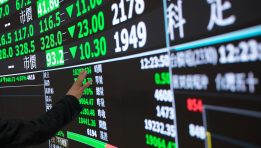
Asian equity markets paused their recent upward momentum as prolonged geopolitical tensions in the Gulf region weighed on investor sentiment
- omer bar
- •
- 8 Min Read
- •
- ago 14 hours
SKN | Canada Redirects Aluminium Trade Toward Europe as Iran Conflict Drives Prices Higher
Global aluminium markets are experiencing renewed volatility as escalating geopolitical tensions involving Iran fuel concerns over supply disruptions, higher
- ago 14 hours
- •
- 8 Min Read

Global aluminium markets are experiencing renewed volatility as escalating geopolitical tensions involving Iran fuel concerns over supply disruptions, higher


