




- Lior mor
- •
- 7 Min Read
- •
- 6 minutes ago


Key Points
- Chinese researchers and technology companies are using outputs from leading American artificial intelligence models to develop and improve domestic systems through a technique known as knowledge distillation.
- A Reuters review of more than 300 Chinese documents found that the practice has expanded into industrial applications, potentially helping developers overcome limitations on advanced computing resources.
- The growing use of American AI outputs is adding another layer to U.S.-China technology tensions, particularly around intellectual property, export controls and competition among domestic Chinese developers.
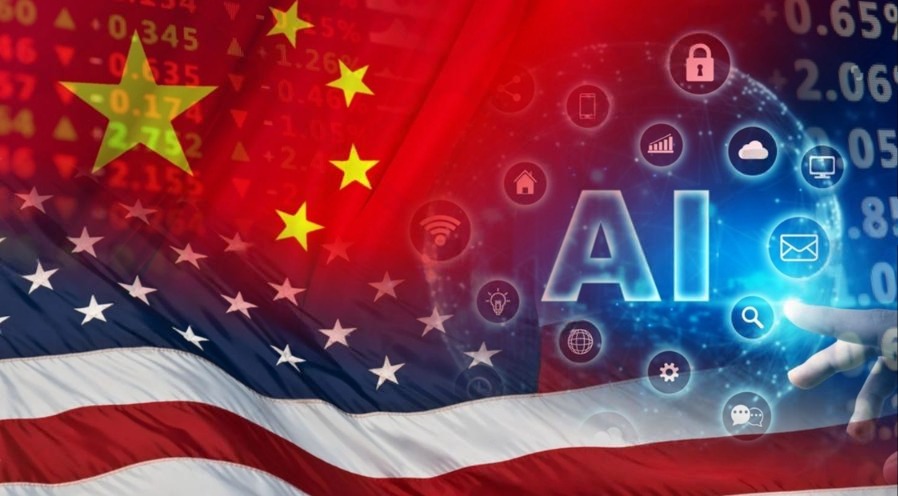
China’s artificial intelligence industry is using the capabilities of leading American models to accelerate the development of domestic alternatives, as U.S. restrictions on advanced semiconductor technology increase pressure on access to computing resources. The approach, known as knowledge distillation, could help Chinese developers produce smaller and less expensive AI systems while intensifying competition between the world’s two largest economies in a strategically important technology market.
Knowledge Distillation Offers an Alternative Development Route
A Reuters review of more than 300 Chinese academic papers, patents, corporate disclosures, recruitment notices and government documents found that Chinese researchers and companies are increasingly using American AI models to generate answers, write code and demonstrate solutions to complex tasks. The resulting material is then used to train smaller domestic systems, with some companies developing software and specialist processes to automate the practice.
The technique involves a powerful model acting as a teacher, generating responses and demonstrations that are subsequently used to improve a smaller student model. For developers facing computing constraints, this can make individual queries more valuable by turning their outputs into reusable training material. Although distillation cannot reproduce the full capabilities of a leading model or eliminate the need for advanced chips, it may preserve selected capabilities at a lower operating cost.
Alibaba Research Illustrates the Commercial Potential
Several research projects demonstrate how the approach has developed. In a November 2024 paper, researchers from Shanghai Jiao Tong University described selecting approximately 5,000 answers from OpenAI’s o1 model, translating them with GPT-4o mini and assembling 10,750 bilingual training examples to further train Alibaba’s Qwen2.5-72B model.
Alibaba researchers also described using GPT-4 and GPT-4o to generate multilingual training material in an April 2025 paper. Separately, a February 2026 study involving Shanghai Jiao Tong University and food delivery company Meituan examined how plans generated by GPT-4o could help train a smaller model to coordinate artificial intelligence agents working on programming tasks.
These examples suggest that distillation is becoming a practical development tool rather than remaining limited to academic experimentation. However, researchers have also warned that excessive dependence on foreign models could weaken original innovation and leave domestic developers reliant on breakthroughs made elsewhere.
Technology Competition Creates Intellectual Property Risks
The expanding practice is creating friction between Washington and Beijing. U.S. officials have raised concerns that organized, industrial-scale collection of American model outputs could cross into intellectual property theft. Chinese officials have defended distillation as a standard development technique and indicated willingness to address conduct involving intellectual property violations, although no concrete commitments were reported.
The issue is particularly sensitive because major American AI companies, including OpenAI and Anthropic, restrict the use of their outputs to develop competing models, subject to applicable exceptions. Washington has also warned that covert industrial-scale activity involving intellectual property theft could lead to sanctions or other restrictions.
Looking forward, semiconductor export controls, AI model development and intellectual property enforcement will remain central to the global technology outlook. Chinese developers may continue refining smaller models that require fewer computing resources, but the extent to which distillation can compensate for restricted access to advanced chips remains uncertain. Regulatory action, enforcement measures and developments in U.S.-China relations could influence the pace of competition, with implications for semiconductor companies, cloud providers and global technology investment.
Comparison, examination, and analysis between investment houses
Leave your details, and an expert from our team will get back to you as soon as possible
* This article, in whole or in part, does not contain any promise of investment returns, nor does it constitute professional advice to make investments in any particular field.
To read more about the full disclaimer, click here
- Lior mor
- •
- 6 Min Read
- •
- ago 39 minutes
SKN | New Street Initiates Anthropic Coverage With Buy Rating, Projects $505 Billion Revenue by 2030
New Street Begins Coverage Ahead of Anthropic IPO New Street Research has initiated coverage of Anthropic with a Buy rating,
- ago 39 minutes
- •
- 6 Min Read
New Street Begins Coverage Ahead of Anthropic IPO New Street Research has initiated coverage of Anthropic with a Buy rating,
- Ronny Mor
- •
- 7 Min Read
- •
- ago 4 hours
U.S. China Data Center Restrictions Advance Despite Big Tech Opposition, Raising Questions for the AI Supply Chain
The Trump administration’s efforts to limit China’s access to critical data center technology are advancing despite concerns from
- ago 4 hours
- •
- 7 Min Read
The Trump administration’s efforts to limit China’s access to critical data center technology are advancing despite concerns from
- Lior mor
- •
- 7 Min Read
- •
- ago 8 hours
SKN | Nvidia Warns Customers of Legal Risks Over Chinese Access to AI Chips
Nvidia Alerts Customers to Proposed Legal Risks Nvidia has cautioned customers that proposed US legislation governing Chinese companies' remote access
- ago 8 hours
- •
- 7 Min Read
Nvidia Alerts Customers to Proposed Legal Risks Nvidia has cautioned customers that proposed US legislation governing Chinese companies' remote access

- sagi habasov
- •
- 7 Min Read
- •
- ago 13 hours
SKN | Nvidia Board Warned of “Irreplaceable” Talent Loss in Employee Letter: Can Directors Hold the Line Ahead of Q3 Earnings?
Nvidia Corp.’s board of directors has received a direct warning from senior internal engineering leadership that top technical talent is
- ago 13 hours
- •
- 7 Min Read
Nvidia Corp.’s board of directors has received a direct warning from senior internal engineering leadership that top technical talent is
