




- Lior mor
- •
- 8 Min Read
- •
- 3 minutes ago


Key Points
- Donald Trump is set to join his first meeting with leaders of the Quad, bringing together the United States, Japan, Australia and India for the first gathering in two years.
- The meeting in Manila is expected to demonstrate regional coordination ahead of planned talks between the US, China and Russia during the APEC forum in Shenzhen.
- Discussions are expected to cover maritime security, critical-mineral supply chains, AI, export restrictions and regional economic resilience amid growing geopolitical uncertainty.
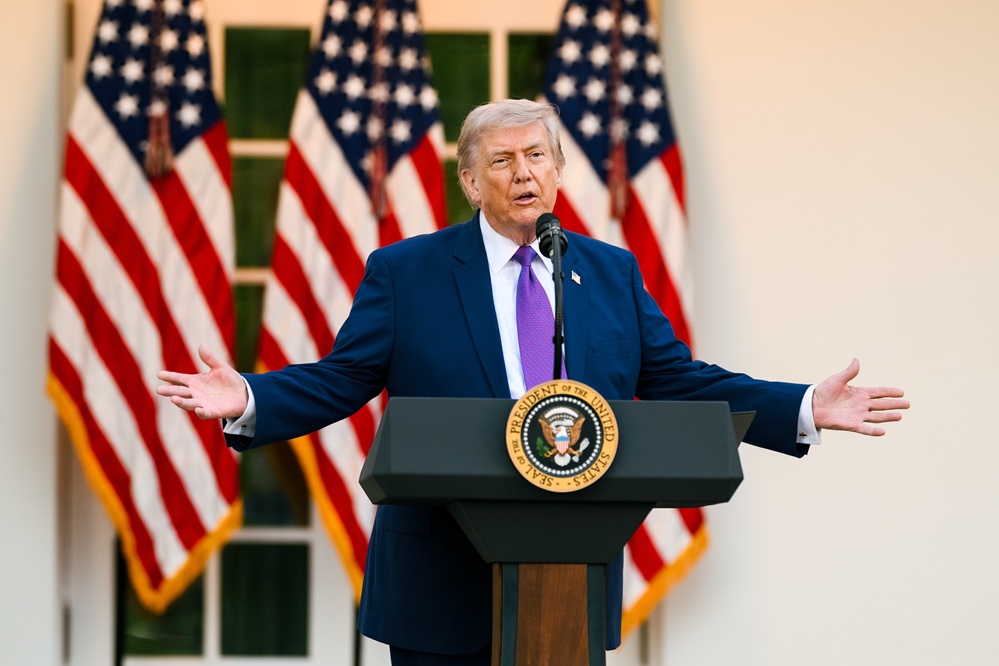
Trump Begins Asia Tour in Manila
US President Donald Trump is arriving in the Philippines on Tuesday as part of an Asia trip that includes the Asia-Pacific Economic Cooperation (APEC) forum in Shenzhen and an anticipated trilateral meeting with Chinese President Xi Jinping and Russian President Vladimir Putin.
The visit follows Republican losses in the US midterm elections, allegations involving espionage and new US restrictions on China’s access to advanced AI chips. These developments could complicate an already fragile trade-war truce between Washington and Beijing.
Trump’s arrival in Manila also comes amid demonstrations opposing his visit. Recent protests have included the burning of effigies of the US president and calls to end the Middle East war and abandon the US-led Pax Silica supply-chain initiative.
The main diplomatic event in the Philippines will be the Quad meeting, bringing together the United States, Japan, Australia and India. It will be Trump’s first participation in the grouping’s leaders’ meeting and the first gathering in two years. The initiative was a major foreign-policy priority under former President Joe Biden.
Quad Meeting Carries Strategic Significance
The timing of the meeting is significant because it precedes the APEC gathering hosted by Xi in China. Beijing has previously criticized the Quad, viewing it as an effort to contain its influence. The four member countries, however, maintain that the partnership is not directed against any particular nation.
Former US Deputy Secretary of State Kurt Campbell described the meeting as a potentially important signal ahead of the planned US-China-Russia discussions. He also emphasized the importance of the US-Japan relationship to Washington’s broader position in Asia.
Potential topics for the Quad leaders include maritime security, export restrictions, diversification of critical-mineral supply chains and artificial intelligence. Undersea cables, emerging technologies and disaster relief are also expected to feature in discussions.
The White House has characterized the grouping as an active partnership focused on regional challenges and maintaining a free and open Indo-Pacific.
ASEAN Balances Economic Ties With China and the US
The diplomatic activity comes as Southeast Asian countries navigate their relationships with both Washington and Beijing.
At the Association of Southeast Asian Nations summit, Chinese Premier Li Qiang highlighted China’s economic relationship with the bloc and called for greater cooperation in response to global trade restrictions. China remains ASEAN’s largest trading partner and an important source of investment.
At the same time, the region’s largest economies are seeking deeper ties with the United States despite uncertainty surrounding American trade and diplomatic policy. The 11-member ASEAN bloc has a combined gross domestic product of more than $3.9 trillion.
Japan is also seeking a more active role in regional cooperation. Prime Minister Sanae Takaichi said Tokyo would work with ASEAN to strengthen economic and energy resilience, address export restrictions and reduce supply-chain vulnerabilities, particularly in critical minerals.
Trump to Meet ASEAN Leaders and Philippine President
Trump is expected to skip the East Asia Summit while participating in a US-ASEAN special summit. He is also scheduled to meet Philippine President Ferdinand Marcos Jr. on Wednesday. The Philippines remains a US defense ally.
Separately, Trump is expected to sign a joint statement with Thai Prime Minister Anutin Charnvirakul concerning reciprocal trade. Thailand’s government said the statement would address progress in negotiations between the two countries.
The United States is Thailand’s largest export market, accounting for 24% of its total shipments this year. Washington designated Thailand a major non-NATO ally in 2003.
What Investors Should Watch Next
The meetings in Manila and Shenzhen will provide important indications of how Washington intends to manage its relationships with regional allies while pursuing negotiations with Beijing and Moscow. Investors will be watching for developments in trade discussions, technology restrictions and supply-chain cooperation, particularly involving critical minerals and advanced AI.
The degree of unity demonstrated by the Quad countries may also influence perceptions of regional stability. Any changes in trade policy or geopolitical tensions could affect companies and industries with significant exposure to Asian manufacturing, technology and export markets.
Comparison, examination, and analysis between investment houses
Leave your details, and an expert from our team will get back to you as soon as possible
* This article, in whole or in part, does not contain any promise of investment returns, nor does it constitute professional advice to make investments in any particular field.
To read more about the full disclaimer, click here
- orshu
- •
- 8 Min Read
- •
- ago 3 hours
SKN | Global Markets Wrap: November 16, 2026 Broad Equity Selloff Hits Wall Street, Tokyo, and Tel Aviv Ahead of November 17 Retail Data and Fed Speak
Global equity markets opened the week on a distinctly defensive footing on Monday, November 16, 2026, as broad-based risk aversion
- ago 3 hours
- •
- 8 Min Read

Global equity markets opened the week on a distinctly defensive footing on Monday, November 16, 2026, as broad-based risk aversion
- orshu
- •
- 8 Min Read
- •
- ago 6 hours
SKN | Asian Markets Diverge in Tuesday Trade: Sensex and Hang Seng Rise While KOSPI and Nikkei Slide
Asian equity benchmarks display pronounced regional divergence during the morning session on Tuesday, November 17, as heavy selling in Seoul,
- ago 6 hours
- •
- 8 Min Read
Asian equity benchmarks display pronounced regional divergence during the morning session on Tuesday, November 17, as heavy selling in Seoul,

- Ronny Mor
- •
- 7 Min Read
- •
- ago 8 hours
SKN | Semiconductor Stocks Face Renewed Downside Risk as Recovery Loses Momentum
Semiconductor stocks are showing renewed signs of weakness after another recovery attempt failed to break through a significant technical
- ago 8 hours
- •
- 7 Min Read

Semiconductor stocks are showing renewed signs of weakness after another recovery attempt failed to break through a significant technical

- sagi habasov
- •
- 7 Min Read
- •
- ago 8 hours
SKN | Gold Hits One-Year Low as Strong Dollar and Treasury Yields Intensify Pressure
Gold has entered a more challenging phase as higher U.S. Treasury yields, a stronger dollar and expectations for tighter
- ago 8 hours
- •
- 7 Min Read

Gold has entered a more challenging phase as higher U.S. Treasury yields, a stronger dollar and expectations for tighter
