




- Lior mor
- •
- 7 Min Read
- •
- 5 minutes ago


Key Points
- Tesla plans to invest €3 billion ($3.3 billion) at its Grünheide factory, potentially making it Germany’s largest auto plant by production capacity.
- The company aims to produce up to 1 million Cybercabs annually, with construction expected to begin in 2027 and production targeted for 2029.
- The expansion contrasts with job cuts and potential plant closures at Volkswagen, Mercedes-Benz and BMW as Germany’s auto industry faces intensifying Chinese competition.
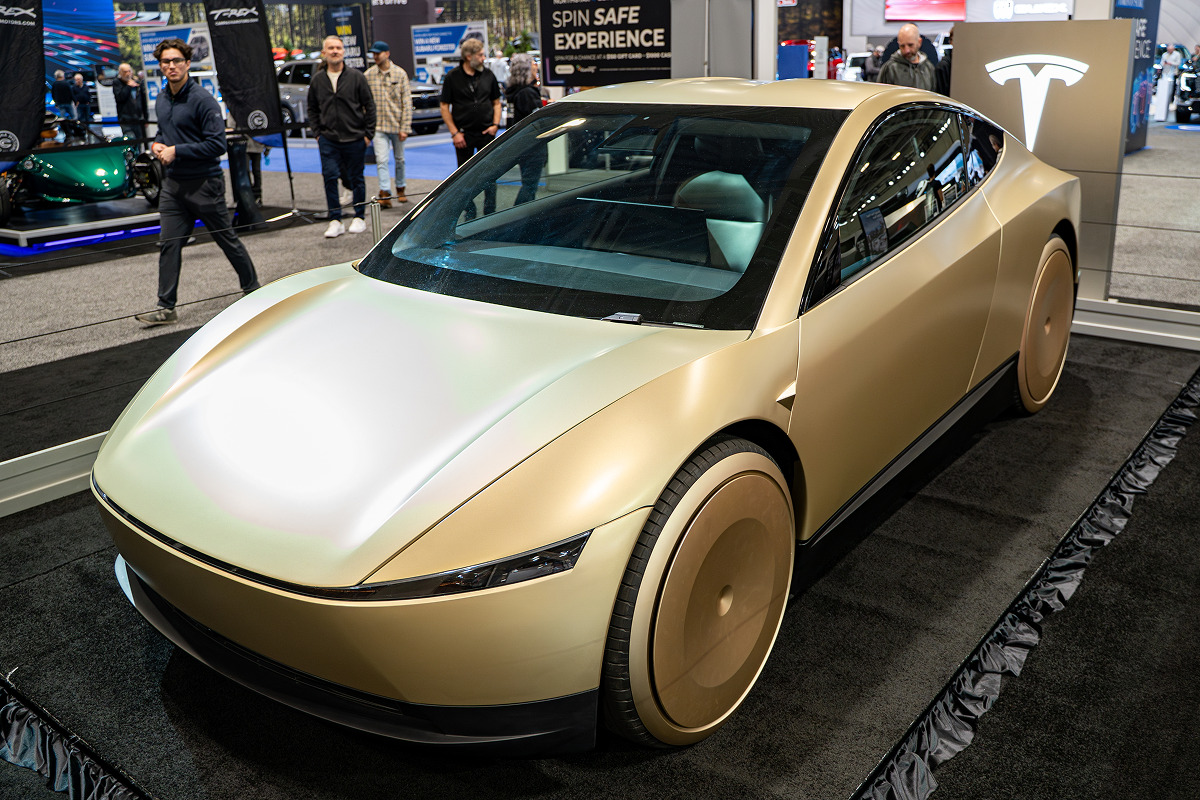
Tesla is planning a €3 billion expansion of its German manufacturing operations, positioning its Grünheide factory near Berlin for large-scale Cybercab production while much of Germany’s traditional auto industry is reducing capacity. The investment represents a significant strategic bet on robotaxis even though Tesla has yet to launch the Cybercab commercially at scale.
Tesla Bets on Germany for Cybercab Expansion
Tesla said it plans to construct an additional production facility at Grünheide, which could eventually make the site Germany’s largest auto plant by capacity, surpassing Volkswagen’s Wolfsburg headquarters. The company plans to submit a building permit application before the end of 2026, with construction scheduled to begin during the first half of 2027.
Production is targeted to start in 2029. Tesla said the project will also create additional employment, with several hundred workers expected to be needed during the initial construction and production-planning phase.
The scale of the planned facility reflects Tesla’s ambitions for the Cybercab, with the company targeting production of up to 1 million vehicles annually at Grünheide. However, the model has not yet been sold commercially at significant scale, leaving demand and production economics as important uncertainties around the expansion.
Expansion Contrasts With Germany’s Auto Retrenchment
Tesla’s investment stands out against a difficult backdrop for Germany’s automotive industry. Volkswagen, Mercedes-Benz and BMW are cutting jobs and considering plant closures as established manufacturers face increasing competition from Chinese automakers and pressure to restructure their operations.
Tesla has therefore emerged as one of the few growth stories in German auto manufacturing. The Grünheide plant opened in March 2022 after a comparatively rapid construction process, although the facility has also faced environmental protests and repeated disputes with the powerful IG Metall manufacturing union.
The company has recently expanded Model Y production at the site and hired more than 2,000 additional employees. Tesla also plans to begin battery-cell production at Grünheide from the middle of next year.
Cybercab Creates a New Layer of Execution Risk
The expansion depends heavily on Tesla’s ability to turn the Cybercab concept into a commercially viable product. Automotive analyst Matthias Schmidt questioned how much of the planned investment would translate into sustainable long-term employment, particularly if future production relies heavily on automation.
Tesla is also reshaping its production priorities elsewhere. The company plans to wind down Cybertruck production at its Austin, Texas, facility toward the end of summer 2027, with Elon Musk saying the capacity should make room for additional Cybercab production.
What Investors Will Watch Next
The German expansion places autonomous driving and manufacturing scale at the center of Tesla’s next phase of growth. The key milestones will include approval of the Grünheide expansion, construction progress, the start of battery production and Tesla’s ability to move Cybercab from development into commercial deployment.
For investors, the larger question is whether the planned capacity can be matched by actual demand and reliable autonomous technology. If Tesla can achieve both, Grünheide could become an important European production hub for its robotaxi strategy. If commercial deployment takes longer than expected, the company could face substantial capacity and capital-allocation challenges before the new facility reaches its targeted 2029 production start.
Comparison, examination, and analysis between investment houses
Leave your details, and an expert from our team will get back to you as soon as possible
* This article, in whole or in part, does not contain any promise of investment returns, nor does it constitute professional advice to make investments in any particular field.
To read more about the full disclaimer, click here
- Ronny Mor
- •
- 7 Min Read
- •
- ago 5 minutes
SKN | Intel Faces Shareholder Lawsuit After 29% Stock Plunge Raises Disclosure Questions
Intel is facing a shareholder lawsuit following one of the sharpest single-day declines in its stock this year, adding
- ago 5 minutes
- •
- 7 Min Read

Intel is facing a shareholder lawsuit following one of the sharpest single-day declines in its stock this year, adding

- sagi habasov
- •
- 7 Min Read
- •
- ago 5 minutes
SKN | Nvidia Rules Out Jensen Huang Return as Campaign for His Reinstatement Grows
Nvidia’s board is not considering a return for Jensen Huang as chief executive despite a growing campaign calling for
- ago 5 minutes
- •
- 7 Min Read
Nvidia’s board is not considering a return for Jensen Huang as chief executive despite a growing campaign calling for
- Ronny Mor
- •
- 7 Min Read
- •
- ago 2 hours
SKN | US Tightens AI Chip Export Restrictions to Block China’s Access Through Third-Country Data Centers
Washington Expands Controls on AI Chip Access The Trump administration has introduced additional restrictions aimed at limiting China's access to
- ago 2 hours
- •
- 7 Min Read

Washington Expands Controls on AI Chip Access The Trump administration has introduced additional restrictions aimed at limiting China's access to
- Ronny Mor
- •
- 8 Min Read
- •
- ago 4 hours
SKN | Europe Seeks Alternatives to Palantir as Militaries Prioritize Defence Technology Sovereignty
Europe Accelerates Efforts to Reduce US Technology Dependence European defence ministries are increasingly seeking alternatives to American military technology as
- ago 4 hours
- •
- 8 Min Read

Europe Accelerates Efforts to Reduce US Technology Dependence European defence ministries are increasingly seeking alternatives to American military technology as
