




- Ronny Mor
- •
- 7 Min Read
- •
- 2 minutes ago


Key Points
- U.S. equities staged an aggressive broad-based rebound on Monday, November 9, with the Nasdaq advancing 2.7% and the S&P 500 rising over 2% as tumbling oil prices eased inflation worries.
- Nvidia Corp. sharply diverged from the tape, falling over 4% as its board launched an independent investigation into whether Chief Executive Jensen Huang was targeted by foreign intelligence.
- For international allocators and Israeli tech investors, the divergence highlights a decisive rotation into rival chip designers, small caps, and balance-sheet-resilient software providers.
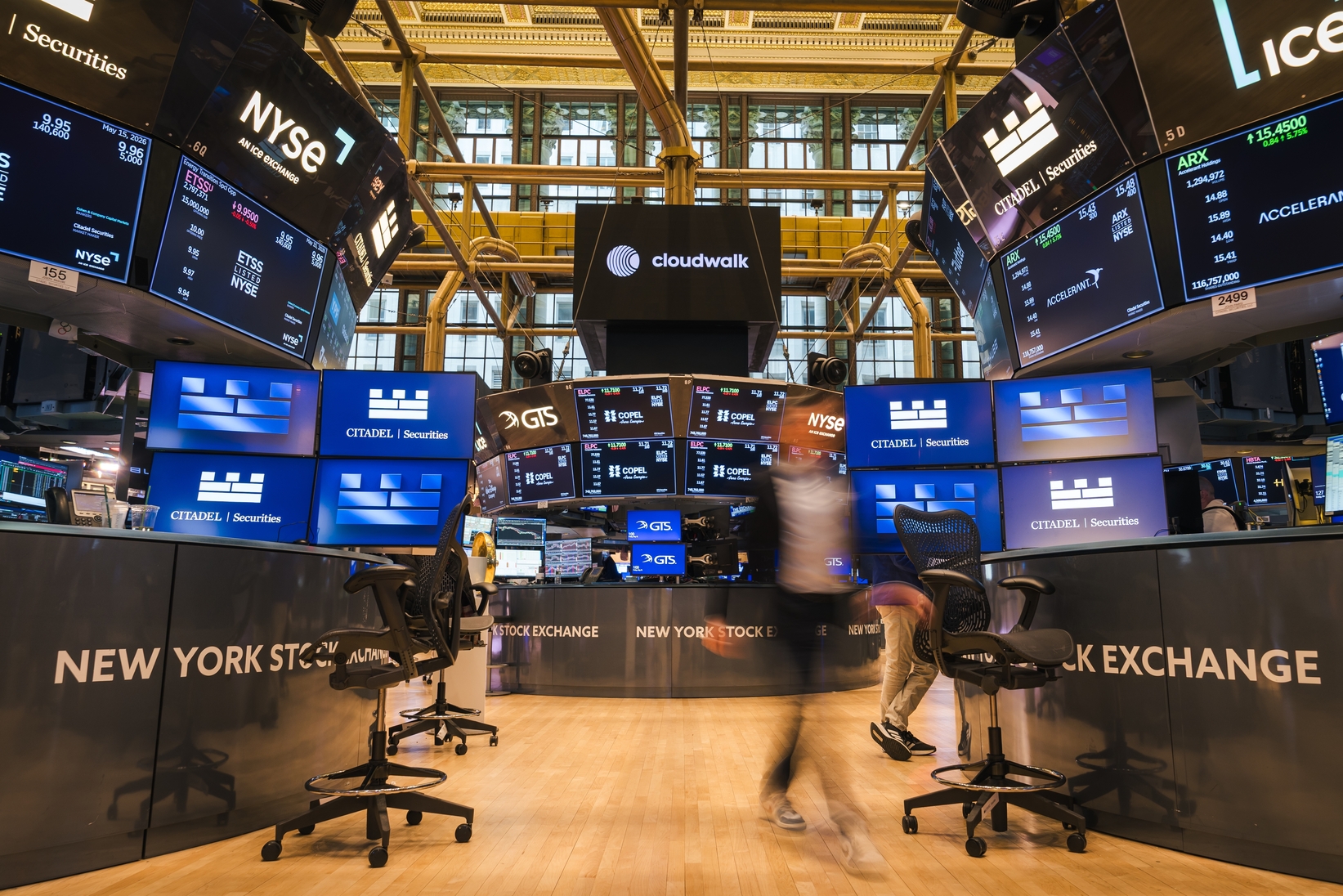
U.S. equity markets staged a powerful, broad-based recovery on Monday, November 9, 2026, recouping a substantial portion of the prior week’s steep losses as tumbling crude prices tempered near-term inflation anxieties. The tech-heavy Nasdaq Composite climbed 2.7%, the S&P 500 advanced 2.3%, and the Dow Jones Industrial Average rose 2.1% in a session where all eleven primary sectors advanced. However, market bellwether Nvidia Corp. decoupled from the broader market surge, tumbling more than 4% as corporate governance turmoil and a board-level foreign espionage inquiry triggered company-specific liquidation.
Crude Oil Slump Fuels Broad-Market Relief and Sector Rotation
The catalyst unlocking broad risk appetite across global trading desks was a sharp unwind in petroleum futures. Brent crude dropped 5.85% to settle at $92.57 per barrel, while West Texas Intermediate slid 4.38% to $86.85, unwinding geopolitical risk premiums and soothing consumer price expectations. The energy pullback granted investors latitude to re-enter rate-sensitive growth assets, transportation equities, and industrials, with the Cboe Volatility Index (VIX) retreating 20% toward 20.50 to reflect easing cross-asset hedging demand.
Despite the broader tech sector’s recovery—where the semiconductor ETF (SOXX) surged over 7%—the retreat was concentrated uniquely in Nvidia. The company revealed over the weekend that independent directors and external legal counsel have opened a formal inquiry into whether Chief Executive Jensen Huang was targeted by an overseas intelligence operation during an extramarital relationship with an executive tied to a Singapore-based data center client. The governance overhang erased roughly $200 billion from Nvidia’s market capitalization, prompting trading desks to actively rotate capital into direct competitors, with Advanced Micro Devices (AMD) soaring 11.8% and Applied Materials surging 11.5%.
Decoupling Dynamics and Repercussions for Israeli Allocators
The decoupling between Nvidia and the broader tech complex marks a critical structural shift for global asset allocators and Israel’s institutional financial corridor. Historically, an idiosyncratic decline of this magnitude in the semiconductor leader would have dragged the broader Nasdaq into deep negative territory. The market’s ability to advance regardless confirms that institutional allocators view the event as an isolated governance and key-man risk rather than an immediate cyclical collapse in underlying computing infrastructure demand.
For Israeli institutional pension managers and high-tech investors on the Tel Aviv Stock Exchange (TASE), the rotation provides an actionable template. Israel houses Nvidia’s largest foreign research and development hub—centered on Mellanox’s high-speed networking and the local Israel-1 AI supercomputer cluster—leaving domestic ecosystems closely tied to the chipmaker’s corporate trajectory. Domestic fund managers navigated Monday’s dispersion by rotating incremental liquidity away from concentrated Nvidia exposure into diversified fabless designers, enterprise cybersecurity, and optical hardware suppliers that benefit from industry-wide architectural diversification. Concurrently, the New Israeli Shekel (NIS) demonstrated ongoing resilience near 3.14 per dollar, bolstered by retreating imported energy costs and steady foreign exchange flows.
Outlook: Board Disclosures, CPI Prints, and Multiple Dispersion
Moving through the trading week, market participants will monitor whether independent investigators release preliminary clearance findings regarding Nvidia’s intellectual property and export-control compliance. Crucial macroeconomic catalysts ahead include upcoming U.S. consumer price index data, which will guide Federal Reserve terminal interest-rate expectations against 10-year Treasury yields hovering near 4.88%. If upcoming inflation prints validate that energy-driven disinflation is taking hold, broad-market breadth will likely continue to expand; however, Nvidia will remain tethered to headline risk until the board concludes its probe and provides clear operational guidance on its November earnings call.
Comparison, examination, and analysis between investment houses
Leave your details, and an expert from our team will get back to you as soon as possible
* This article, in whole or in part, does not contain any promise of investment returns, nor does it constitute professional advice to make investments in any particular field.
To read more about the full disclaimer, click here
- sagi habasov
- •
- 8 Min Read
- •
- ago 3 days
SKN | CME Delays Nvidia GPU Rental Futures Again: Regulatory Scrutiny Pushes AI Compute Derivatives Into 2027
The development of financial products linked to artificial intelligence infrastructure has encountered another regulatory obstacle, after CME Group agreed
- ago 3 days
- •
- 8 Min Read
The development of financial products linked to artificial intelligence infrastructure has encountered another regulatory obstacle, after CME Group agreed

- Lior mor
- •
- 9 Min Read
- •
- ago 4 days
SKN | South Korea’s Corporate Governance Reforms Face Resistance as Samsung Comes Under Investor Pressure
South Korea's efforts to improve corporate governance and attract international investment are facing renewed challenges as major conglomerates resist pressure
- ago 4 days
- •
- 9 Min Read

South Korea's efforts to improve corporate governance and attract international investment are facing renewed challenges as major conglomerates resist pressure

- Ronny Mor
- •
- 6 Min Read
- •
- ago 4 days
SKN | KOSPI Plunges Below 5,000 to Nine-Month Low: Will U.S. Midterm Regulatory Fears Paralyze Asian Chipmakers?
South Korea’s benchmark KOSPI plunged 7.77% on Friday morning, November 6, 2026, dropping below the 5,000 milestone to trade near
- ago 4 days
- •
- 6 Min Read

South Korea’s benchmark KOSPI plunged 7.77% on Friday morning, November 6, 2026, dropping below the 5,000 milestone to trade near
- Lior mor
- •
- 7 Min Read
- •
- ago 4 days
SKN | Global Desks Reprice the AI Trade as $2.5 Trillion Tech Rout Spills Into Asia: Is the Capex Cycle Broken?
Global asset managers and Wall Street strategists moved swiftly on Friday, November 6, 2026, to reassess the viability of the
- ago 4 days
- •
- 7 Min Read

Global asset managers and Wall Street strategists moved swiftly on Friday, November 6, 2026, to reassess the viability of the
