




- Lior mor
- •
- 9 Min Read
- •
- 6 minutes ago


Key Points
- South Korea's financial companies are advancing shareholder-friendly reforms, but resistance among major conglomerates, particularly chaebol affiliates, is raising concerns about the government's efforts to reduce the Korea Discount.
- Global investors are calling for stronger capital returns, including share buybacks and cancellations, while questioning Samsung Electronics' decision to delay allocating 55 trillion to 75 trillion won earmarked for shareholder returns.
- Despite a 35% year-to-date rally in South Korean equities, the market trades at a forward price-to-earnings ratio of approximately 3.85 times, compared with 17.64 times for MSCI World.
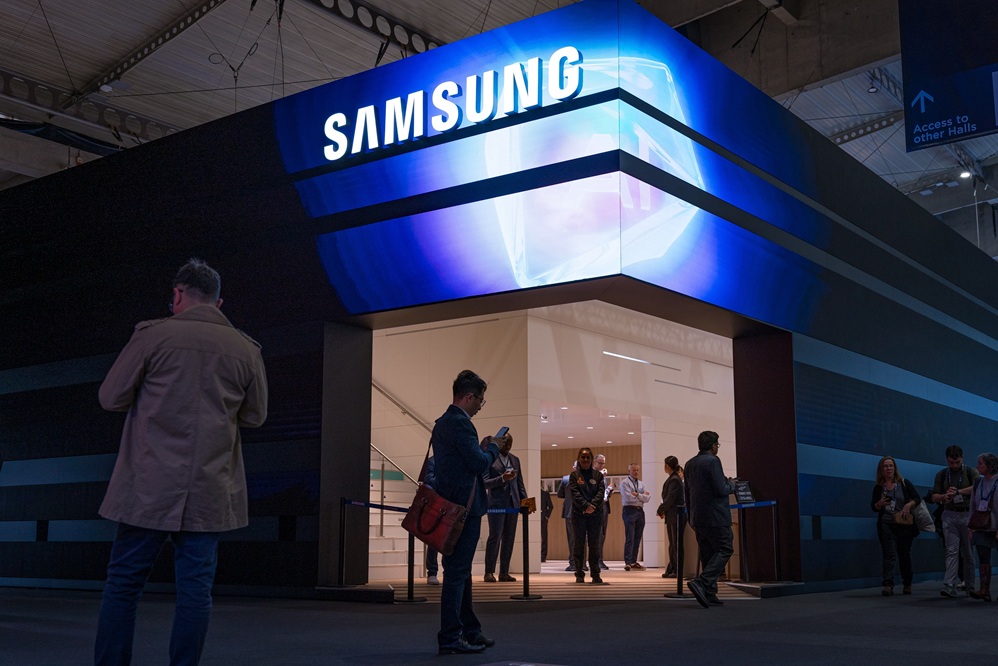
South Korea’s efforts to improve corporate governance and attract international investment are facing renewed challenges as major conglomerates resist pressure to strengthen shareholder returns and simplify corporate structures.
The country’s stock market has recorded a substantial rally this year, with the benchmark index gaining 35% despite a significant correction from its summer highs. At one point, the market had more than doubled. Nevertheless, South Korean equities remain among the cheapest globally, trading at approximately 3.85 times forward earnings compared with 17.64 times for the MSCI World Index.
LSEG data indicate that around 70% of KOSPI-listed companies trade at or below book value.
The persistent valuation gap has raised questions about whether President Lee Jae Myung’s campaign to eliminate the so-called Korea Discount can maintain momentum.
Namuh Rhee, chairman of the Korean Corporate Governance Forum, said financial holding companies were progressing according to their value-up plans, while resistance to governance reforms among large conglomerates had intensified.
Samsung Becomes a Focus of Shareholder Demands
Samsung Electronics has emerged as a central example of the challenges facing the reform agenda.
Despite reporting the largest quarterly operating profit by a technology company in history during the third quarter, Samsung trades at approximately 1.87 times book value. This compares with 7.8 times for Micron, 29 times for Nvidia and 44 times for Apple.
Global investors have called for stronger shareholder returns, simpler corporate structures and strategic changes, including potential divestments from underperforming subsidiaries.
Samsung board chairman Shin Je-yoon met overseas investors ahead of the company’s October earnings announcement, following complaints about its shareholder-return policy from major investors including Capital Group, Artisan and Fidelity.
According to a person familiar with the discussions, investors considered the proposed returns too modest and expressed a preference for share buybacks and cancellations rather than higher dividends.
Samsung said Shin regularly meets major global investors as part of its shareholder engagement efforts and that the company maintains ongoing discussions about shareholder returns and capital allocation.
Shareholder Capital Allocation Under Scrutiny
In August, Samsung declared a record 30 trillion won ($22.35 billion) in dividends. However, it postponed a decision on how to allocate an additional 55 trillion to 75 trillion won earmarked for shareholder returns until January.
The approach contrasts with rival SK Hynix, which announced a $75 billion shareholder-return package last month incorporating dividends, share repurchases and cancellations.
Samsung Electronics and SK Hynix together represent slightly more than half of the KOSPI’s total market capitalization, making their capital-allocation decisions particularly significant for the broader Korean equity market.
Seoul-based Life Asset Management has asked Samsung’s board special committee and Compliance Committee to independently review the decision to defer allocation of the remaining funds.
The asset manager wants the review to examine whether the delay serves shareholders’ interests, whether potential conflicts of interest have been properly addressed and whether the remaining funds could realistically be deployed before year-end.
Legal Changes Encourage Shareholder-Friendly Measures
South Korea’s governance reforms include legislative changes affecting corporate treasury shares.
A law that took effect in March requires companies to cancel treasury shares by September next year. Critics have argued that companies can use these shares as a takeover defence rather than returning capital to shareholders.
The market response has varied across sectors. A gauge of Korean bank shares has gained 15.9% this year, while insurance stocks have advanced 48%.
By comparison, shipbuilding shares have declined 42% and machinery stocks have fallen 30%.
Financial companies have received stronger market recognition for adopting shareholder-friendly measures, while non-financial conglomerates have been slower to embrace similar changes.
Activist Investors Increase Pressure on Samsung Group
Activist investors are seeking to use the government’s reform agenda and amendments to South Korea’s Commercial Law to push for greater accountability and capital returns.
Palliser Capital, led by James Smith, has called for preferred-share repurchases and cancellations to become part of the shareholder-return policies at Samsung and Hyundai Motor.
Another campaign, led by Singapore-based Flashlight Capital, has pressed Samsung Group to improve shareholder returns at security affiliate S-1 Corp.
Although the campaign has largely been rebuffed, S-1 shares gained following the announcement of a 450 billion won share buyback last month.
The developments illustrate the growing role of activist investors in challenging corporate capital-allocation decisions across South Korea’s major business groups.
What Investors Should Watch Next
The effectiveness of South Korea’s governance reforms will depend on whether large conglomerates move beyond formal commitments and implement measurable changes to capital allocation, treasury-share policies and corporate structures.
Samsung’s pending decision on its remaining shareholder-return funds will be particularly important. Investors will also monitor whether activist campaigns lead to additional buybacks, share cancellations or strategic restructuring across major chaebol affiliates.
For the broader market, the ability to narrow the valuation gap with international peers will depend partly on whether governance improvements become consistent across sectors rather than remaining concentrated among financial companies.
Comparison, examination, and analysis between investment houses
Leave your details, and an expert from our team will get back to you as soon as possible
* This article, in whole or in part, does not contain any promise of investment returns, nor does it constitute professional advice to make investments in any particular field.
To read more about the full disclaimer, click here
- Ronny Mor
- •
- 6 Min Read
- •
- ago 4 hours
SKN | KOSPI Plunges Below 5,000 to Nine-Month Low: Will U.S. Midterm Regulatory Fears Paralyze Asian Chipmakers?
South Korea’s benchmark KOSPI plunged 7.77% on Friday morning, November 6, 2026, dropping below the 5,000 milestone to trade near
- ago 4 hours
- •
- 6 Min Read

South Korea’s benchmark KOSPI plunged 7.77% on Friday morning, November 6, 2026, dropping below the 5,000 milestone to trade near

- Lior mor
- •
- 7 Min Read
- •
- ago 5 hours
SKN | Global Desks Reprice the AI Trade as $2.5 Trillion Tech Rout Spills Into Asia: Is the Capex Cycle Broken?
Global asset managers and Wall Street strategists moved swiftly on Friday, November 6, 2026, to reassess the viability of the
- ago 5 hours
- •
- 7 Min Read

Global asset managers and Wall Street strategists moved swiftly on Friday, November 6, 2026, to reassess the viability of the

- sagi habasov
- •
- 7 Min Read
- •
- ago 5 hours
SKN | Unity Soars on $25 Billion Take-Private Talks With Silver Lake and Saudi PIF: Will Gaming Consolidation Accelerate?
Unity Software Inc. is in early acquisition talks with a consortium led by Silver Lake Partners and Saudi Arabia’s Public
- ago 5 hours
- •
- 7 Min Read
Unity Software Inc. is in early acquisition talks with a consortium led by Silver Lake Partners and Saudi Arabia’s Public
- Lior mor
- •
- 7 Min Read
- •
- ago 6 hours
SKN | Nasdaq Plunges 5.5% in Deepest Drop in 19 Months: Will Regulatory Backlash Derail the AI Infrastructure Trade?
The tech-heavy Nasdaq Composite suffered its sharpest single-day contraction in 19 months on Thursday, November 5, 2026, plunging 5.5% and
- ago 6 hours
- •
- 7 Min Read
The tech-heavy Nasdaq Composite suffered its sharpest single-day contraction in 19 months on Thursday, November 5, 2026, plunging 5.5% and
