




- sagi habasov
- •
- 9 Min Read
- •
- 7 hours ago


Key Points
- Denmark's Central Bank revises its current-year growth forecast to a robust 4%, heavily propelled by pharmaceutical manufacturing outside the country's borders.
- The central bank governor cautions the government against expanding fiscal stimulus, citing limited spare capacity and the risk of igniting domestic inflation.
- While long-term inflation expectations remain well-anchored, volatility in global energy markets poses immediate price risks heading into the winter months.
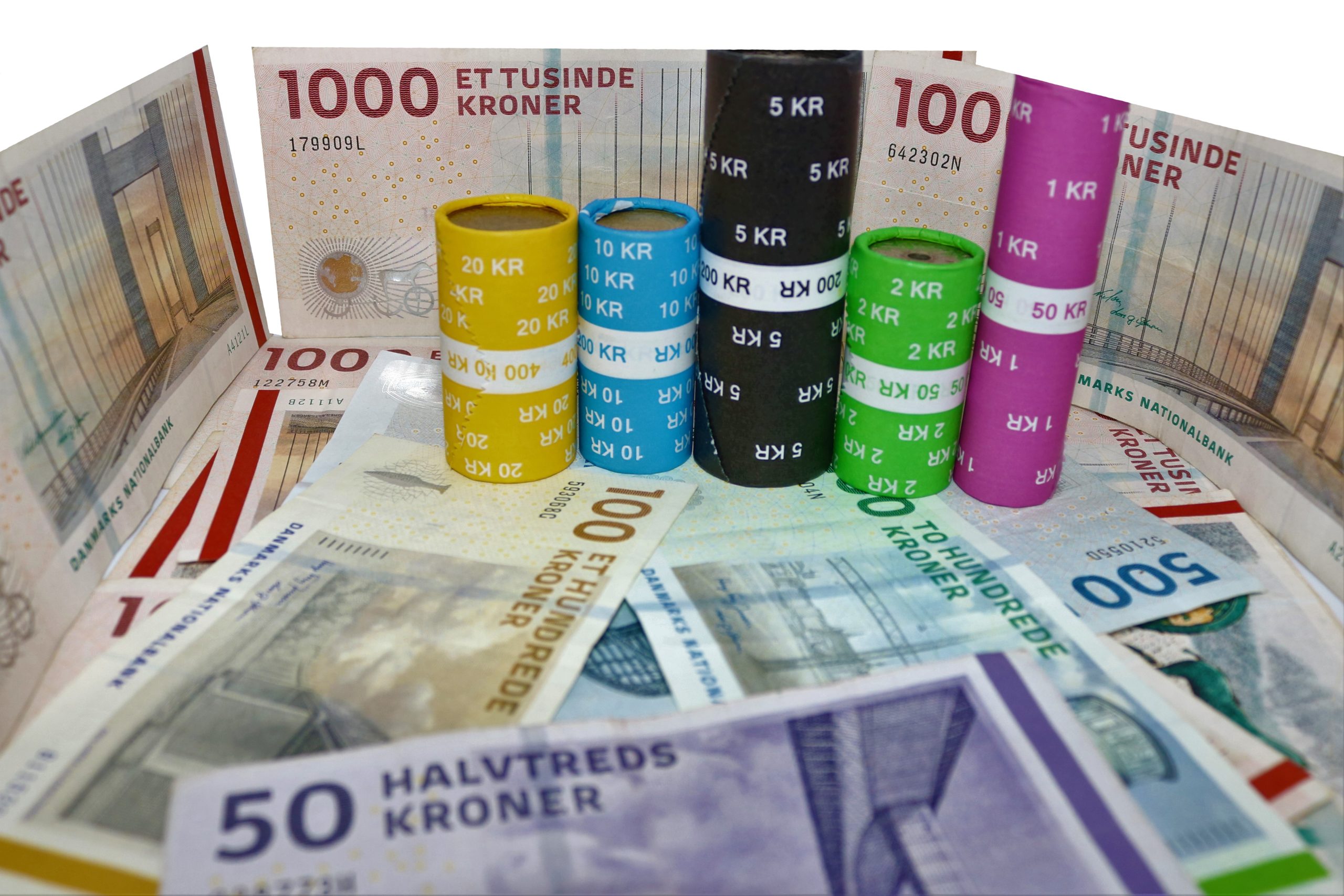
Denmark currently presents macroeconomic figures that stand out remarkably within the European landscape, yet beneath these headline numbers lies a complex economic reality that demands careful navigation by policymakers. With the growth forecast revised upward to 4% for the current year, Danmarks Nationalbank has delivered a resolute professional message to the government: times of statistical prosperity are not necessarily the right moment to open the fiscal taps. The explicit warning against fiscal expansion underscores the structural gap between the overall gross domestic product—heavily skewed by specific sectors—and the actual state of the domestic economy, which is currently operating near full capacity. In a macroeconomic environment where excess government demand could swiftly translate into price hikes, effective risk management requires a delicate balance between supporting targeted growth and preserving domestic price stability.
The Statistical Illusion of the Pharmaceutical Sector
The sharp upward revision in Denmark’s growth trajectory does not reflect a broad-based, uniform expansion across all domestic sectors. Rather, it leans almost entirely on the outperformance of the pharmaceutical industry, particularly on production that takes place outside the country’s borders. This phenomenon, well-documented by analysts tracking the Nordic markets, creates a certain distortion in the national GDP figures and necessitates a clear distinction between global corporate success and real domestic activity. The central bank explicitly notes that the extraordinary surge in pharmaceutical manufacturing during the first half of the year has only a limited impact on the local labor market and capital accumulation within Denmark. Consequently, the wealth generated on the balance sheets of corporate giants does not trickle down proportionally to employment or private consumption for the average Danish citizen. Looking ahead, the export sector is expected to remain a strong defensive anchor in the coming years, alongside a gradual recovery in public demand and a moderate rise in real incomes, as GDP growth forecasts converge to sustainable rates of 2.3% in 2027 and 2% in 2028.
Fiscal Discipline in the Shadow of a Tight Labor Market
The primary challenge now facing the Danish government is managing the budgetary path in an environment lacking spare economic capacity. Central Bank Governor Christian Kettel Thomsen emphasized in his statement that the economy has highly limited excess production capacity, meaning any artificial boost in government demand carries the risk of accelerating inflation. Danish fiscal policy is already slated to expand significantly this year and next, partly due to increased defense budgets in response to geopolitical realities. However, the central bank clarifies that the impact of defense spending on domestic pressures depends largely on the expenditure mix—specifically, what proportion will be directed toward importing foreign equipment versus stimulating local industry. The message to financial markets is unambiguous: the government must refrain from creating demand beyond the expansionary measures already approved last August. Utilizing the full available fiscal space during a period of a tight labor market could prove to be a macroeconomic misstep, potentially forcing a counteracting monetary tightening that would drive up financing costs across the economy.
Market Psychology and the Impact of Energy Prices
From a behavioral perspective, markets are currently pricing in a relatively stable inflationary environment in Denmark, but the central bank serves a reminder that the short-term picture remains vulnerable to external shocks. The official inflation forecast stands at 1.7% for the current year, with expectations of a rise to 2.4% in 2027 before moderating back to 2.1% in 2028. The temporary upward deviation is primarily attributed to geopolitical factors, chief among them the ongoing tensions in the Middle East, which directly impact global energy prices. The bank warns that fluctuations in energy markets could push consumer prices higher as early as the upcoming winter months. Nevertheless, inflation expectations among investors and consumers remain well-anchored, acting as a critical psychological brake that prevents the development of a destructive wage-price spiral. Professional assessments suggest that the Danish economy is well-positioned for long-term equilibrium, characterized by high employment, low unemployment, and a moderate pace of wage growth.
The picture painted by Danmarks Nationalbank is one of a robust economy at a strategic testing point. While strong statistical data provides a tailwind for investor confidence, the governor’s call for government restraint serves as a sharp reminder that growth driven by a single globalized industry requires meticulous management of the domestic economy. In the months ahead, institutional attention will pivot toward Copenhagen’s final budget decisions and the ongoing volatility in global energy markets. For financial markets, this necessitates a continuous peeling back of the official GDP layers, close monitoring of local labor market metrics, and careful scrutiny of how government expenditure ultimately leaks into the real economy.
Comparison, examination, and analysis between investment houses
Leave your details, and an expert from our team will get back to you as soon as possible
* This article, in whole or in part, does not contain any promise of investment returns, nor does it constitute professional advice to make investments in any particular field.
To read more about the full disclaimer, click here
- orshu
- •
- 7 Min Read
- •
- ago 18 minutes
SKN | ECB Sees Limited Wage Pressure Despite Surging Inflation, Keeping Rate Outlook in Focus
The European Central Bank is seeing limited evidence that this year's sharp energy-price shock is translating into significantly higher
- ago 18 minutes
- •
- 7 Min Read
The European Central Bank is seeing limited evidence that this year's sharp energy-price shock is translating into significantly higher

- omer bar
- •
- 7 Min Read
- •
- ago 18 minutes
SKN | Dollar Nears Two-Month High as Fed Rate Hike Expectations and Inflation Risks Rise
The U.S. dollar advanced to a nearly two-month high on Wednesday as investors reassessed the Federal Reserve's interest-rate path
- ago 18 minutes
- •
- 7 Min Read

The U.S. dollar advanced to a nearly two-month high on Wednesday as investors reassessed the Federal Reserve's interest-rate path

- Ronny Mor
- •
- 7 Min Read
- •
- ago 18 minutes
SKN | Inflation Pressures Raise Prospect of Another Fed Rate Hike Ahead of U.S. Elections
Rising inflation pressures and resilient U.S. economic activity are increasing the prospect of another Federal Reserve rate increase just
- ago 18 minutes
- •
- 7 Min Read
Rising inflation pressures and resilient U.S. economic activity are increasing the prospect of another Federal Reserve rate increase just
- omer bar
- •
- 7 Min Read
- •
- ago 1 hour
SKN | U.S. Business Activity Hits Five-Year High as Inflation Pressures Build
U.S. business activity accelerated sharply in September, with the latest private-sector survey showing the strongest expansion in more than
- ago 1 hour
- •
- 7 Min Read

U.S. business activity accelerated sharply in September, with the latest private-sector survey showing the strongest expansion in more than
