





- Ronny Mor
- •
- 8 Min Read
- •
- 7 minutes ago


Key Points
- Palantir, Nvidia and Booz Allen Hamilton are restricting access to advanced Anthropic and OpenAI models amid concerns over how sensitive corporate and government data could be retained or accessed.
- Anthropic’s 30-day data-retention policy has intensified enterprise concerns, particularly among customers handling proprietary, regulated or cybersecurity-related information.
- The dispute could accelerate demand for self-hosted and customer-controlled AI systems, strengthening the strategic position of Nvidia’s Nemotron models and Palantir’s data infrastructure.
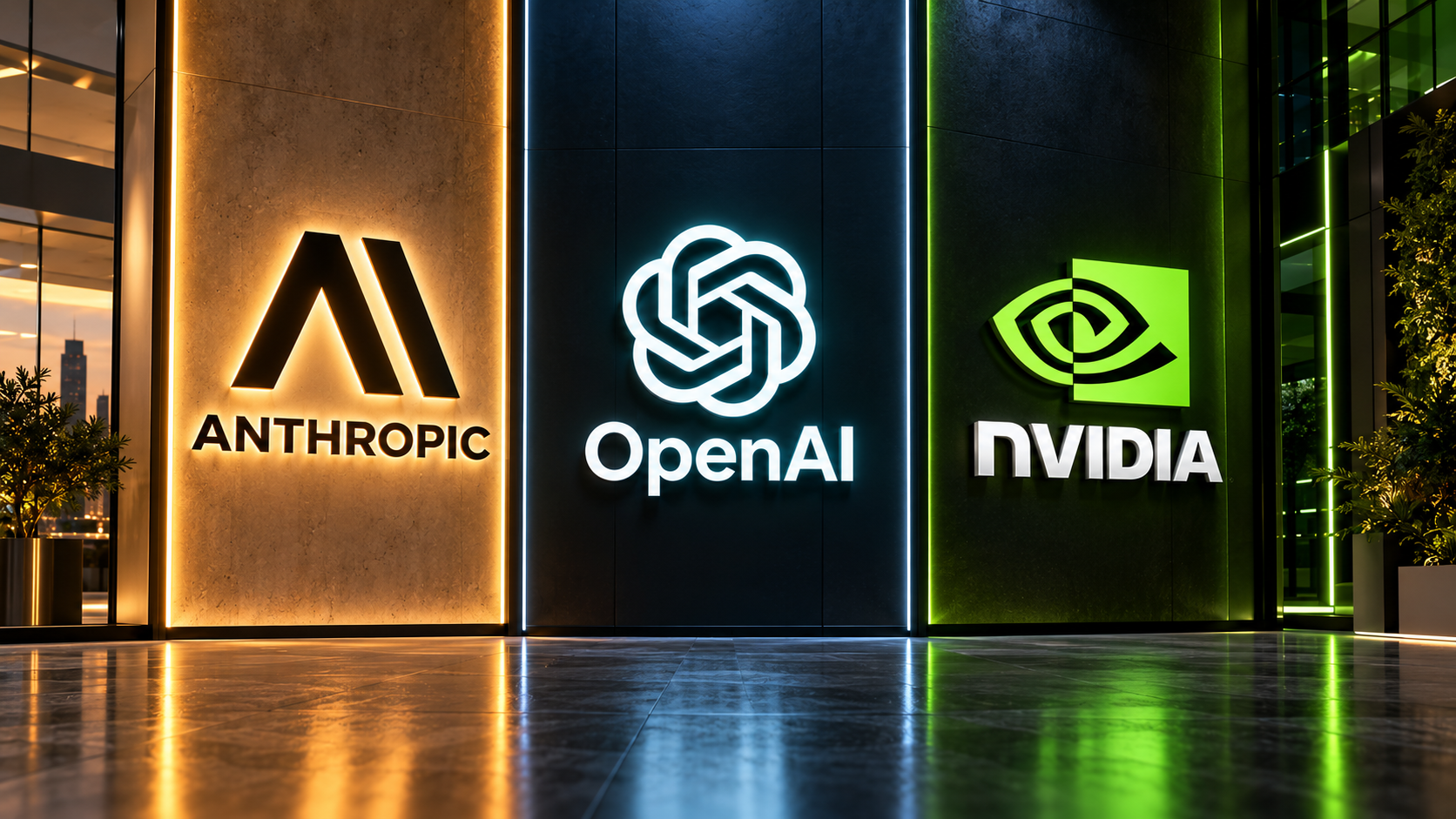
Enterprise Customers Push Back on AI Data Policies
A growing dispute over data protection is beginning to influence how major enterprises deploy advanced artificial intelligence models. Palantir Technologies, Nvidia and Booz Allen Hamilton are restricting or reconsidering their use of models from Anthropic and Open AI, reflecting concerns that sensitive corporate information could be retained or potentially exposed through external AI systems.
For companies operating in defense, cybersecurity and other highly sensitive industries, the issue extends beyond model performance. Control over proprietary data is becoming an increasingly important factor when deciding which AI systems can be integrated into critical workflows.
Anthropic’s Data-Retention Policy Raises Concerns
Palantir has reportedly pushed Anthropic for guarantees of zero data retention before making its models available through Palantir’s software. Nvidia has limited Anthropic’s models to less sensitive internal applications while favoring its own Nemotron models for proprietary work.
Booz Allen has taken an even more restrictive approach, prohibiting employees from using Anthropic’s commercial model on cybersecurity projects involving proprietary data.
The concerns intensified after Anthropic introduced a 30-day data-retention policy in June alongside its Fable 5 model. Anthropic said the retention period was necessary to analyze usage logs and identify sophisticated attacks that could unfold over multiple sessions. The company also stated that retained information would not be used to train its models.
Anthropic Moves Toward Customer-Controlled Data
Anthropic has responded by introducing Enterprise Frontier Safeguards, which allows enterprise customers to store activity data within their own cloud environments, including Amazon S3, Azure Blob Storage and Google Cloud Storage. Customers can also use their own encryption keys.
Anthropic’s automated safety systems can continue monitoring activity for misuse, while the company says the new structure eliminates the need for human review by Anthropic employees. The system is being introduced gradually, with broader availability targeted for later in the fall.
Neither Anthropic nor OpenAI trains on customer data by default, according to the information provided, although both collect anonymized metadata for product improvement unless customers choose to opt in.
Nvidia and Palantir Offer an Alternative Approach
The restrictions also highlight a broader strategic shift toward AI systems that allow organizations to maintain greater control over their data. Palantir and Nvidia recently introduced a platform combining Palantir’s software with Nvidia’s open Nemotron models, designed to allow organizations to run AI against their own data without exposing it to external model providers.
Nvidia is reportedly the first customer for the supply-chain application of the technology, reinforcing the potential commercial importance of this approach.
The strategy could become increasingly attractive to businesses that view data sovereignty as equally important as model intelligence. Rather than sending sensitive information to an external AI provider, organizations can increasingly look toward architectures that keep critical data within their own infrastructure or cloud environment.
Microsoft Sees an Opening in Enterprise AI
The growing uncertainty also creates an opportunity for Microsoft, which is marketing its AI products and segmented cloud infrastructure to enterprise customers concerned about data security and isolation.
This suggests that the competition in enterprise AI is expanding beyond which company has the most capable model. Data governance, security, infrastructure control and compliance are becoming central components of the purchasing decision.
AI Stocks Face a New Risk Factor
The market reaction illustrates how quickly concerns surrounding AI infrastructure and enterprise adoption can affect technology valuations. Nvidia shares fell approximately 3% Monday as AI-related stocks broadly declined.
For Anthropic and OpenAI, maintaining enterprise confidence will be essential as increasingly sensitive workloads move onto AI platforms. For Nvidia and Palantir, meanwhile, the shift could create an opportunity to promote AI architectures that prioritize customer-controlled data.
The broader implication is that the next phase of enterprise AI adoption may be shaped as much by trust and data ownership as by model performance. If large organizations increasingly restrict third-party models because of retention and privacy concerns, demand could accelerate for AI systems that can operate within controlled environments. That would potentially reshape the competitive landscape around enterprise AI infrastructure, benefiting providers capable of combining advanced models with stronger data-sovereignty guarantees.
Comparison, examination, and analysis between investment houses
Leave your details, and an expert from our team will get back to you as soon as possible
* This article, in whole or in part, does not contain any promise of investment returns, nor does it constitute professional advice to make investments in any particular field.
To read more about the full disclaimer, click here
- sagi habasov
- •
- 6 Min Read
- •
- ago 15 hours
SKN | Musk Accelerates SpaceX’s Orbital AI Plans: Could NVIDIA Compute Reach Orbit in 2027?
Elon Musk is bringing forward SpaceX’s timeline for putting AI computing infrastructure into orbit, saying the company has designed a
- ago 15 hours
- •
- 6 Min Read
Elon Musk is bringing forward SpaceX’s timeline for putting AI computing infrastructure into orbit, saying the company has designed a

- omer bar
- •
- 6 Min Read
- •
- ago 15 hours
SKN | CrowdStrike CEO Warns: Slowing Frontier AI Will Not Stop Autonomous Cyberattacks Already Moving at Machine Speed
CrowdStrike CEO and founder George Kurtz is warning that a potential slowdown in frontier AI development would not eliminate cyber
- ago 15 hours
- •
- 6 Min Read

CrowdStrike CEO and founder George Kurtz is warning that a potential slowdown in frontier AI development would not eliminate cyber

- Ronny Mor
- •
- 7 Min Read
- •
- ago 17 hours
SKN | Apple’s Sonera Acquisition Could Strengthen Its Long-Term Strategy as Near-Term Pressures Weigh on AAPL
Apple’s acquisition of Sonera could prove strategically important over the long term by adding technology that may expand the company’s
- ago 17 hours
- •
- 7 Min Read

Apple’s acquisition of Sonera could prove strategically important over the long term by adding technology that may expand the company’s
- sagi habasov
- •
- 7 Min Read
- •
- ago 1 day
SKN | China’s Z.AI Raises $5 Billion as AI Competition Drives Demand for Capital
Chinese artificial intelligence company Z.AI has secured $5 billion through a combination of equity and convertible bond financing, underscoring
- ago 1 day
- •
- 7 Min Read

Chinese artificial intelligence company Z.AI has secured $5 billion through a combination of equity and convertible bond financing, underscoring

