





- omer bar
- •
- 8 Min Read
- •
- 21 hours ago
Key Points
- Former Fed Vice Chair Roger Ferguson believes another interest rate hike remains possible in 2026.
- Fed Chair Kevin Warsh signaled a shift away from traditional forward guidance and dot-plot dependence.
- New task forces reviewing monetary policy and the Fed’s balance sheet may shape future policy reforms.
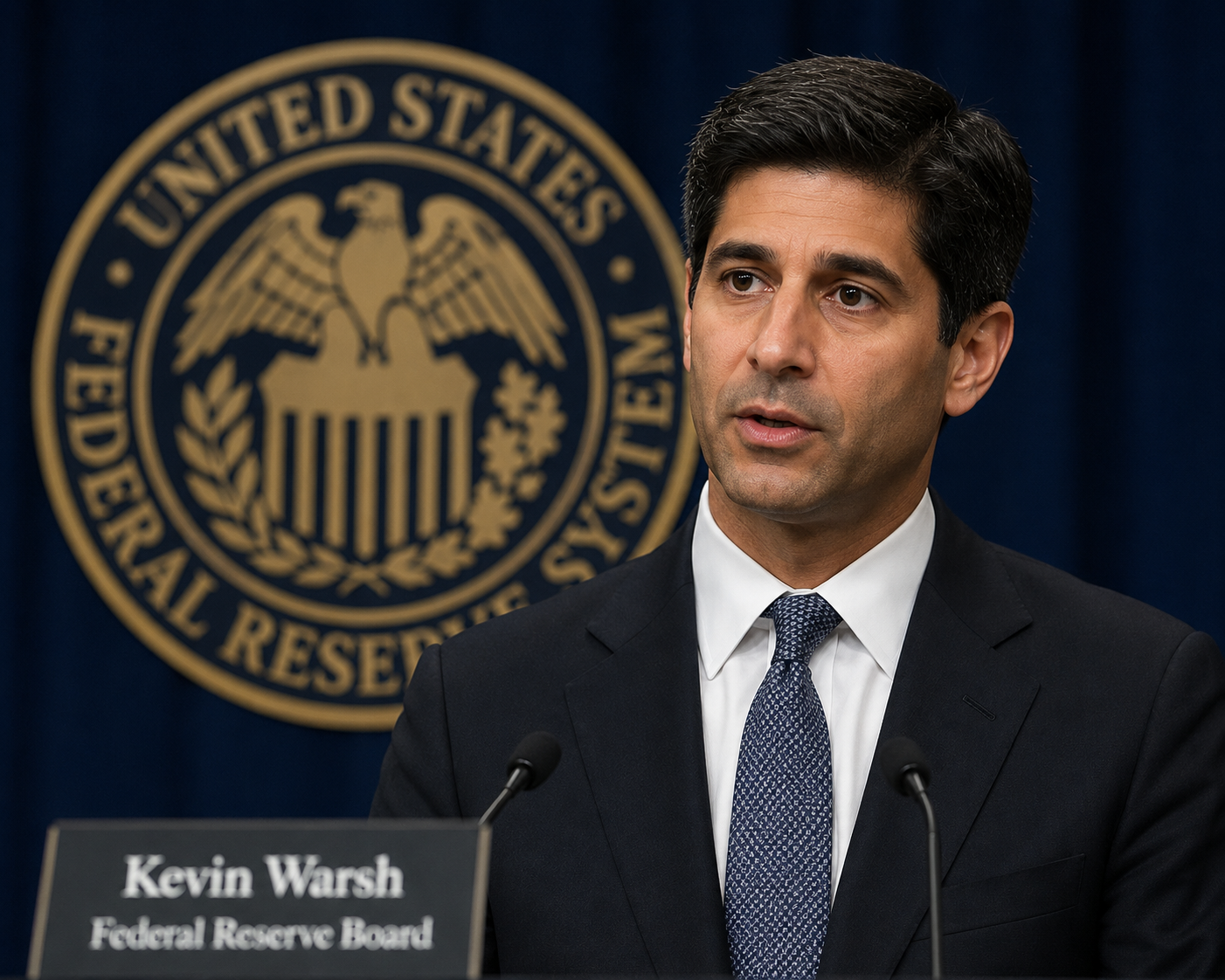
The Federal Reserve’s latest policy meeting may have left interest rates unchanged, but investors are increasingly focused on what comes next under the leadership of newly appointed Chair Kevin Warsh. While the Federal Open Market Committee maintained its benchmark rate at 3.75%, comments from former Vice Chair Roger Ferguson suggest markets should not dismiss the possibility of another rate increase later this year. With inflation showing renewed signs of persistence and labor markets remaining resilient, the Fed appears determined to preserve its inflation-fighting credibility even as economic growth continues.
Inflation Data Keeps Rate Hike Expectations Alive
According to Ferguson, the underlying economic data still supports the possibility of tighter monetary policy. Inflation indicators remain elevated compared to the Federal Reserve’s long-term target, despite previous rate adjustments and policy tightening efforts. Core Personal Consumption Expenditures (PCE), the Fed’s preferred inflation gauge, reached 129.63 in April, while Consumer Price Index (CPI) readings continued to trend higher in May.
At the same time, the labor market remains remarkably stable. Unemployment has held at approximately 4.3% for three consecutive months, reflecting a healthy employment environment that provides policymakers with flexibility to maintain a restrictive policy stance if necessary. For investors, this combination of resilient employment and persistent inflation creates conditions where additional rate increases cannot be ruled out.
The Federal Reserve already reduced rates by 75 basis points between October and December 2025. Since then, inflation pressures have shown signs of reaccelerating, creating a challenge for policymakers seeking to maintain credibility while avoiding excessive economic tightening.
Warsh Signals a Different Leadership Style
One of the most notable developments from the June meeting was not a policy change but rather Warsh’s approach to institutional reform. Instead of introducing sweeping changes immediately after assuming leadership, Warsh announced the formation of multiple task forces to evaluate key aspects of Federal Reserve operations, including monetary policy communications and the central bank’s $6.7 trillion balance sheet.
Ferguson described the strategy as consensus-driven rather than directive. By utilizing internal working groups, Warsh appears focused on building support among Federal Reserve governors and regional presidents before implementing significant reforms. This approach suggests investors should expect gradual rather than abrupt changes to the Fed’s operating framework.
While the process may appear slow, it could ultimately result in more durable policy adjustments as broader institutional support develops.
The Quiet End of the Forward Guidance Era
Perhaps the most significant signal from the meeting was what the Federal Reserve chose to remove. Policymakers eliminated language that previously provided hints regarding future policy direction, a move widely interpreted as reflecting Warsh’s long-standing skepticism toward forward guidance.
Warsh has frequently argued that excessive communication can constrain policymakers by forcing them to defend forecasts that may become outdated as economic conditions evolve. The so-called “dot plot,” which outlines individual officials’ expectations for future interest rates, has also faced criticism for creating a false sense of precision.
For investors, this shift could increase market volatility. Without detailed forward guidance, markets may need to place greater emphasis on incoming economic data rather than relying on central bank projections. While this could improve policy flexibility, it may also create greater uncertainty regarding the future path of interest rates.
What Investors Should Watch Next
Looking ahead, inflation trends, labor market conditions, and the findings of Warsh’s newly established task forces will likely become the primary drivers of monetary policy expectations. Investors should closely monitor future inflation reports, wage growth, and consumer spending data for clues about whether additional tightening becomes necessary.
At the same time, the Fed’s evolving communication strategy may fundamentally reshape how markets interpret policy decisions. If Warsh continues reducing reliance on forward guidance, financial markets could become increasingly data-dependent. The coming months may determine whether the Federal Reserve can successfully balance flexibility, transparency, and credibility as it navigates the next phase of the economic cycle.
Comparison, examination, and analysis between investment houses
Leave your details, and an expert from our team will get back to you as soon as possible
* This article, in whole or in part, does not contain any promise of investment returns, nor does it constitute professional advice to make investments in any particular field.
To read more about the full disclaimer, click here
- sagi habasov
- •
- 7 Min Read
- •
- ago 1 day
SKN | Can Uzbekistan’s Investor-Led Reform Agenda Transform It Into Central Asia’s Next Financial Hub?
Uzbekistan is accelerating its efforts to position itself as one of Central Asia's most attractive investment destinations by transforming investor
- ago 1 day
- •
- 7 Min Read

Uzbekistan is accelerating its efforts to position itself as one of Central Asia's most attractive investment destinations by transforming investor

- Ronny Mor
- •
- 7 Min Read
- •
- ago 2 days
SKN | Could Another Large Social Security COLA Be on the Horizon for 2027?
Social Security beneficiaries may be on track for another sizable cost-of-living adjustment (COLA) in 2027 if inflation remains elevated relative
- ago 2 days
- •
- 7 Min Read

Social Security beneficiaries may be on track for another sizable cost-of-living adjustment (COLA) in 2027 if inflation remains elevated relative

- Lior mor
- •
- 8 Min Read
- •
- ago 3 days
SKN | Warsh Forms Task Force to Review Fed’s $6.7 Trillion Balance Sheet
Fed Launches Comprehensive Balance Sheet Review Federal Reserve Chairman Kevin Warsh announced Wednesday that he is creating a dedicated task
- ago 3 days
- •
- 8 Min Read
Fed Launches Comprehensive Balance Sheet Review Federal Reserve Chairman Kevin Warsh announced Wednesday that he is creating a dedicated task
- sagi habasov
- •
- 7 Min Read
- •
- ago 3 days
SKN | Fed Chair Warsh Expected to Withhold ‘Dot’ From Central Bank’s Interest Rate Outlook
Focus Shifts to the Fed’s Dot Plot As the Federal Reserve concludes its latest policy meeting, market participants are paying
- ago 3 days
- •
- 7 Min Read

Focus Shifts to the Fed’s Dot Plot As the Federal Reserve concludes its latest policy meeting, market participants are paying


