





- omer bar
- •
- 8 Min Read
- •
- 3 hours ago
Key Points
- U.S. officials are investigating whether ASML’s advanced EUV chipmaking technology may have reached China despite export restrictions.
- ASML strongly denies the claims, stating that no EUV lithography machine has ever been shipped to China.
- The dispute highlights growing geopolitical tensions surrounding semiconductor technology and artificial intelligence development.
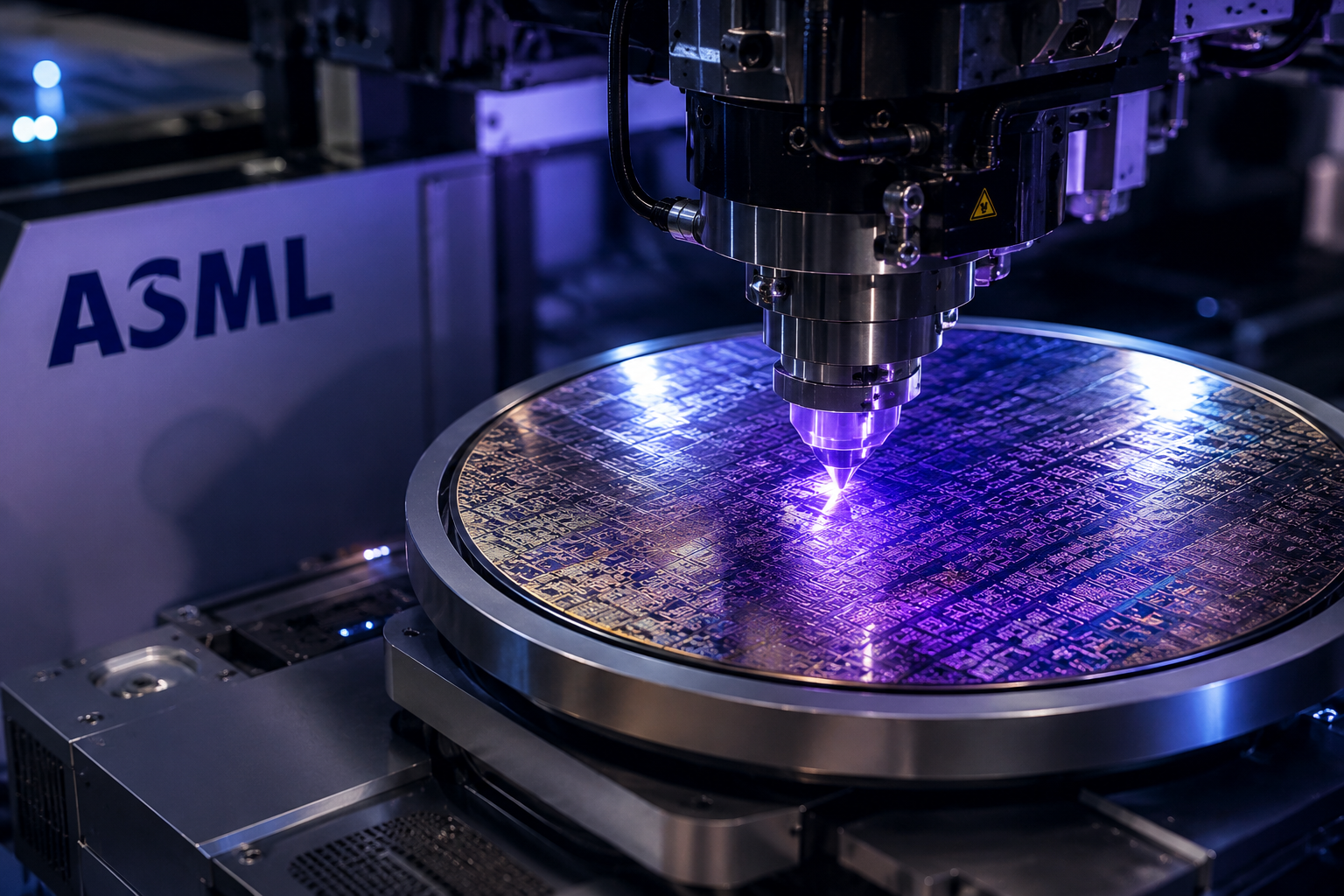
The global semiconductor industry is facing renewed scrutiny after U.S. officials raised concerns that one of ASML’s highly restricted extreme ultraviolet (EUV) lithography systems may have found its way into China. The allegation, if proven, would represent one of the most significant breaches of Western export controls designed to limit China’s access to advanced semiconductor manufacturing capabilities. While ASML has firmly rejected the claims, the controversy underscores the increasing strategic importance of chip technology as governments compete for leadership in artificial intelligence, advanced computing, and national security.
ASML’s Critical Role in the Global Semiconductor Ecosystem
ASML occupies a unique and highly strategic position within the semiconductor industry. The Dutch technology giant is currently the only company in the world capable of manufacturing EUV lithography systems, which are required to produce the most advanced semiconductors powering artificial intelligence applications, cloud computing infrastructure, data centers, smartphones, and next-generation processors.
Every leading-edge chip manufactured by companies such as Taiwan Semiconductor Manufacturing Company (TSMC) relies on ASML’s equipment. These chips ultimately power products developed by industry leaders including Nvidia, Apple, and other major technology firms. The company’s technological monopoly has transformed ASML into one of Europe’s most valuable corporations and a cornerstone of the global AI supply chain.
The complexity of EUV technology further strengthens ASML’s position. Industry experts estimate that the company spent decades and billions of dollars developing the systems, creating an enormous barrier to entry for potential competitors. As a result, any disruption involving ASML’s technology has implications far beyond the semiconductor industry itself.
Export Controls Become a New Battleground
The latest dispute highlights the intensifying technology rivalry between the United States and China. Washington has spent years tightening restrictions on advanced semiconductor exports, arguing that cutting-edge chips could enhance China’s military and technological capabilities. Since the first Trump administration, ASML has been prohibited from selling EUV systems to Chinese customers.
Recent reports indicate that U.S. Commerce Secretary Howard Lutnick has privately expressed concerns to ASML executives regarding evidence that EUV-related equipment or transport components may have entered China. However, U.S. officials have not publicly disclosed evidence showing that a complete EUV machine is currently operating within the country.
ASML has strongly rejected the allegations. Company executives maintain that every EUV system produced is carefully monitored throughout its lifecycle and that no EUV machine has ever been delivered to a Chinese customer. The company also states that strict internal controls separate employees with access to sensitive EUV technology from operations serving restricted markets.
Investor Implications and Future Industry Risks
For investors, the controversy serves as a reminder that geopolitical risks have become increasingly important in evaluating technology companies. Even companies with dominant market positions can face significant uncertainty when government policies and international trade restrictions become part of the business environment.
ASML’s importance to the artificial intelligence boom makes the situation particularly significant. Demand for advanced semiconductors continues to surge as AI infrastructure investments accelerate worldwide. Any escalation in export controls or supply chain restrictions could affect semiconductor production, technology valuations, and investment strategies across the broader market.
At the same time, governments and private investors are increasing efforts to support alternative semiconductor technologies. Emerging companies focused on next-generation lithography systems have attracted both public and private capital, reflecting a growing desire to reduce dependence on a single supplier for critical chipmaking equipment.
What Markets Should Watch Next
Looking ahead, the key question remains whether U.S. authorities will provide concrete evidence supporting their concerns. If such evidence emerges, it could trigger tighter export restrictions and further strain relations between Western technology suppliers and Chinese manufacturers. If the allegations remain unsubstantiated, attention may shift toward broader policy debates surrounding semiconductor security and global technology competition.
As artificial intelligence continues driving unprecedented demand for advanced chips, the strategic importance of semiconductor manufacturing is only increasing. Investors, policymakers, and technology companies alike will be watching closely, as the outcome of this dispute could influence the future direction of global chip production and the balance of power within the AI economy.
Comparison, examination, and analysis between investment houses
Leave your details, and an expert from our team will get back to you as soon as possible
* This article, in whole or in part, does not contain any promise of investment returns, nor does it constitute professional advice to make investments in any particular field.
To read more about the full disclaimer, click here
- sagi habasov
- •
- 7 Min Read
- •
- ago 12 hours
SKN | Hyundai Moves to Consolidate Robotics Bet in $325 Million Boston Dynamics Stake Buyout From SoftBank
Hyundai Motor Group is reportedly preparing to acquire SoftBank’s remaining stake in Boston Dynamics for approximately $325 million, according to
- ago 12 hours
- •
- 7 Min Read

Hyundai Motor Group is reportedly preparing to acquire SoftBank’s remaining stake in Boston Dynamics for approximately $325 million, according to

- Lior mor
- •
- 8 Min Read
- •
- ago 13 hours
SKN | Amazon’s AI Chip Push Into External Markets: A Strategic Threat to Nvidia or a Limited Challenge?
Amazon is reportedly exploring the possibility of selling its custom-designed artificial intelligence chips to external companies, a development that could
- ago 13 hours
- •
- 8 Min Read

Amazon is reportedly exploring the possibility of selling its custom-designed artificial intelligence chips to external companies, a development that could
- Lior mor
- •
- 9 Min Read
- •
- ago 18 hours
SKN | Amazon Investigates Employees Who Criticized AI Data Center Expansion
Amazon Engineers Face Internal Investigation Amazon (NASDAQ: AMZN) is investigating several employees after they spoke publicly against the rapid expansion
- ago 18 hours
- •
- 9 Min Read

Amazon Engineers Face Internal Investigation Amazon (NASDAQ: AMZN) is investigating several employees after they spoke publicly against the rapid expansion

- Ronny Mor
- •
- 7 Min Read
- •
- ago 1 day
SKN | Could AI-Driven Costs Force Apple to Raise iPhone Prices? Structural Pressures Mount
Apple Inc. is facing growing market scrutiny as artificial intelligence integration across its ecosystem introduces new cost pressures that may
- ago 1 day
- •
- 7 Min Read

Apple Inc. is facing growing market scrutiny as artificial intelligence integration across its ecosystem introduces new cost pressures that may


