


- sagi habasov
- •
- 9 Min Read
- •
- 57 minutes ago
Key Points
- Beef and coffee prices remain major drivers of consumer food inflation across the United States.
- Supply chain disruptions and energy costs are increasingly feeding into agricultural pricing pressures.
- Persistent food inflation could place additional strain on consumers and broader economic growth throughout 2026.
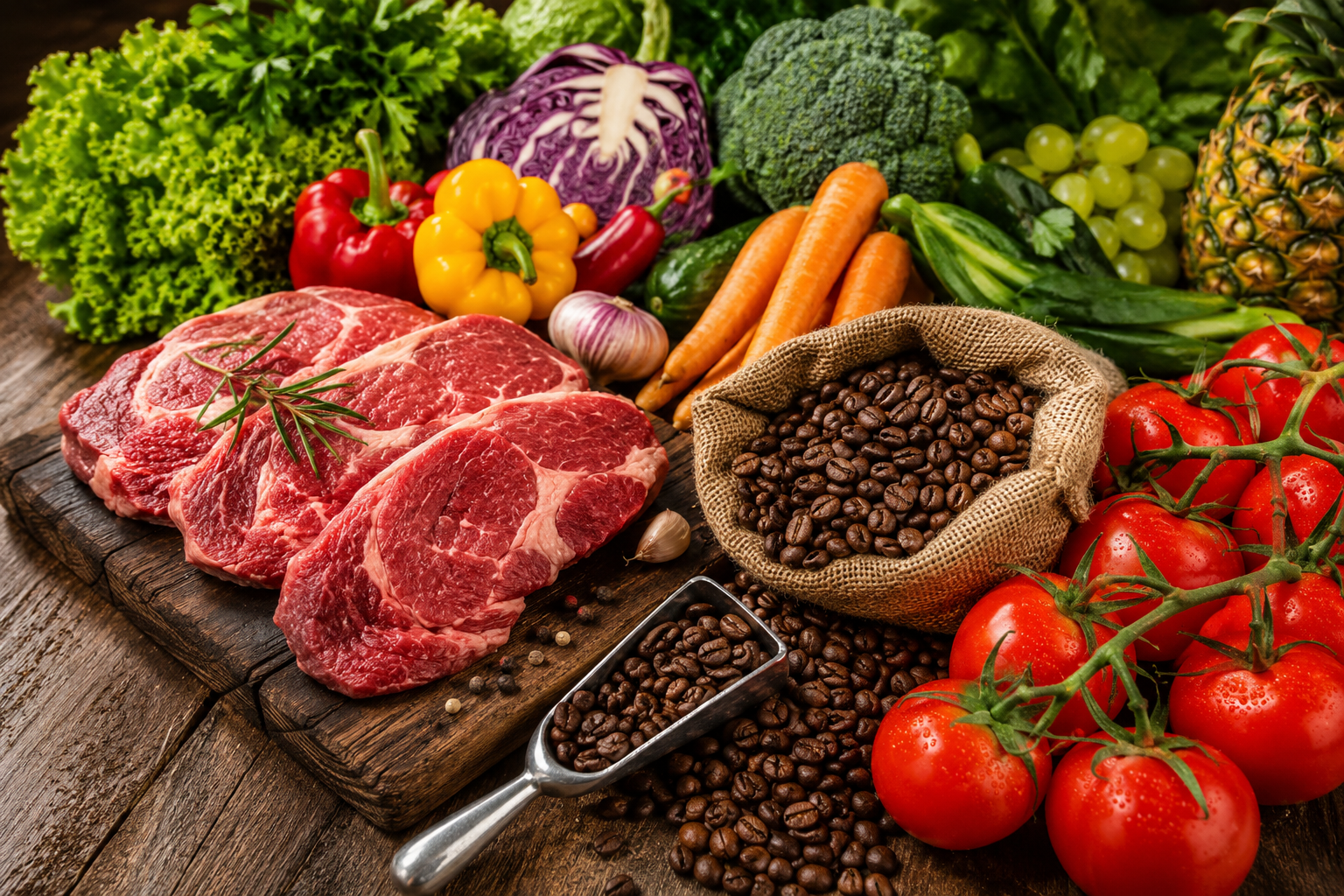
American consumers continue facing mounting pressure at grocery stores and restaurants as food inflation remains stubbornly elevated across key household staples including beef, coffee, tomatoes, and fresh produce. While overall inflation has moderated from previous peaks, food prices are still climbing at a pace that is increasingly reshaping consumer behavior, corporate pricing strategies, and broader expectations for the U.S. economy.
Executives from major restaurant chains and agricultural companies are now warning that supply disruptions, energy costs, and geopolitical instability are creating a far more prolonged inflation cycle than many investors and policymakers initially expected.
Beef Inflation Reshapes Fast Food Pricing Strategies
One of the largest inflationary pressures facing the food industry remains beef prices, which have climbed to record levels across the United States. According to government inflation data, uncooked ground beef prices rose approximately 15% in April compared with the previous year, reaching nearly $6.90 per pound.
Major restaurant operators have begun adjusting strategies in response to higher meat costs, increasingly leaning toward chicken-focused menu offerings as consumers search for lower-cost alternatives. Industry executives have also acknowledged that elevated beef prices are likely to persist throughout the year as cattle herd rebuilding cycles continue constraining supply levels.
For restaurant operators, rising food inflation creates a difficult balancing act. Passing higher costs directly onto consumers risks weakening demand at a time when many households are already struggling with elevated housing, fuel, and borrowing costs. As a result, many restaurant chains are implementing smaller and more gradual price increases while attempting to preserve customer traffic.
Coffee and Produce Costs Add New Inflation Pressure
Coffee prices have also emerged as a major source of inflation pressure, rising roughly 18.5% year over year as supply volatility in major producing countries continues affecting global markets.
Industry executives expressed cautious optimism that additional supply from Brazil and Vietnam could eventually stabilize pricing conditions later this year. However, near-term pressures remain severe as weather disruptions, shipping costs, and supply chain volatility continue affecting agricultural markets.
Fresh produce prices are creating additional strain for consumers. Tomato prices surged approximately 40% in April after adverse weather conditions in Florida reduced available supply. Agricultural economists noted that tomatoes remain highly price inelastic because they are deeply integrated into restaurant menus and everyday household consumption.
Fruit producers are also warning that higher fertilizer, transportation, and energy costs linked to geopolitical instability are beginning to ripple across global agricultural supply chains. Crops with longer production cycles, including pineapples and tropical fruits, may experience additional pricing pressure later this year.
Energy Markets and Geopolitical Risks Deepen Food Inflation
The broader concern for economists and investors is that food inflation is increasingly becoming intertwined with global energy markets and geopolitical disruptions.
Ongoing Middle East tensions have contributed to higher transportation costs, elevated fertilizer prices, and broader commodity volatility, all of which directly affect agricultural production expenses. Industry executives warn that virtually every stage of the food supply chain — from packaging and refrigeration to transportation and distribution — remains heavily dependent on energy prices.
This creates a difficult inflation cycle for the broader economy. Higher fuel prices increase agricultural costs, which then raise food prices, placing additional pressure on consumers while reinforcing broader inflation expectations.
Consumers May Face a Longer Inflation Battle
Looking ahead, food inflation is increasingly emerging as one of the most persistent economic challenges facing both consumers and policymakers. While certain categories such as tomatoes may eventually normalize due to seasonal supply improvements, structural pressures tied to labor costs, energy markets, and geopolitical instability appear far more difficult to resolve quickly.
For households already facing elevated borrowing costs and slower wage growth, continued increases in grocery and restaurant prices could further weaken discretionary spending patterns during the second half of 2026. Investors are also closely monitoring whether sustained food inflation could reinforce expectations that the Federal Reserve may need to maintain restrictive monetary policy longer than markets previously anticipated.
Outlook
Food inflation is likely to remain a central economic concern throughout 2026 as global supply chains, energy markets, and geopolitical risks continue creating upward pressure across agricultural commodities. While some temporary price relief may emerge in select categories, broader structural inflation forces appear increasingly embedded within the food industry. Consumers, businesses, and policymakers will continue monitoring whether supply conditions stabilize enough to ease pricing pressures or whether prolonged inflation becomes a larger drag on consumer spending and overall economic growth.
Comparison, examination, and analysis between investment houses
Leave your details, and an expert from our team will get back to you as soon as possible
* This article, in whole or in part, does not contain any promise of investment returns, nor does it constitute professional advice to make investments in any particular field.
To read more about the full disclaimer, click here
- omer bar
- •
- 8 Min Read
- •
- ago 2 days
SKN | Russia’s Wartime Economy Contracts for First Time Since 2023 as Sanctions and Inflation Press Growth
Russia’s wartime economy contracted for the first time since 2023, highlighting growing strains on an economic system that had
- ago 2 days
- •
- 8 Min Read

Russia’s wartime economy contracted for the first time since 2023, highlighting growing strains on an economic system that had

- Ronny Mor
- •
- 8 Min Read
- •
- ago 2 days
SKN | Stocks Retreat as Treasury Yields Surge and Inflation Concerns Shake Global Markets
Global stock markets moved lower as Treasury yields climbed sharply amid renewed concerns that inflation may remain elevated longer
- ago 2 days
- •
- 8 Min Read

Global stock markets moved lower as Treasury yields climbed sharply amid renewed concerns that inflation may remain elevated longer
- omer bar
- •
- 8 Min Read
- •
- ago 3 days
SKN | Should Investors Expect a Fed Policy Shift After Williams Signals Rates Are on Hold?
Federal Reserve Bank of New York President John Williams signaled that there is currently no need to adjust US monetary
- ago 3 days
- •
- 8 Min Read

Federal Reserve Bank of New York President John Williams signaled that there is currently no need to adjust US monetary
- Ronny Mor
- •
- 8 Min Read
- •
- ago 3 days
SKN | Will Japan’s Energy-Driven Wholesale Inflation Push the Bank of Japan Toward a June Rate Hike?
Japan’s wholesale inflation accelerated more than expected, driven largely by higher energy prices and renewed cost pressure across manufacturing and
- ago 3 days
- •
- 8 Min Read

Japan’s wholesale inflation accelerated more than expected, driven largely by higher energy prices and renewed cost pressure across manufacturing and

