


- omer bar
- •
- 8 Min Read
- •
- 3 minutes ago
Key Points
- Federal Reserve Bank of New York President John Williams indicated no immediate need to adjust US interest rate policy
- The comments reinforce expectations of a “wait-and-see” stance as inflation and growth trends stabilize
- Markets continue to reassess the timing of potential rate cuts amid evolving macroeconomic data

Federal Reserve Bank of New York President John Williams signaled that there is currently no need to adjust US monetary policy, reinforcing the view that the central bank remains in a holding pattern. His remarks come as policymakers continue to evaluate inflation trends, labor market resilience, and broader economic momentum in the US. For global investors, the message underscores a Federal Reserve approach focused on patience rather than immediate policy recalibration.
Fed Signals Policy Stability Amid Mixed Economic Signals
Williams’ comments align with the broader Federal Reserve stance that interest rates are appropriately positioned given current economic conditions. While inflation has moderated from its peak levels, it remains above the Fed’s long-term target, and economic activity continues to show resilience in key sectors.
The Fed’s cautious approach reflects the challenge of balancing two competing risks: tightening policy too aggressively and slowing growth, versus easing too early and allowing inflationary pressures to re-emerge. Williams’ position suggests policymakers believe the current rate level is sufficient to manage these risks for now.
For financial markets, such signals reinforce the expectation that the Federal Reserve will maintain a data-dependent stance, with policy adjustments contingent on clear and sustained shifts in inflation and employment indicators.
Market Pricing Reflects Delayed Rate Cut Expectations
Interest rate futures and bond markets have been adjusting to the prospect that any meaningful policy easing may occur later than previously anticipated. Treasury yields have remained sensitive to incoming economic data, particularly inflation readings and wage growth indicators.
The absence of immediate policy change guidance from senior Fed officials like Williams contributes to a market environment where volatility is driven largely by data surprises rather than central bank signaling. Equity markets have also been closely tracking these expectations, as discount rate assumptions remain a key driver of valuation dynamics, particularly in growth-oriented sectors.
For global investors, including those in Israeli capital markets with exposure to US assets, the Fed’s stance continues to influence portfolio allocation decisions across equities, fixed income, and currency markets. A prolonged higher-rate environment typically supports the US dollar while weighing on duration-sensitive assets.
Inflation and Labor Market Data Remain Central Variables
The Federal Reserve’s policy trajectory remains heavily dependent on inflation persistence and labor market conditions. While headline inflation has eased from its multi-decade highs, core price pressures and services inflation continue to play a critical role in shaping policy decisions.
At the same time, the US labor market has shown relative resilience, with unemployment remaining near historically low levels. This strength has allowed the Fed to maintain a restrictive policy stance without triggering a sharp economic slowdown, though policymakers continue to monitor for signs of cooling.
Williams’ comments reflect this balancing act, emphasizing that current conditions do not yet justify a shift in policy direction. Instead, the Fed appears focused on maintaining stability while assessing whether inflation continues its gradual convergence toward target levels.
Outlook: Data Dependency Keeps Markets Focused on Fed Signals
Looking ahead, investors will closely monitor upcoming inflation reports, employment data, and broader economic indicators for signs that could alter the Federal Reserve’s policy stance. Any sustained decline in inflation or weakening in labor market conditions could reopen discussions around rate cuts, while persistent price pressures may reinforce the current holding pattern.
Risks include renewed inflation volatility, unexpected economic slowdown, or financial market stress driven by prolonged high interest rates. On the other hand, continued economic resilience combined with moderating inflation could support a gradual and orderly policy normalization path later in the cycle.
Overall, Williams’ remarks reinforce a Federal Reserve narrative centered on patience and data dependence, signaling that US monetary policy is likely to remain steady in the near term as officials wait for clearer economic direction.
Comparison, examination, and analysis between investment houses
Leave your details, and an expert from our team will get back to you as soon as possible
* This article, in whole or in part, does not contain any promise of investment returns, nor does it constitute professional advice to make investments in any particular field.
To read more about the full disclaimer, click here
- Ronny Mor
- •
- 8 Min Read
- •
- ago 2 hours
SKN | Will Japan’s Energy-Driven Wholesale Inflation Push the Bank of Japan Toward a June Rate Hike?
Japan’s wholesale inflation accelerated more than expected, driven largely by higher energy prices and renewed cost pressure across manufacturing and
- ago 2 hours
- •
- 8 Min Read

Japan’s wholesale inflation accelerated more than expected, driven largely by higher energy prices and renewed cost pressure across manufacturing and

- omer bar
- •
- 7 Min Read
- •
- ago 2 days
SKN | Is China’s $3 Trillion Hidden Debt Dragging Out Its Economic Slowdown?
China’s financial system is facing renewed scrutiny as estimates of more than $3 trillion in so-called “hidden” or off-balance-sheet debt
- ago 2 days
- •
- 7 Min Read

China’s financial system is facing renewed scrutiny as estimates of more than $3 trillion in so-called “hidden” or off-balance-sheet debt

- sagi habasov
- •
- 8 Min Read
- •
- ago 2 days
SKN | New Zealand Tightens Fiscal Spending While Preserving Budget Surplus Goals in an Uncertain Economy
New Zealand is moving toward a more restrained fiscal approach as the government seeks to limit new spending commitments while
- ago 2 days
- •
- 8 Min Read
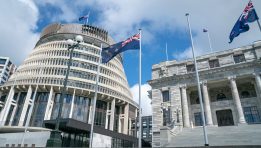
New Zealand is moving toward a more restrained fiscal approach as the government seeks to limit new spending commitments while
- omer bar
- •
- 6 Min Read
- •
- ago 3 days
SKN | Inflation’s Old Ceiling Is Becoming the New Floor — Why Wage Growth Is Struggling to Keep Up
Inflation that was once viewed as temporary is increasingly becoming embedded across major economies, raising concerns that elevated price
- ago 3 days
- •
- 6 Min Read

Inflation that was once viewed as temporary is increasingly becoming embedded across major economies, raising concerns that elevated price


