





- orshu
- •
- 7 Min Read
- •
- 1 month ago


Key Points
- Oppenheimer cautioned that Wall Street's bullish positioning on Walmart leaves limited room for additional upside despite the retailer's strong execution.
- Walmart's consistent earnings growth, expanding e-commerce business, and resilient consumer demand continue to support fundamentals, but valuation has become increasingly demanding.
- Investors remain focused on upcoming earnings, consumer spending trends, inflation, and tariff-related developments that could influence future performance.

Walmart Inc. remains one of Wall Street’s strongest-performing defensive retailers, yet analysts at Oppenheimer believe investor optimism has become increasingly reflected in the company’s valuation. While the retailer continues to outperform many peers through disciplined execution and growing digital operations, expectations have risen to levels that may limit additional near-term share appreciation.
The assessment comes as investors continue balancing resilient U.S. consumer spending against slowing economic growth, evolving inflation trends, and uncertainty surrounding monetary policy. Defensive retail stocks have attracted significant institutional inflows over the past year as investors seek companies capable of delivering relatively stable earnings across different economic environments.
Strong Fundamentals Continue to Support Walmart
Walmart has continued strengthening its competitive position through investments in e-commerce, automation, advertising, and higher-margin business segments. Its ability to combine value pricing with expanding digital fulfillment services has enabled the retailer to capture market share while maintaining resilient customer traffic despite elevated interest rates and changing consumer purchasing patterns.
Institutional investors continue to view Walmart as one of the highest-quality defensive companies within the consumer staples sector. Stable cash generation, operational efficiency, and broad geographic diversification have helped reinforce confidence in management’s long-term strategy. Nevertheless, Oppenheimer’s latest assessment suggests that these positive attributes are now widely recognized and largely reflected in the company’s market valuation.
Valuation Becomes the Primary Debate
Rather than questioning Walmart’s operating performance, Oppenheimer’s commentary centers on valuation. When market expectations become increasingly optimistic, companies often face a higher hurdle to outperform investor forecasts. Future share appreciation may therefore depend less on steady execution and more on whether earnings growth can materially exceed already elevated expectations.
The broader macroeconomic backdrop also remains an important consideration. Inflation trends, labor market conditions, consumer confidence, and potential tariff adjustments could all influence retail spending during the coming quarters. While Walmart has historically demonstrated resilience during periods of economic uncertainty, slower consumer demand or margin pressure could reduce the pace of earnings growth if macroeconomic conditions deteriorate.
Implications for Global and Israeli Investors
For Israeli investors, Walmart represents an important component of many internationally diversified portfolios through direct U.S. equity holdings and global exchange-traded funds. The company is frequently viewed as a benchmark defensive investment because of its scale, predictable cash flows, and exposure to essential consumer spending rather than cyclical demand.
However, valuation remains an increasingly important consideration alongside fundamentals. Investors continue monitoring U.S. dollar movements, Federal Reserve policy, corporate earnings revisions, and consumer spending trends when evaluating exposure to large-cap U.S. retailers within globally diversified portfolios.
Outlook: The near-term outlook for Walmart remains constructive but increasingly dependent on execution. Continued growth in e-commerce, advertising revenue, and operating efficiency could support future earnings, while resilient consumer spending would further reinforce the company’s defensive characteristics. However, downside risks—including softer household demand, renewed inflationary pressures, geopolitical disruptions, fiscal uncertainty, or higher-than-expected operating costs—could challenge current valuation assumptions. For long-term investors, Walmart continues to represent one of the strongest franchises in global retail, although maintaining a balanced assessment of both opportunities and valuation-related risks remains appropriate as macroeconomic conditions continue to evolve.
Comparison, examination, and analysis between investment houses
Leave your details, and an expert from our team will get back to you as soon as possible
* This article, in whole or in part, does not contain any promise of investment returns, nor does it constitute professional advice to make investments in any particular field.
To read more about the full disclaimer, click here
- sagi habasov
- •
- 8 Min Read
- •
- ago 4 hours
SKN | Apple Ties 75% of John Ternus’ Equity Award to Relative Stock Performance: What Does It Signal for Investors?
Apple has placed a significant portion of new CEO John Ternus’ compensation directly behind the company’s stock performance, creating
- ago 4 hours
- •
- 8 Min Read

Apple has placed a significant portion of new CEO John Ternus’ compensation directly behind the company’s stock performance, creating

- Lior mor
- •
- 6 Min Read
- •
- ago 5 hours
SKN | Beyond Chips: Is Nvidia Engine of Infinite AI Growth or Architect of an Infrastructure Bubble?
Nvidia Corporation no longer operates as a conventional semiconductor vendor, but as the primary economic engine and financial underwriter
- ago 5 hours
- •
- 6 Min Read

Nvidia Corporation no longer operates as a conventional semiconductor vendor, but as the primary economic engine and financial underwriter

- Ronny Mor
- •
- 8 Min Read
- •
- ago 20 hours
SKN | Nike’s S&P 100 Exit Signals a Deeper Crisis: Can the Sportswear Giant Rebuild Its Market Position?
The deterioration in Nike’s equity value has reached an important symbolic milestone. S&P Dow Jones Indices announced that NIKE
- ago 20 hours
- •
- 8 Min Read

The deterioration in Nike’s equity value has reached an important symbolic milestone. S&P Dow Jones Indices announced that NIKE

- orshu
- •
- 8 Min Read
- •
- ago 20 hours
SKN | Five Below Wins Over Shoppers With a Major Strategy Shift: Can Its Value Model Sustain Double-Digit Growth?
Five Below is demonstrating that value retail can still generate strong growth when low prices are combined with a
- ago 20 hours
- •
- 8 Min Read
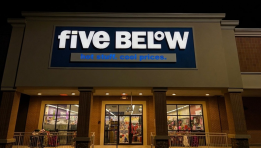
Five Below is demonstrating that value retail can still generate strong growth when low prices are combined with a

