




- Ronny Mor
- •
- 6 Min Read
- •
- 57 seconds ago


Key Points
- U.S. equity index futures rallied early Monday, November 23, with Nasdaq 100 E-minis surging 3.02%, S&P 500 E-minis climbing 2.24%, and Dow E-minis advancing 1.58%.
- The bounce follows Friday’s steep sell-off—in which the Nasdaq Composite plunged 5.3% to erase its 2026 gains and both the S&P 500 and Dow confirmed 10% corrections.
- For international allocators and Israeli institutional desks, emergency market-stabilization measures in South Korea sparked relief buying, though strategists caution elevated volatility persists.
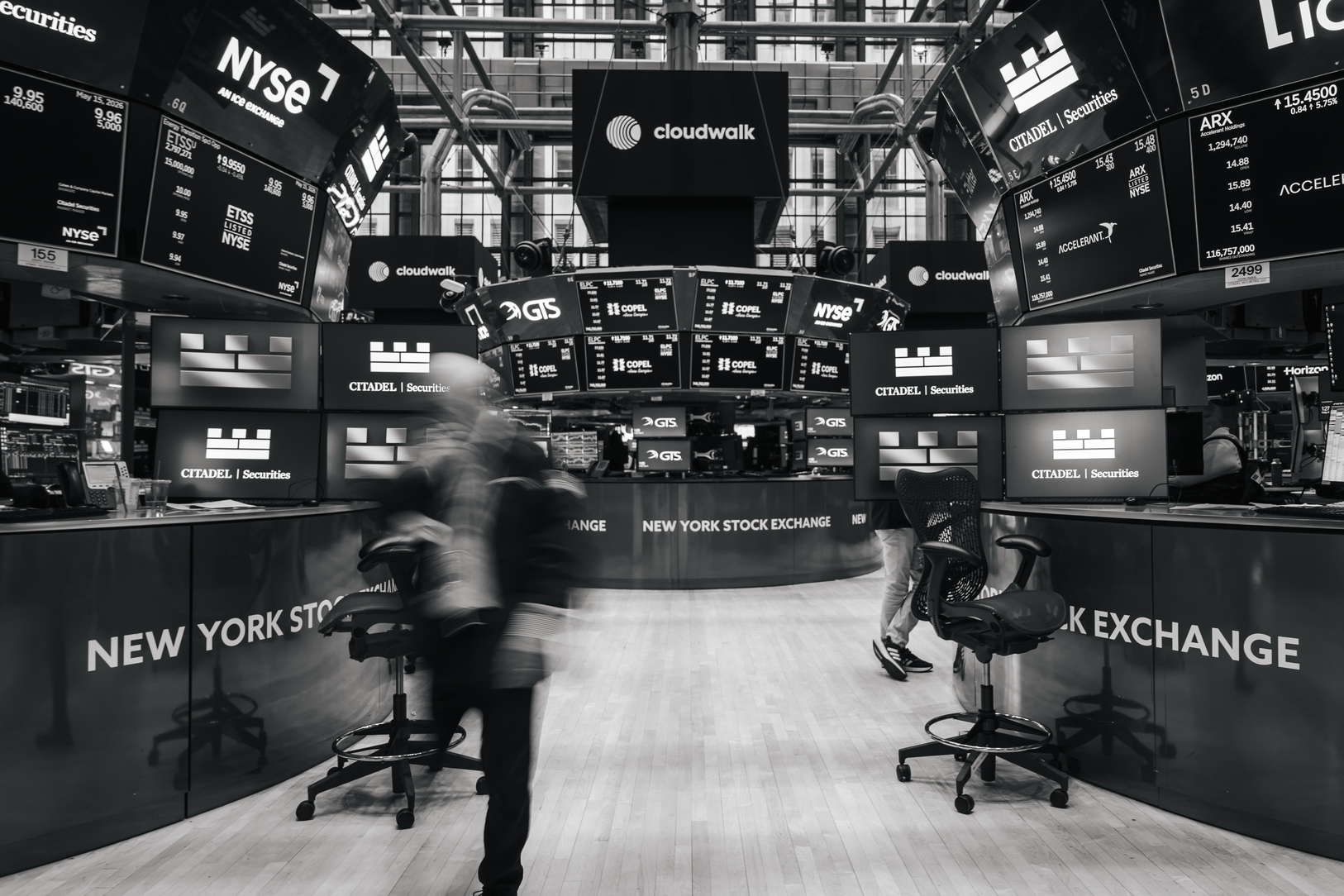
U.S. equity index futures rebounded sharply in early Monday trading on November 23, 2026, staging a broad relief rally after a bruising week for artificial intelligence-linked shares pushed both the S&P 500 and Dow Jones Industrial Average into formal correction territory. At 2:29 a.m. ET, Nasdaq 100 E-minis surged 758.5 points, or 3.02%, S&P 500 E-minis climbed 155 points, or 2.24%, to reclaim the 7,090 level, and Dow E-minis gained 761 points, or 1.58%, supported by weekend market-stabilization measures in South Korea.
Severe Friday Drawdown Resets Mega-Cap AI Valuations
Monday’s pre-market bounce follows one of Wall Street’s most turbulent sessions of the year on Friday, November 20, when relentless selling across semiconductors and foundational AI developers drove the Nasdaq Composite down 5.3%—marking its worst weekly loss since March 2020 and erasing all of the index’s 2026 gains. The S&P 500 tumbled 3.7% and the Dow lost 1.9% on Friday, leaving both benchmarks more than 10% below their record closing highs.
Selling pressure intensified during Anthropic PBC’s second day of public trading after Thursday’s record $81.34 billion IPO: shares of the Claude developer slid 8.5% on Friday to close at $88.91 after touching an intraday low of $83.05—barely above its $83.00 offering price. Hardware suppliers followed lower, with Nvidia dropping 14%, SanDisk falling 14%, and Micron Technology declining 12% as investors questioned multi-hundred-billion-dollar AI infrastructure spending commitments alongside heightened regulatory scrutiny.
Asian Stabilization Measures and Transmission Channels for Israeli Desks
Overnight sentiment steadied after South Korean authorities announced emergency measures to support local equities following Friday’s 5.5% plunge in Seoul’s KOSPI index. Still, market strategists warned against treating Monday’s early futures jump as an immediate trend reversal, noting that elevated implied volatility makes it difficult to distinguish a durable bottom from a technical dead-cat bounce.
For Israeli institutional pension managers and equity allocators on the Tel Aviv Stock Exchange (TASE), the violent repricing across U.S. semiconductor and AI benchmarks carries direct portfolio and currency implications. Domestic institutional funds maintain substantial passive and active allocations to U.S. technology benchmarks alongside local chip-design, optical-networking, and cybersecurity leaders. Concurrently, with the New Israeli Shekel (NIS) weakening roughly 6% month-to-date to near 3.34 per dollar (0.2994 USD/ILS) amid global risk aversion and elevated 10-year U.S. Treasury yields above 5%, local multi-asset desks are closely managing currency hedge ratios while balancing tech volatility against high-yielding domestic sovereign bonds (Shahar).
Outlook: S&P Global PMI Data, Holiday Liquidity, and Anthropic Price Discovery
Moving into Monday’s cash session and the holiday-shortened U.S. Thanksgiving week, traders will evaluate whether institutional buyers defend Friday’s session lows or sell into the overnight bounce. Key near-term catalysts include Monday’s S&P Global November Composite Purchasing Managers’ Index (PMI) release, secondary price discovery in Anthropic shares near the $83 IPO floor, and positioning ahead of December’s Federal Reserve and Bank of Israel policy decisions. Until volatility subsides and mega-cap earnings multiples stabilize, cross-asset desks are likely to favor quality balance sheets over high-beta AI momentum.
Comparison, examination, and analysis between investment houses
Leave your details, and an expert from our team will get back to you as soon as possible
* This article, in whole or in part, does not contain any promise of investment returns, nor does it constitute professional advice to make investments in any particular field.
To read more about the full disclaimer, click here
- orshu
- •
- 7 Min Read
- •
- ago 4 hours
SKN | Core PCE Inflation and Front-Loaded Tech Earnings Anchor Thanksgiving-Shortened Trading Week
Global financial markets enter the final full week of November 2026 operating on a compressed schedule, as institutional participants front-load
- ago 4 hours
- •
- 7 Min Read

Global financial markets enter the final full week of November 2026 operating on a compressed schedule, as institutional participants front-load
- orshu
- •
- 9 Min Read
- •
- ago 7 hours
SKN | Asian Markets Slide in Monday Trade as Nikkei Drops 5.06% and KOSPI Falls 3.51% While Sensex Advances
Asian equity markets open the trading week under pronounced downward pressure during the morning session on Monday, November 23, as
- ago 7 hours
- •
- 9 Min Read

Asian equity markets open the trading week under pronounced downward pressure during the morning session on Monday, November 23, as

- Ronny Mor
- •
- 5 Min Read
- •
- ago 11 hours
SKN | Compass Group Reportedly Plans to Move Primary Listing From London to New York
Compass Group, the world's largest catering company, is reportedly planning to move its primary listing from London to New York,
- ago 11 hours
- •
- 5 Min Read

Compass Group, the world's largest catering company, is reportedly planning to move its primary listing from London to New York,

- omer bar
- •
- 6 Min Read
- •
- ago 16 hours
Crude Oil Falls 5.82% on the Week to $83.41 Despite Friday Rebound as Energy Markets Assess Supply Risks
West Texas Intermediate crude oil recorded a substantial weekly decline, with the January 2027 futures contract falling 5.82% to
- ago 16 hours
- •
- 6 Min Read

West Texas Intermediate crude oil recorded a substantial weekly decline, with the January 2027 futures contract falling 5.82% to
