




- Ronny Mor
- •
- 7 Min Read
- •
- 46 seconds ago


Key Points
- A U.S. government website temporarily used Alibaba’s Qwen AI model to help users search federal regulations, raising questions about technology sourcing.
- The FBI previously accused the Chinese AI developer of copying technology from U.S. competitor Anthropic, increasing scrutiny over AI competition between Washington and Beijing.
- No immediate security risks were identified, but the episode highlights growing concerns over AI governance, data protection, and strategic technology dependence.
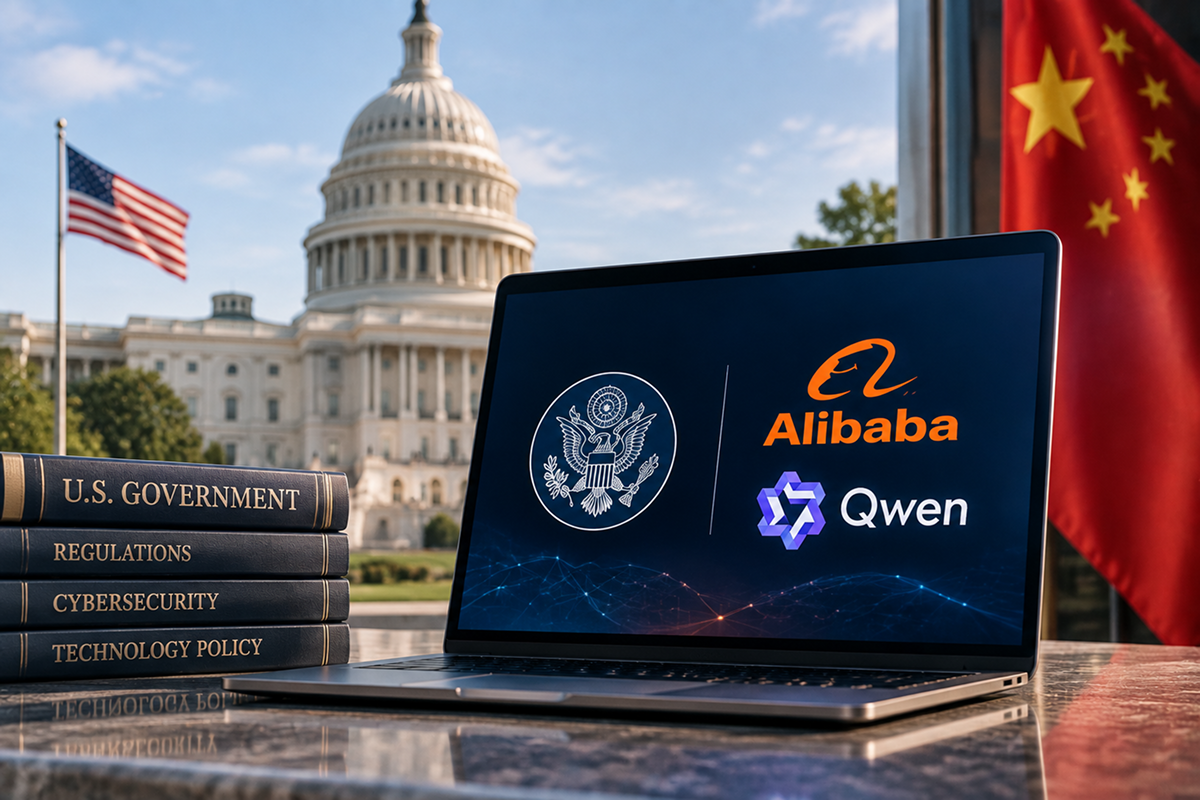
A U.S. government website briefly used an artificial intelligence model developed by Chinese technology company Alibaba for regulatory searches, creating new scrutiny over the role of foreign AI systems in government infrastructure. The development comes amid rising tensions between the United States and China over artificial intelligence capabilities, intellectual property, and technology security.
The Federal Register website, operated by the National Archives, offered users an AI-powered search option based on Alibaba’s Qwen model alongside other search tools. The timing drew attention because the FBI had previously accused Alibaba’s AI division of engaging in what it described as unauthorized copying of technology from U.S. AI company Anthropic.
Government AI Deployment Raises Technology Security Questions
The use of Alibaba’s Qwen model on a federal website raised questions about how government agencies evaluate artificial intelligence systems before deployment. According to reports, the AI search function was later removed after discussions and social media attention highlighted the connection between the tool and a Chinese-developed model.
Officials did not identify any immediate security threat linked to the deployment. However, the situation illustrates the broader challenge governments face as artificial intelligence tools become increasingly integrated into public services. Agencies are balancing the potential efficiency benefits of AI systems with concerns involving data handling, cybersecurity, and technological independence.
The incident also reflects the complexity of the global AI market, where models developed by companies from different countries compete for adoption across industries. Government use of foreign-developed AI technologies has become a sensitive issue as policymakers assess potential risks related to critical infrastructure and sensitive information.
US-China AI Competition Intensifies
The dispute comes during a period of heightened competition between Washington and Beijing over artificial intelligence leadership. The United States has focused on protecting domestic AI innovation and limiting potential misuse of advanced technologies, while Chinese technology companies continue expanding their AI capabilities.
The FBI’s allegations against Alibaba’s AI activities added another layer to existing concerns regarding intellectual property protection. Chinese technology firms have repeatedly faced scrutiny from U.S. officials over issues involving technology transfer, cybersecurity, and access to advanced computing resources.
Alibaba has not publicly confirmed wrongdoing related to the accusations described in the report. The broader debate reflects a growing divide between technological openness and national security considerations as AI becomes a strategic economic asset.
AI Governance Becomes a Growing Policy Priority
The episode highlights the need for clearer standards governing the adoption of artificial intelligence systems by public institutions. Governments worldwide are developing frameworks focused on transparency, reliability, security testing, and accountability before deploying AI tools in sensitive environments.
For technology companies and investors, the situation demonstrates that AI adoption is increasingly influenced not only by technical performance but also by geopolitical considerations. Companies developing AI models must navigate regulatory environments where trust, data protection, and national policy priorities play a larger role.
Going forward, attention will remain focused on how U.S. agencies evaluate external AI providers, whether additional restrictions emerge, and how governments define acceptable use of artificial intelligence technologies. The balance between innovation and security is expected to remain a central issue as AI systems become more deeply embedded in public and private sector operations.
Comparison, examination, and analysis between investment houses
Leave your details, and an expert from our team will get back to you as soon as possible
* This article, in whole or in part, does not contain any promise of investment returns, nor does it constitute professional advice to make investments in any particular field.
To read more about the full disclaimer, click here
- orshu
- •
- 7 Min Read
- •
- ago 21 seconds
SKN | SEC Opens Door for Tokenized Stock Trading With Five-Year Regulatory Exemption
The U.S. Securities and Exchange Commission has introduced a new regulatory framework designed to support the development of tokenized
- ago 21 seconds
- •
- 7 Min Read
The U.S. Securities and Exchange Commission has introduced a new regulatory framework designed to support the development of tokenized

- Arik Arkadi Sluzki
- •
- 7 Min Read
- •
- ago 22 seconds
SKN | Crusoe Reaches $30.9 Billion Valuation as AI Infrastructure Race Accelerates
Artificial intelligence infrastructure company Crusoe has secured a major funding round that highlights the accelerating capital flows into the
- ago 22 seconds
- •
- 7 Min Read

Artificial intelligence infrastructure company Crusoe has secured a major funding round that highlights the accelerating capital flows into the

- sagi habasov
- •
- 7 Min Read
- •
- ago 52 seconds
SKN | AI Copyright Battle Intensifies as OpenAI and Microsoft Face New Challenges From News Publishers
The legal dispute between artificial intelligence companies and news organizations is entering a critical phase as court filings reveal
- ago 52 seconds
- •
- 7 Min Read

The legal dispute between artificial intelligence companies and news organizations is entering a critical phase as court filings reveal
- sagi habasov
- •
- 6 Min Read
- •
- ago 1 hour
SKN | Nvidia CEO Jensen Huang Expects AI Chip Demand to Double as Global Investment Accelerates
Nvidia CEO Jensen Huang said the company expects to sell approximately twice as many chips next year as it
- ago 1 hour
- •
- 6 Min Read
Nvidia CEO Jensen Huang said the company expects to sell approximately twice as many chips next year as it
