





- orshu
- •
- 6 Min Read
- •
- 3 minutes ago


Key Points
- Russell 2000 fell 1.77% and Nasdaq declined 1.13%, making small-cap and technology-oriented equities the weakest-performing major U.S. segments in the current session.
- S&P 500 and Dow also moved lower, falling 0.75% and 0.68%, respectively, while the broader U.S. equity market showed widespread weakness.
- The U.S. Dollar Index gained 0.16%, while Canada's S&P/TSX Composite Index fell 1.61% and Brazil's IBOVESPA declined 0.06%, creating a broadly negative cross-market picture.
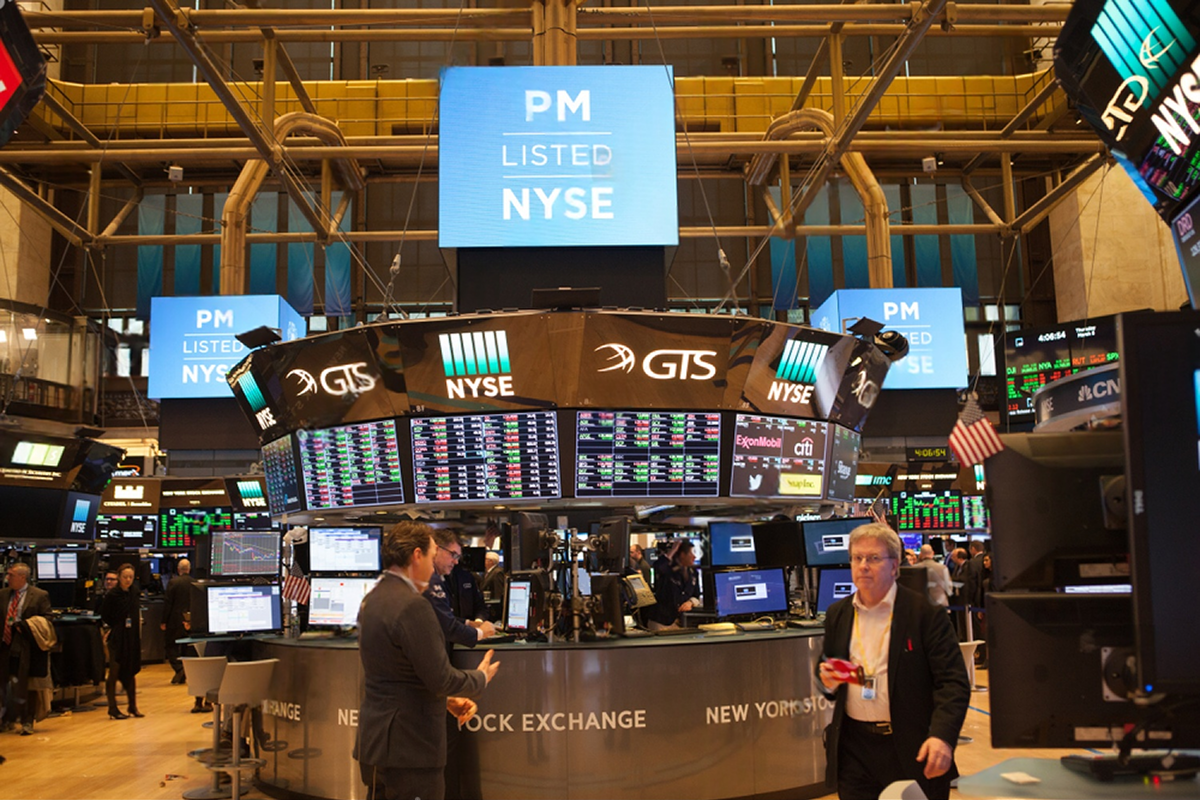
U.S. markets are trading broadly lower on September 24, with declines extending across major large-cap, technology, and small-cap benchmarks. The latest snapshot shows particularly pronounced weakness in the Russell 2000 and Nasdaq, while the U.S. dollar is moving modestly higher and equity markets across Canada and Brazil are also under pressure.
Russell 2000 and Nasdaq Lead Market Declines
The Russell 2000 is currently the weakest-performing major U.S. equity benchmark in the provided snapshot, falling 1.77% to 2,838.66. The decline places small-cap stocks under significant pressure and marks a sharper move than the losses recorded by the major large-cap benchmarks.
The Nasdaq also declined substantially, falling 1.13% to 26,936.04. The move places technology-oriented and growth-sensitive equities among the weakest areas of the U.S. market during the session. The simultaneous declines in the Nasdaq and Russell 2000 indicate that weakness is extending across both technology-focused and smaller-company segments.
The combination of these declines represents a notable shift from the stronger performance recorded by these segments in some recent sessions. With the market still open, the final magnitude of the moves remains subject to further intraday changes.
Major Large-Cap Benchmarks Also Under Pressure
The S&P 500 fell 0.75% to 7,706.03, while the Dow 30 declined 0.68% to 51,511.59. The simultaneous weakness across these benchmarks indicates that the market decline is not restricted to small-cap or technology stocks.
However, the magnitude of the losses differs considerably. The Russell 2000’s 1.77% decline is more than twice the percentage fall in the S&P 500, while the Nasdaq’s 1.13% decline also exceeds the losses in both the S&P 500 and Dow. This creates a picture of broader market weakness with greater pressure on smaller and growth-oriented equities.
For sophisticated investors, market breadth remains an important consideration. When major benchmarks across different capitalization groups decline simultaneously, the distribution and intensity of those losses can provide additional information about the underlying market environment.
Dollar Strengthens as North American Equities Decline
The U.S. Dollar Index gained 0.16% to 101.26. The modest increase contrasts with the sharp declines across U.S. equities and represents a shift in the direction of the dollar compared with some recent sessions.
Elsewhere in the Americas, Canada’s S&P/TSX Composite Index fell 1.61% to 35,751.43, making it one of the weakest major regional benchmarks in the snapshot. Brazil’s IBOVESPA declined a more limited 0.06% to 185,700.36.
The overall picture is therefore one of broad equity-market weakness across the Americas, with the strongest declines concentrated in the Russell 2000, Nasdaq, and Canadian equities. The dollar’s modest advance provides a contrasting cross-asset signal, while Brazil’s near-flat performance suggests that weakness is not equally distributed across every regional market.
Looking ahead, investors will monitor whether the current equity declines deepen or begin to stabilize as the U.S. session progresses. Particular attention will remain on the Russell 2000 and Nasdaq to assess whether pressure on small-cap and growth-oriented equities persists, while the S&P 500 and Dow will indicate whether weakness continues to broaden across large-cap stocks. The U.S. dollar, Canadian equities, and Brazilian market will provide additional cross-market signals. Because the market remains open, changes in index leadership, trading breadth, and the dollar’s direction could materially reshape the session before the close.
Comparison, examination, and analysis between investment houses
Leave your details, and an expert from our team will get back to you as soon as possible
* This article, in whole or in part, does not contain any promise of investment returns, nor does it constitute professional advice to make investments in any particular field.
To read more about the full disclaimer, click here
- orshu
- •
- 6 Min Read
- •
- ago 3 hours
SKN | Asian Markets Mixed on September 23, 2026 as India and China Slide While Japan Advances
Asian markets delivered a sharply mixed session on September 23, 2026, with strength concentrated in South Korea and Japan while
- ago 3 hours
- •
- 6 Min Read

Asian markets delivered a sharply mixed session on September 23, 2026, with strength concentrated in South Korea and Japan while

- sagi habasov
- •
- 8 Min Read
- •
- ago 3 hours
SKN | Could Higher Treasury Yields and Trump-Xi Talks Keep U.S. Stocks Under Pressure?
Wall Street Starts Thursday Under Pressure U.S. stock futures were lower early Thursday as investors weighed the impact of elevated
- ago 3 hours
- •
- 8 Min Read

Wall Street Starts Thursday Under Pressure U.S. stock futures were lower early Thursday as investors weighed the impact of elevated
- sagi habasov
- •
- 7 Min Read
- •
- ago 15 hours
SKN | Copper Could Be Gearing Up for a Rally as Key Resistance Comes Into Focus
Copper is approaching a potentially important technical inflection point after several months of gains and consolidation. According to Reuters'
- ago 15 hours
- •
- 7 Min Read

Copper is approaching a potentially important technical inflection point after several months of gains and consolidation. According to Reuters'

- Arik Arkadi Sluzki
- •
- 7 Min Read
- •
- ago 16 hours
SKN | Is 6% the New Threshold for U.S. Treasury Market Stress?
The 5% level on the benchmark U.S. 10-year Treasury yield was once regarded as a major psychological barrier for
- ago 16 hours
- •
- 7 Min Read

The 5% level on the benchmark U.S. 10-year Treasury yield was once regarded as a major psychological barrier for

