





- orshu
- •
- 7 Min Read
- •
- 2 months ago
Key Points
- The U.S. Dollar Index rose 0.15% to 99.69 on June 17, reflecting renewed demand for the world's primary reserve currency.
- The index traded near the upper end of its daily range, signaling improving momentum despite remaining below its 52-week high.
- Currency markets remain focused on Federal Reserve policy expectations, inflation trends, and global economic developments.

The U.S. Dollar Index (DXY) moved higher during the June 17 trading session as investors continued assessing economic conditions, monetary policy expectations, and broader market sentiment. The advance reflects a modest strengthening of the U.S. currency against a basket of major international currencies, reinforcing the dollar’s role as a key barometer of global financial conditions.
Currency markets have remained particularly sensitive to interest-rate expectations and macroeconomic data throughout 2026. As investors evaluate the trajectory of inflation and economic growth, movements in the dollar continue to influence equities, commodities, bonds, and international capital flows.
Dollar Advances as Market Confidence Improves
As of 10:52 p.m. GMT+8 on June 17, the U.S. Dollar Index stood at 99.69, representing a gain of 0.15% from the previous close of 99.54. The index opened at 99.52 and traded within a daily range of 99.49 to 99.74, indicating relatively stable but constructive price action throughout the session.
The move higher suggests investors continued to favor the dollar amid ongoing uncertainty surrounding global growth and monetary policy. While the gain was modest, the index’s ability to hold near session highs indicated that demand for U.S. assets remained resilient.
The dollar’s performance remains important because it influences a wide range of financial markets. A stronger dollar can affect multinational corporate earnings, commodity prices, international trade flows, and emerging-market capital movements. As a result, even relatively small changes in the index are closely monitored by institutional investors worldwide.
Interest Rate Expectations Remain the Key Driver
Federal Reserve policy expectations continue to be one of the most significant influences on currency markets. Investors remain focused on incoming economic data and any signals that could alter expectations regarding future interest-rate decisions.
Higher interest rates generally support the dollar by increasing the attractiveness of dollar-denominated assets. Conversely, expectations for lower rates can place downward pressure on the currency. As markets continue to evaluate inflation trends and labor market conditions, shifts in policy expectations have the potential to create additional volatility in foreign exchange markets.
The dollar’s current position also reflects a balance between domestic economic resilience and evolving global conditions. While concerns about slowing growth in some regions persist, the relative strength of the U.S. economy continues to provide support for the currency.
Investors are increasingly watching whether upcoming economic releases will reinforce the current outlook or introduce new uncertainty regarding future policy direction.
Broader Market Implications Extend Beyond Currency Trading
The performance of the U.S. Dollar Index carries implications far beyond foreign exchange markets. Commodity prices, particularly those denominated in dollars, often respond to changes in currency strength. A stronger dollar can create headwinds for commodities by making them more expensive for international buyers.
Equity markets also remain sensitive to dollar movements. Companies with substantial international revenue exposure may experience currency-related impacts on earnings, while exporters can face competitiveness challenges when the dollar appreciates.
From a global investment perspective, the index remains well within its 52-week range of 95.55 to 100.64. This suggests that while the dollar has strengthened recently, it has not yet returned to the strongest levels seen over the past year. Investors continue to assess whether current economic conditions support further appreciation or whether the currency will remain range-bound in the months ahead.
Looking ahead, market participants will closely monitor Federal Reserve communications, inflation reports, and economic growth indicators for clues regarding the dollar’s next move. Continued economic resilience could provide support for additional gains, while softer economic data or shifting interest-rate expectations could alter the current trajectory. Investors should also watch developments in global monetary policy, as divergence between major central banks may create new opportunities and risks across currency markets during the second half of 2026.
Comparison, examination, and analysis between investment houses
Leave your details, and an expert from our team will get back to you as soon as possible
* This article, in whole or in part, does not contain any promise of investment returns, nor does it constitute professional advice to make investments in any particular field.
To read more about the full disclaimer, click here
- Ronny Mor
- •
- 8 Min Read
- •
- ago 8 hours
SKN | The Bond Vigilantes: How Investors Are Doing the Federal Reserve’s Dirty Work
Capital markets in the United States are currently facing a fascinating dynamic where market forces are seizing the reins
- ago 8 hours
- •
- 8 Min Read
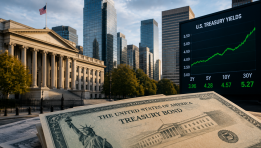
Capital markets in the United States are currently facing a fascinating dynamic where market forces are seizing the reins

- Lior mor
- •
- 8 Min Read
- •
- ago 8 hours
SKN | System Warning from the Chip Market: What Does the $1.3 Trillion Wipeout Signal for the S&P 500?
The aggressive wave of sell-offs that recently washed over the semiconductor sector has left Wall Street with a glaring warning
- ago 8 hours
- •
- 8 Min Read

The aggressive wave of sell-offs that recently washed over the semiconductor sector has left Wall Street with a glaring warning
- Ronny Mor
- •
- 8 Min Read
- •
- ago 9 hours
SKN | Is the Old Continent Offering the Investment Opportunity of the Year?
Amidst a complex geopolitical landscape and ongoing security escalations, European capital markets are displaying remarkable resilience, setting new records
- ago 9 hours
- •
- 8 Min Read

Amidst a complex geopolitical landscape and ongoing security escalations, European capital markets are displaying remarkable resilience, setting new records

- sagi habasov
- •
- 6 Min Read
- •
- ago 15 hours
SKN | Could a Coordinated U.S.-Japan Yen Strategy Reshape Global Markets?
Global investors are closely monitoring reports that the United States and Japan could unveil a coordinated initiative to strengthen
- ago 15 hours
- •
- 6 Min Read

Global investors are closely monitoring reports that the United States and Japan could unveil a coordinated initiative to strengthen


