





- Ronny Mor
- •
- 8 Min Read
- •
- 5 hours ago
Key Points
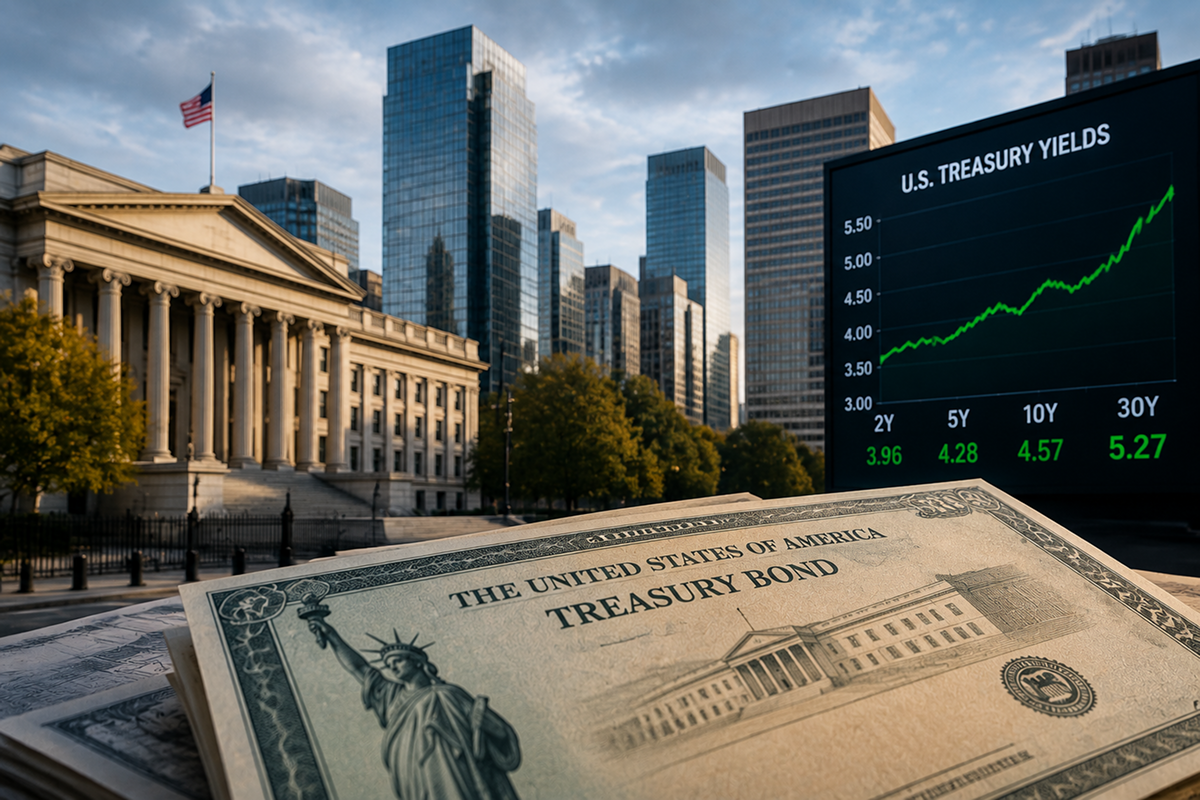
- US 30-year Treasury yields have surged to 5.27%, reaching their highest level since 2007.
- Fed Chair Kevin Warsh is stepping back from forward guidance, leaving investors to independently tighten financial conditions.
- The rise in long-term borrowing costs is weighing heavily on the broader economy, particularly on the housing market and individual borrowers.
Capital markets in the United States are currently facing a fascinating dynamic where market forces are seizing the reins from the central bank. While the Federal Reserve maintains stability in its short-term interest rates, bond market investors are actively repricing risk and pushing long-term borrowing costs to highs not seen in nearly two decades. This trend reflects a fundamental shift in how monetary policy trickles down to the real economy, raising professional questions about the delicate balance between curbing inflation and applying unsustainable pressure to the American consumer. The data clearly indicates that the tightening of financial conditions is occurring in practice, even without the necessity of further official rate hikes.
Changing the Rules of the Game on the Yield Curve
The surge in US government bond yields reflects a new reality where investors dictate the price of money for the long haul. The Federal Reserve has held its overnight target rate steady at a range of 3.5% to 3.75% throughout 2026, yet long-term rates have registered sharp increases. The 30-year Treasury yield climbed to 5.27%, a historic peak not witnessed since 2007. Since June, when Warsh held his first meeting as chairman, the 30-year yield has jumped by approximately 34 basis points. Concurrently, the 10-year yield rose by roughly 24 basis points, while the 2-year note recorded a more moderate increase of about 10 basis points. This aggressive repricing, prominent mostly at the long end of the curve, is leading to a broad-based increase in funding costs, heavily influencing mortgage rates and long-term corporate borrowing.
The Fed’s Deliberate Strategy of Non-Intervention
This market movement is not occurring in a vacuum; rather, it is a direct derivative of a calculated strategy by Federal Reserve Chairman Kevin Warsh. It is evident that Warsh is adopting an approach reminiscent of former Fed Chair Alan Greenspan, advocating for reduced “forward guidance” and granting markets the freedom to organically shape economic expectations. The central bank is aiming to receive an authentic, unfiltered message from the buyers and sellers in the open market, replacing a dynamic where asset prices simply automatically echo the Fed’s latest official forecasts. This philosophy effectively shifts the burden of financial tightening directly into the hands of the “bond vigilantes”—institutional investors who drive government borrowing costs higher by demanding adequate compensation for their perceived risks.
Economic Implications and the Psychology of Debt Investors
Transferring control of the yield curve to market forces carries profound implications, both at the macroeconomic level and in the behavioral sphere. As prominent market analysts point out, including Alfonso Peccatiello of the Macro Compass, investors are expected to continue applying pressure on bond prices until one of three specific off-ramps materializes: credit costs reach a level that tangibly slows economic growth and inflation, short positions against bonds become prohibitively expensive, or weaker macroeconomic data convinces the market that no further tightening is required. None of these paths is devoid of significant economic pain for borrowers. The most interest-rate-sensitive sectors, led by the US housing market, are already experiencing the severe pressures stemming from this new rate environment. Strategically, investors are now required to price a higher risk premium without the communicative safety net they previously enjoyed from the Fed.
Ultimately, the Federal Reserve is consciously leaning on free-market mechanisms as a macroeconomic restraint, operating under the belief that the pressure exerted by bond investors will help finish the job of subduing inflation. Although the market-led tightening of financial conditions provides policymakers with temporary breathing room, it remains a precarious tightrope walk. As is often cautioned in the corridors of Wall Street—when you let the market do the tightening for you, the process is rarely kind. The true test for the Fed in the near future will be identifying that elusive equilibrium point where elevated funding costs cease to be a welcome cooling mechanism and transform into a tangible, systemic threat to the stability of US economic growth.
Comparison, examination, and analysis between investment houses
Leave your details, and an expert from our team will get back to you as soon as possible
* This article, in whole or in part, does not contain any promise of investment returns, nor does it constitute professional advice to make investments in any particular field.
To read more about the full disclaimer, click here
- sagi habasov
- •
- 6 Min Read
- •
- ago 11 hours
SKN | Could a Coordinated U.S.-Japan Yen Strategy Reshape Global Markets?
Global investors are closely monitoring reports that the United States and Japan could unveil a coordinated initiative to strengthen
- ago 11 hours
- •
- 6 Min Read

Global investors are closely monitoring reports that the United States and Japan could unveil a coordinated initiative to strengthen
- sagi habasov
- •
- 6 Min Read
- •
- ago 1 day
SKN | Japan and the U.S. Reportedly Prepare Joint Yen Strategy as Currency Markets Face Rising Intervention Risk
The Japanese yen experienced a sharp rally after reports suggested that Japan and the United States could unveil a
- ago 1 day
- •
- 6 Min Read

The Japanese yen experienced a sharp rally after reports suggested that Japan and the United States could unveil a

- Lior mor
- •
- 6 Min Read
- •
- ago 2 days
SKN | S&P 500 Turns Lower as Rising Treasury Yields Pressure Global Equity Markets
The S&P 500 reversed earlier gains and turned lower as a renewed rise in the U.S. 10-year Treasury yield
- ago 2 days
- •
- 6 Min Read
The S&P 500 reversed earlier gains and turned lower as a renewed rise in the U.S. 10-year Treasury yield

- Arik Arkadi Sluzki
- •
- 6 Min Read
- •
- ago 2 days
SKN | Dollar Weakens Against Yen as Intervention Risks Reshape Currency Market Expectations
The U.S. dollar weakened against the Japanese yen on July 31 as concerns over potential currency intervention by Japanese
- ago 2 days
- •
- 6 Min Read

The U.S. dollar weakened against the Japanese yen on July 31 as concerns over potential currency intervention by Japanese


