





- orshu
- •
- 7 Min Read
- •
- 18 seconds ago


Key Points
- The United States has ordered federal civilian agencies to remove DeepSeek products and prohibit new purchases, citing potential national security and data protection risks.
- The restrictions extend to third-party services built using DeepSeek technology, reinforcing scrutiny of AI supply chains and government technology procurement.
- The decision highlights growing uncertainty for global AI companies, with implications for technology investment, cross-border business and competition between the United States and China.

The United States has intensified its scrutiny of Chinese artificial intelligence technology, ordering federal civilian agencies to remove products developed by DeepSeek from their information systems and prohibiting further procurement. The move, made public on October 19, adds a new dimension to the U.S.-China technology rivalry, where national security, data governance and competition for AI leadership are increasingly shaping corporate strategy and investment conditions.
Government Restrictions Expand Beyond Direct DeepSeek Products
The directive issued by the U.S. Department of Homeland Security covers technology developed by DeepSeek and affiliated entities, as well as third-party products and services built using its models. The order also excludes the company’s products and services from federal civilian agency procurement, reflecting a broader effort to manage potential risks across government technology supply chains.
U.S. officials have raised concerns that DeepSeek’s use by government employees or contractors could expose sensitive information to Chinese authorities. The notice also identifies possible security vulnerabilities and the potential for information to be used to develop intelligence about U.S. individuals and government institutions. These are stated security concerns rather than proof that every use of the technology has resulted in a breach.
The measure applies to federal civilian agency systems and procurement, rather than constituting a blanket prohibition on DeepSeek for every U.S. business or individual. That distinction matters for investors assessing the commercial reach of the policy and its potential implications for the wider AI market.
AI Competition Becomes a Strategic and Commercial Risk
The decision reflects a widening divide between Washington and Beijing over control of advanced technology. AI models are increasingly viewed not only as commercial software but also as strategic infrastructure, with implications for cybersecurity, productivity, public services and national competitiveness. As a result, governments may place greater weight on the origin of software, data-storage arrangements and the ability to audit systems before approving their use.
For technology companies, these developments could increase compliance costs and complicate international expansion. Providers serving government agencies may face additional scrutiny of their model suppliers, cloud infrastructure and third-party integrations. At the same time, restrictions could create opportunities for vendors able to demonstrate strong data controls, transparent governance and reliable security standards.
However, a more fragmented market could also limit competition and reduce access to lower-cost AI tools. If governments and businesses increasingly separate their technology ecosystems by geopolitical alignment, companies may need to maintain different products, infrastructure and compliance processes across markets.
Implications for Global Investors and the Outlook
The policy adds uncertainty to an AI sector already shaped by substantial infrastructure spending, evolving regulation and intense competition. For investors, the relevant question extends beyond DeepSeek itself: whether technology restrictions will remain concentrated in sensitive government systems or broaden into additional commercial sectors and cross-border services.
Israeli technology companies and institutional investors may also need to monitor how changing procurement standards affect partnerships, cloud providers and access to international markets. Israel’s close economic and technology ties with the United States make developments in American cybersecurity policy particularly relevant, although the directive does not automatically impose the same restrictions on Israeli organizations.
Looking ahead, attention will turn to implementation, possible additional restrictions and China’s response. The outlook for global AI investment will depend partly on whether governments can strengthen security safeguards without creating excessive barriers to innovation. Further escalation could raise operating costs and geopolitical risk premiums, while clearer compliance standards could benefit companies capable of establishing trusted, secure AI infrastructure.
Comparison, examination, and analysis between investment houses
Leave your details, and an expert from our team will get back to you as soon as possible
* This article, in whole or in part, does not contain any promise of investment returns, nor does it constitute professional advice to make investments in any particular field.
To read more about the full disclaimer, click here
- Ronny Mor
- •
- 7 Min Read
- •
- ago 42 minutes
SKN | U.S. Tech Stocks Rebound, but Asia’s Sell-Off Signals a More Cautious AI Outlook
U.S. technology stocks began the week with a recovery, but the subsequent weakness across Asian markets suggests that investor
- ago 42 minutes
- •
- 7 Min Read

U.S. technology stocks began the week with a recovery, but the subsequent weakness across Asian markets suggests that investor

- orshu
- •
- 7 Min Read
- •
- ago 2 hours
SKN | Tel Aviv Stocks Rebound as TA-90 Gains 0.9% and Broad Market Strength Returns
Tel Aviv stocks are rebounding after the broad declines recorded in the previous session, with all eight major benchmarks trading
- ago 2 hours
- •
- 7 Min Read

Tel Aviv stocks are rebounding after the broad declines recorded in the previous session, with all eight major benchmarks trading
- orshu
- •
- 9 Min Read
- •
- ago 7 hours
SKN | Global Markets Wrap: October 19, 2026, as European and Tel Aviv Stocks Fall While U.S. and Asian Markets Diverge – Outlook for October 20
Global markets diverged on Monday, October 19, 2026, as gains in parts of the U.S. and Asia contrasted with widespread
- ago 7 hours
- •
- 9 Min Read
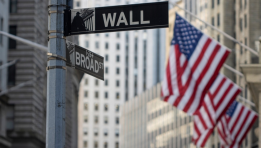
Global markets diverged on Monday, October 19, 2026, as gains in parts of the U.S. and Asia contrasted with widespread

- sagi habasov
- •
- 8 Min Read
- •
- ago 10 hours
SKN | Asian Markets Mixed: KOSPI Falls 3.58% as Nikkei and ASX 200 Decline, Shanghai Gains
Asian market indicators present a mixed picture on Tuesday morning, October 20, with reported declines across several major equity benchmarks
- ago 10 hours
- •
- 8 Min Read

Asian market indicators present a mixed picture on Tuesday morning, October 20, with reported declines across several major equity benchmarks

