




- orshu
- •
- 7 Min Read
- •
- 1 minute ago


Key Points
- Tesla plans to wind down Cybertruck production around mid-2027 at its Texas gigafactory after years of persistently weak sales.
- The Cybertruck faced repeated recalls, quality issues and multiple price revisions, limiting its commercial momentum.
- Tesla plans to use the freed production capacity for its newly launched Cybercab as the company expands its robotaxi ambitions.
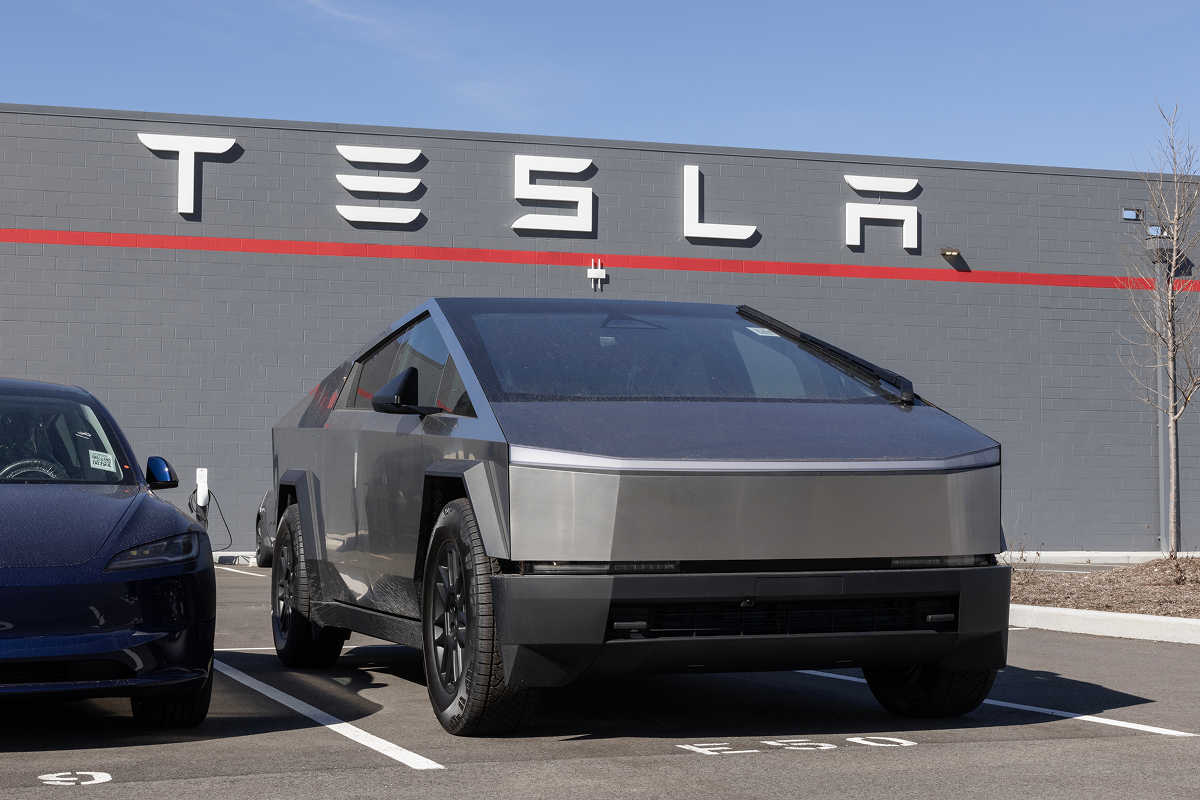
Tesla is preparing to wind down production of the Cybertruck at its Texas gigafactory around mid-2027, marking a significant strategic shift for a vehicle that was once presented as a major challenger to established pickup manufacturers. The decision highlights the difficulty of converting Tesla’s distinctive product strategy into sustained mass-market demand while the automaker increasingly prioritizes autonomous driving and robotaxi development.
Cybertruck Struggles to Deliver on Early Expectations
The Cybertruck entered the market with considerable attention surrounding its futuristic design and stainless-steel construction. However, the model has experienced persistently weak sales and a series of operational challenges that have limited its commercial performance.
The vehicle has faced repeated recalls and quality problems, while Tesla has revised its pricing multiple times. These issues have complicated the model’s positioning in a highly competitive pickup market, where established manufacturers already have extensive customer bases, production networks and experience across different price segments.
The Cybertruck’s distinctive stainless-steel construction also created challenges beyond the U.S. market. According to the report, the design complicated European regulatory approval, constraining Tesla’s ability to expand overseas demand for the vehicle and limiting the model’s potential addressable market.
Production Capacity Shifts Toward Cybercab
Tesla CEO Elon Musk said the production wind-down would allow the company to accommodate increased output of the Cybercab, the newly launched vehicle that has become central to Tesla’s robotaxi ambitions.
The reallocation of manufacturing capacity reflects a broader strategic decision to prioritize products and technologies that management believes can support Tesla’s next phase of growth. Rather than continuing to dedicate significant factory capacity to a pickup whose sales have remained weak, Tesla can redirect resources toward a vehicle positioned within the company’s autonomous transportation strategy.
The shift also demonstrates how production flexibility can become strategically important for automakers undergoing technological transitions. Factory capacity represents a finite resource, and Tesla’s decision suggests that management increasingly sees autonomous mobility as a higher priority than maintaining Cybertruck output.
Quality and Overseas Constraints Remain Significant
The Cybertruck’s difficulties illustrate the commercial risks associated with unconventional vehicle design. While its stainless-steel exterior differentiated it from traditional pickups, that same design contributed to regulatory complications in Europe, potentially limiting the vehicle’s ability to generate the international scale required to support its original ambitions.
Repeated recalls and quality concerns added another challenge. For Tesla, which has historically relied heavily on technological differentiation and brand strength, sustained product reliability remains important as the company expands into increasingly complex businesses, including autonomous transportation.
Tesla’s Next Phase Centers on Autonomous Mobility
The Cybertruck production decision will now place greater attention on whether Tesla can successfully convert the freed capacity into meaningful Cybercab production and advance its broader robotaxi strategy. The transition also raises questions about how effectively the company can balance its existing vehicle portfolio with new autonomous products.
Going forward, markets will monitor Cybercab production volumes, Tesla’s robotaxi deployment, manufacturing efficiency and the company’s ability to address product-quality concerns. The Cybertruck wind-down is unlikely to define Tesla’s overall automotive strategy on its own, but it provides a clear signal that capital and factory resources are increasingly being redirected toward the company’s autonomous-mobility ambitions.
Comparison, examination, and analysis between investment houses
Leave your details, and an expert from our team will get back to you as soon as possible
* This article, in whole or in part, does not contain any promise of investment returns, nor does it constitute professional advice to make investments in any particular field.
To read more about the full disclaimer, click here
- Lior mor
- •
- 7 Min Read
- •
- ago 1 minute
SKN | TSMC Considers Advanced 3D DRAM Production to Capture More of the AI Hardware Market
Taiwan Semiconductor Manufacturing Co. is considering entering advanced memory chip production, according to a report by The Information, potentially
- ago 1 minute
- •
- 7 Min Read
Taiwan Semiconductor Manufacturing Co. is considering entering advanced memory chip production, according to a report by The Information, potentially

- sagi habasov
- •
- 7 Min Read
- •
- ago 2 hours
SKN | Anthropic IPO Faces Timing Pressure as Investors Question $1.5 Trillion Valuation
Anthropic’s highly anticipated initial public offering is facing growing uncertainty as potential investors push for a more attractive valuation
- ago 2 hours
- •
- 7 Min Read

Anthropic’s highly anticipated initial public offering is facing growing uncertainty as potential investors push for a more attractive valuation
- Lior mor
- •
- 7 Min Read
- •
- ago 2 hours
SKN | Nasdaq Targets Rebound as Chip Stocks Stabilize While Rate-Hike Fears Persist
U.S. equity markets were positioned for a stronger open on Friday as semiconductor shares began recovering from a sharp
- ago 2 hours
- •
- 7 Min Read

U.S. equity markets were positioned for a stronger open on Friday as semiconductor shares began recovering from a sharp
- sagi habasov
- •
- 10 Min Read
- •
- ago 8 hours
SKN | AI Boom Drives Billions in Investment as Advanced Chip Packaging Becomes a Semiconductor Bottleneck
The global expansion of artificial intelligence infrastructure is driving substantial investment in advanced semiconductor packaging, transforming a traditionally less prominent
- ago 8 hours
- •
- 10 Min Read

The global expansion of artificial intelligence infrastructure is driving substantial investment in advanced semiconductor packaging, transforming a traditionally less prominent
