




- orshu
- •
- 6 Min Read
- •
- 3 minutes ago


Key Points
- Taiwan’s government stated on Thursday, November 26, that it expects Washington to honor their previously agreed 15% non-stacked tariff ceiling despite new Section 301 proposals targeting 14 trading partners.
- Under the U.S.–Taiwan Agreement on Reciprocal Trade (ART) signed earlier in 2026, semiconductors and high-tech products accounting for over 70% of Taiwan’s U.S. exports receive preferential treatment.
- For international allocators and Israeli tech desks, USTR’s netting structure—which offsets existing MFN and July forced-labor duties—preserves global semiconductor supply-chain predictability into early 2027.

Taiwan’s government expressed confidence on Thursday, November 26, 2026, that its previously negotiated 15% tariff ceiling with the United States will remain intact after the Trump administration proposed new Section 301 import duties targeting structural excess manufacturing capacity across 14 major trading partners. While the Office of the U.S. Trade Representative (USTR) outlined headline tariff rates of up to 15% to 35%—with alternative fallback rates reaching 40% if talks stall—Taipei emphasized that bilateral commitments signed earlier this year anchor its effective duty exposure.
Reciprocal Trade Pact and Netting Formula Shield Taiwanese Tech Exports
In official communications following USTR Jamieson Greer’s Wednesday announcement, Taipei cited the investment cooperation memorandum of understanding and the Agreement on Reciprocal Trade (ART) signed between Taiwan and Washington in January and February 2026. Those accords established a 15% non-stacked tariff ceiling and secured preferential most-favored-nation treatment for semiconductors and advanced technology hardware, which together represent more than 70% of Taiwan’s exports to the United States.
USTR’s formal Federal Register notice corroborates Taipei’s assessment. Rather than stacking new levies on top of existing duties, USTR proposed applying up to 15% on Taiwanese goods net of ordinary most-favored-nation (MFN) rates and existing Section 301 tariffs imposed under July’s forced-labor determination. According to Taiwan Institute of Economic Research President Chang Chien-yi, adding roughly 5 percentage points for structural overcapacity atop Taiwan’s existing 10% Section 301 arrangement leaves total duties capped at the agreed 15% threshold, placing Taiwan on parity with peers including the European Union, Japan, South Korea, and Switzerland.
Semiconductor Supply-Chain Stability and Transmission Channels for Israeli Desks
Maintaining the 15% ceiling—alongside specific product exemptions—insulates Taiwan’s foundry and server-assembly ecosystem from abrupt cost shocks at a moment of heightened global artificial intelligence hardware scrutiny. Although USTR noted it could consider an alternative rate of up to 20% if ongoing bilateral consultations fail to resolve excess-capacity concerns, both Taipei and Washington confirmed that the November 25 figures are procedural proposals subject to formal review rather than immediate levies.
For Israeli institutional pension managers and technology allocators on the Tel Aviv Stock Exchange (TASE), tariff continuity in Taipei reduces cross-border friction across the global semiconductor value chain. Israeli fabless chip designers, wafer-inspection equipment suppliers, and optical-interconnect vendors depend heavily on Taiwanese foundry capacity for leading-edge fabrication before final integration into U.S. data centers. Concurrently, with the New Israeli Shekel (NIS) consolidating near 3.35 per dollar against elevated 10-year U.S. Treasury yields, domestic multi-asset desks continue balancing globally integrated tech equities with high-yielding local sovereign bonds (Shahar).
Outlook: January 5 Comment Deadline, January 25 Hearings, and Section 232 Semiconductor Review
Market participants will track USTR’s formal rulemaking calendar, which sets a January 5, 2027 deadline for written public comments and begins public hearings at the U.S. International Trade Commission on January 25, 2027. Investors will also monitor Washington’s separate, pending Section 232 national-security tariff review on semiconductors, legislative ratification of the U.S.–Taiwan reciprocal trade pact in Taipei, and ongoing bilateral consultations to ensure the 15% cap holds when final duties are implemented in early 2027.
Comparison, examination, and analysis between investment houses
Leave your details, and an expert from our team will get back to you as soon as possible
* This article, in whole or in part, does not contain any promise of investment returns, nor does it constitute professional advice to make investments in any particular field.
To read more about the full disclaimer, click here
- Lior mor
- •
- 6 Min Read
- •
- ago 8 minutes
SKN | S&P Puts Nvidia’s ‘AA’ Credit Rating on Negative Watch, Warning Long Director Tenures May Have Compromised Board Independence
S&P Global Ratings placed Nvidia Corp.’s ‘AA’ long-term issuer credit rating and senior unsecured debt rating on CreditWatch with negative
- ago 8 minutes
- •
- 6 Min Read
S&P Global Ratings placed Nvidia Corp.’s ‘AA’ long-term issuer credit rating and senior unsecured debt rating on CreditWatch with negative

- sagi habasov
- •
- 7 Min Read
- •
- ago 4 hours
SKN | How Nvidia AI Chips Reached China Despite U.S. Export Controls
Advanced artificial intelligence chips have become a central battleground in the strategic competition between the United States and China,
- ago 4 hours
- •
- 7 Min Read
Advanced artificial intelligence chips have become a central battleground in the strategic competition between the United States and China,

- orshu
- •
- 7 Min Read
- •
- ago 4 hours
SKN | Nasdaq and S&P 500 Pare Sharp Losses as Investors Step In After Technology Selloff
U.S. stocks moved sharply off their session lows on November 25 as investors stepped in after a heavy technology-led
- ago 4 hours
- •
- 7 Min Read
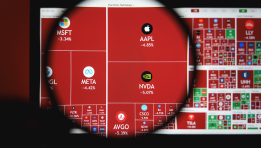
U.S. stocks moved sharply off their session lows on November 25 as investors stepped in after a heavy technology-led

- Ronny Mor
- •
- 7 Min Read
- •
- ago 5 hours
SKN | SpaceX Wins Approval for One Million Satellites as AI Data Centers Move Into Orbit
The United States has taken a significant regulatory step toward moving artificial intelligence computing infrastructure beyond Earth. The Federal
- ago 5 hours
- •
- 7 Min Read
The United States has taken a significant regulatory step toward moving artificial intelligence computing infrastructure beyond Earth. The Federal
