





- sagi habasov
- •
- 7 Min Read
- •
- 48 seconds ago


Key Points
- U.S. export controls have sought to restrict China's access to advanced Nvidia AI chips and the technology required to manufacture them.
- Chinese companies have obtained Nvidia's H200 processors through a combination of authorized shipments, intermediaries and indirect routes, while Beijing has simultaneously limited large-scale imports.
- The controversy is intensifying scrutiny of Nvidia, U.S. export-control enforcement and China's push for domestic AI-chip self-sufficiency.

Advanced artificial intelligence chips have become a central battleground in the strategic competition between the United States and China, with Washington attempting to restrict Beijing’s access to computing capabilities considered critical to next-generation AI. Nvidia, the leading U.S. exporter of AI processors to China, has increasingly found itself at the center of that policy debate as regulators, lawmakers and investors examine how restricted chips have nevertheless reached Chinese companies.
Export Controls Have Evolved Rather Than Fully Closed Access
U.S. restrictions introduced since 2022 have progressively targeted advanced Nvidia processors and the equipment required to manufacture sophisticated semiconductors. The objective has been to limit China’s ability to develop frontier AI systems while preserving the United States’ technological advantage.
However, the policy framework has changed under the Trump administration. Washington previously authorized Nvidia to sell its H200 AI chips to approved Chinese customers following a shift away from some of the restrictions imposed under the Biden administration. Reuters reported that U.S. authorities approved H200 sales to several Chinese companies, including Alibaba, Tencent and ByteDance.
Authorized Sales Were Only Part of the Supply Chain
Access to Nvidia processors has not been limited to straightforward shipments directly from the United States. Chinese buyers have also obtained limited quantities through intermediaries and indirect routes, while a much larger quantity of H200 chips has reportedly accumulated in Hong Kong awaiting approval for mainland delivery.
Reuters previously reported that approximately 600,000 H200 chips were being stored in Hong Kong as Beijing withheld approval for large-scale imports. Several major Chinese internet companies had nevertheless obtained around 10,000 chips each, while smaller quantities moved through intermediaries.
The situation illustrates the complexity of enforcing semiconductor restrictions across a global supply chain. Even when Washington restricts direct exports, chips can move through international commercial networks, cloud infrastructure and intermediary companies, creating additional challenges for regulators seeking to control where advanced computing capacity ultimately resides.
Washington Faces Questions Over Enforcement
The issue has become particularly sensitive after the U.S. House Foreign Affairs Committee disclosed that the Trump administration had approved shipments of 879,000 advanced AI chips from Nvidia and AMD to Chinese companies between December 2025 and May 2026. Companies had applied for permission to ship more than 3.4 million processors, although it remained unclear how many approved chips were actually delivered to China.
The disclosures have intensified congressional scrutiny over whether licensing decisions adequately addressed national-security concerns. At the same time, U.S. authorities have investigated suspected diversion of advanced chips, including through companies connected to Nvidia’s cloud-partner network. The Commerce Department has also recently added several firms linked to suspected chip diversion to its trade blacklist.
China’s Dependence Could Accelerate Domestic Chip Development
The policy dilemma extends beyond enforcement. China still relies heavily on Nvidia’s ecosystem for advanced AI computing, while Beijing is simultaneously encouraging companies to prioritize domestic processors and reduce dependence on U.S. technology.
That creates a strategic paradox for Washington. Tighter restrictions could limit China’s access to leading-edge computing, but they could also accelerate investment in Chinese alternatives. Conversely, allowing controlled access to Nvidia chips may preserve some technological dependence on U.S. suppliers while creating concerns over national security and enforcement.
Going forward, investors will be watching whether Washington tightens licensing requirements, expands chip-tracking measures or introduces broader restrictions on cloud-based access to advanced processors. Congress is already considering additional legislation, while Beijing is expected to accelerate domestic substitution efforts. For Nvidia, the dispute represents more than a regulatory challenge: China remains an important market, but access to that market is increasingly intertwined with U.S. national-security policy and the broader global AI race.
Comparison, examination, and analysis between investment houses
Leave your details, and an expert from our team will get back to you as soon as possible
* This article, in whole or in part, does not contain any promise of investment returns, nor does it constitute professional advice to make investments in any particular field.
To read more about the full disclaimer, click here
- orshu
- •
- 7 Min Read
- •
- ago 16 minutes
SKN | Nasdaq and S&P 500 Pare Sharp Losses as Investors Step In After Technology Selloff
U.S. stocks moved sharply off their session lows on November 25 as investors stepped in after a heavy technology-led
- ago 16 minutes
- •
- 7 Min Read
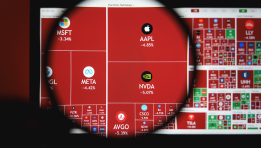
U.S. stocks moved sharply off their session lows on November 25 as investors stepped in after a heavy technology-led

- Ronny Mor
- •
- 7 Min Read
- •
- ago 1 hour
SKN | SpaceX Wins Approval for One Million Satellites as AI Data Centers Move Into Orbit
The United States has taken a significant regulatory step toward moving artificial intelligence computing infrastructure beyond Earth. The Federal
- ago 1 hour
- •
- 7 Min Read

The United States has taken a significant regulatory step toward moving artificial intelligence computing infrastructure beyond Earth. The Federal

- sagi habasov
- •
- 7 Min Read
- •
- ago 2 hours
SKN | Anthropic’s Slide Forces Wall Street to Reassess Lofty AI Profit Expectations
Anthropic’s decline below its initial public offering price is forcing investors to take a closer look at the assumptions
- ago 2 hours
- •
- 7 Min Read

Anthropic’s decline below its initial public offering price is forcing investors to take a closer look at the assumptions
- Ronny Mor
- •
- 6 Min Read
- •
- ago 13 hours
SKN | Meta Meets India’s Congress Party Amid Protests Over Content Moderation and Account Restrictions
Meta Engages With Opposition Congress Meta's senior executives in India held closed-door discussions with the opposition Congress party on
- ago 13 hours
- •
- 6 Min Read

Meta Engages With Opposition Congress Meta's senior executives in India held closed-door discussions with the opposition Congress party on

