





- Ronny Mor
- •
- 6 Min Read
- •
- 23 seconds ago


Key Points
- The TA-SME60 fell 0.82% over the week ended October 23, closing at 1,272.44 points.
- The index declined 2.75% over one month and 9.51% over three months, indicating persistent pressure on smaller Israeli-listed companies.
- The one-year gain of approximately 6.07% and five-year advance of 51.70% remain positive, but the outlook depends on earnings resilience, domestic economic conditions and investor risk appetite.
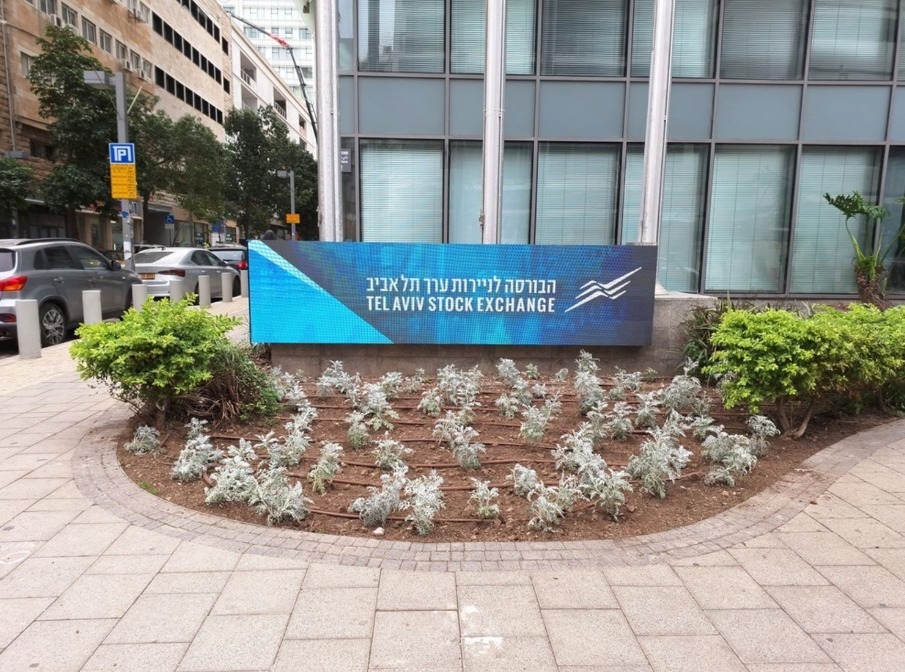
The TA-SME60 ended the week of October 19–23, 2026, at 1,272.44 points, down 2.06 points, or 0.16%, in the latest session and 0.82% over the week. Its performance reflects a more challenging recent trend for Israel’s small-cap segment, where valuations can be particularly sensitive to financing conditions, changes in domestic demand and shifts in market confidence. Although longer-term returns remain positive, the latest figures suggest that the recovery in smaller companies’ share prices has lost momentum.
Recent Weakness Signals a More Cautious Market Environment
The weekly decline was relatively modest compared with the index’s losses over longer recent periods. The TA-SME60 fell 2.75% over one month, 9.51% over three months and 11.70% over six months. This sequence points to sustained pressure rather than an isolated weekly setback.
Small-cap companies can be more exposed than larger businesses to changes in borrowing costs, operating expenses and consumer or business spending. They may also have less diversified revenue streams and more limited access to capital markets. When investors become more selective, these characteristics can translate into sharper share-price adjustments, even when company-specific fundamentals remain intact. The index’s performance alone, however, does not establish whether the recent weakness reflects deteriorating earnings, changing valuations or broader risk aversion.
Long-Term Gains Offer Context, but Recovery Remains Uneven
Despite recent declines, the TA-SME60 remained 6.07% higher over one year and 51.70% above its level five years earlier. Since its historical starting point represented in the data, the index has advanced 73.26%. These figures show that the latest weakness has not erased its longer-term gains.
Nevertheless, the 52-week range of 1,176.46 to 1,576.29 places the latest close considerably below the period’s high. That gap highlights the scale of the retreat from previous levels and suggests that renewed gains may require more than a short-lived improvement in sentiment. For investors assessing Israeli equities, the distinction between longer-term performance and recent momentum is important: positive historical returns do not guarantee a near-term recovery.
Liquidity and the Outlook for Israeli Small-Cap Stocks
Reported trading volume was approximately 2.12 million shares, compared with a three-month average of roughly 5.02 million. The lower activity may indicate more limited participation during the latest session, although one observation is insufficient to establish a sustained liquidity trend. In smaller stocks, thinner trading can amplify price movements when buyers and sellers disagree over valuations or the economic outlook.
Looking ahead, the TA-SME60’s direction will likely depend on corporate earnings, domestic demand, interest-rate expectations and broader confidence in Israel’s economic outlook. Geopolitical uncertainty, fiscal pressures and shekel volatility could continue to influence risk appetite and companies’ financing costs. Conversely, improving business conditions and stronger earnings delivery could help stabilize valuations. The key question for the coming weeks is whether the index can establish a sustained recovery or whether recent declines signal continued caution toward smaller Israeli-listed companies.
Comparison, examination, and analysis between investment houses
Leave your details, and an expert from our team will get back to you as soon as possible
* This article, in whole or in part, does not contain any promise of investment returns, nor does it constitute professional advice to make investments in any particular field.
To read more about the full disclaimer, click here
- omer bar
- •
- 6 Min Read
- •
- ago 27 minutes
SKN | KOSPI Recovers Late Losses as Tech Rebound Tempers a Volatile Week
South Korea’s benchmark KOSPI Composite Index finished the week ending October 23, 2026, on an uneven footing, posting a
- ago 27 minutes
- •
- 6 Min Read

South Korea’s benchmark KOSPI Composite Index finished the week ending October 23, 2026, on an uneven footing, posting a

- Lior mor
- •
- 6 Min Read
- •
- ago 1 hour
SKN | Japanese Yen Index Firms on Monetary Shift Speculation Despite Late Consolidation
The Japanese Yen Currency Index finished the week ending October 23, 2026, on a firm footing, posting a five-day
- ago 1 hour
- •
- 6 Min Read

The Japanese Yen Currency Index finished the week ending October 23, 2026, on a firm footing, posting a five-day

- Arik Arkadi Sluzki
- •
- 6 Min Read
- •
- ago 2 hours
SKN | Australian Dollar Currency Index Advances as Policy Divergence Anchors Commodity FX
The Australian Dollar Currency Index finished the week ending October 23, 2026, on a firm footing, posting a five-day
- ago 2 hours
- •
- 6 Min Read

The Australian Dollar Currency Index finished the week ending October 23, 2026, on a firm footing, posting a five-day

- sagi habasov
- •
- 6 Min Read
- •
- ago 2 hours
SKN | SSE Composite Rebounds Off 52-Week Lows as Late Buying Tempers Weekly Decline
China’s benchmark SSE Composite Index concluded the week ending October 23, 2026, with a contained five-day decline of approximately
- ago 2 hours
- •
- 6 Min Read

China’s benchmark SSE Composite Index concluded the week ending October 23, 2026, with a contained five-day decline of approximately

