




- Lior mor
- •
- 6 Min Read
- •
- 8 seconds ago


Key Points
- The TA-35 index fell 3.71% over the week shown in the chart, closing at 4,061.71 and extending its decline over the monthly timeframe to 3.78%.
- The index remains up 23.95% over one year and 125.46% over five years, indicating that the recent pullback comes after substantial longer-term gains.
- The next direction may depend on geopolitical developments, interest-rate expectations, corporate earnings and the shekel’s performance, with volatility remaining a key risk for Israeli investors.

The TA-35 index, which tracks leading companies listed on the Tel Aviv Stock Exchange, weakened over the five-day period displayed in the chart, falling to 4,061.71. The decline places recent pressure on Israel’s large-cap equity market in a broader environment where investors must balance corporate performance and longer-term growth against geopolitical uncertainty, financing costs and currency movements.
Weekly Selling Pressure Reverses Earlier Gains
The chart shows the TA-35 losing 3.71% over one week, including a 0.69% decline in the latest session displayed. The index moved lower from levels near 4,230 at the beginning of the charted period, with the steepest selling appearing around October 7–8. A modest recovery attempt followed, but it failed to restore the earlier levels before the period ended.
This pattern suggests that selling pressure was sustained rather than confined to a single session. However, the chart alone does not identify the cause of the decline, and it would be premature to attribute the move to one specific political, economic or corporate development. The reported trading volume of approximately 16.89 million shares was below the three-month average of about 27.42 million, although the figures do not establish whether the decline reflected broad institutional selling or shifts in individual stocks.
Short-Term Weakness Contrasts With Longer-Term Returns
Despite the weekly retreat, the TA-35 remains up 23.95% over one year and 125.46% over five years. The index is also marginally higher over three months, gaining 0.16%, while its six-month performance stands at minus 8.58%. These figures present a mixed picture: the longer-term advance remains substantial, but performance over shorter periods points to a loss of momentum.
For institutional investors, the distinction matters. A weekly correction does not, by itself, establish a lasting change in market direction. At the same time, strong historical returns do not guarantee a quick recovery, particularly if earnings expectations weaken or investors demand greater compensation for holding Israeli assets.
Israeli Equities Remain Sensitive to Macro and Currency Risks
The outlook for the Tel Aviv market will depend partly on developments beyond the index itself. Geopolitical risk can influence foreign participation, the shekel and the risk premium assigned to Israeli assets. Interest-rate expectations also matter: borrowing costs affect company financing and equity valuations, while changes in global bond yields can alter the relative appeal of stocks and fixed-income investments.
Currency volatility adds another layer for international investors assessing returns in dollars or euros. A change in the shekel’s value can amplify or offset local equity performance when translated into foreign currencies. Domestic fiscal conditions, inflation and the path of monetary policy will therefore remain relevant alongside company-specific results.
In the coming week, investors will likely watch whether the TA-35 stabilizes after its sharp decline, whether trading participation increases and whether market breadth improves beyond a handful of large constituents. A sustained rebound could indicate that the pullback is losing force, but further weakness in earnings expectations, renewed geopolitical pressure or unfavorable currency moves could prolong volatility. The key question is whether the index can regain momentum while the broader economic and risk environment remains uncertain.
Comparison, examination, and analysis between investment houses
Leave your details, and an expert from our team will get back to you as soon as possible
* This article, in whole or in part, does not contain any promise of investment returns, nor does it constitute professional advice to make investments in any particular field.
To read more about the full disclaimer, click here
- Arik Arkadi Sluzki
- •
- 6 Min Read
- •
- ago 20 minutes
SKN | TA-125 Falls 3.60% in a Week as Selling Pressure Weighs on Israeli Equities
The Tel Aviv TA-125 index ended the week under pressure, falling 3.60% over the five trading days shown in
- ago 20 minutes
- •
- 6 Min Read

The Tel Aviv TA-125 index ended the week under pressure, falling 3.60% over the five trading days shown in

- sagi habasov
- •
- 6 Min Read
- •
- ago 38 minutes
SKN | TA-RealEstate Rebounds 1.71% on Friday, but Weekly Losses Keep Pressure on Israel’s Property Sector
The TA-RealEstate Index ended Friday at 1,268.88, gaining 21.29 points, or 1.71%, in a session that provided some relief
- ago 38 minutes
- •
- 6 Min Read

The TA-RealEstate Index ended Friday at 1,268.88, gaining 21.29 points, or 1.71%, in a session that provided some relief

- orshu
- •
- 6 Min Read
- •
- ago 2 hours
SKN | TA Banks 5 Falls 5.05% in a Week as Israeli Bank Stocks Face Renewed Pressure
The TA Banks 5 index came under notable pressure during the trading week shown in the chart, ending at
- ago 2 hours
- •
- 6 Min Read

The TA Banks 5 index came under notable pressure during the trading week shown in the chart, ending at

- Ronny Mor
- •
- 6 Min Read
- •
- ago 2 hours
SKN | TA-SME60 Rebounds 0.68% on Friday, but Small-Cap Stocks Remain Under Pressure After a 5.98% Weekly Decline
The Tel Aviv Stock Exchange’s TA-SME60 index ended Friday, October 9, at 1,218.87, gaining 8.28 points, or 0.68%,
- ago 2 hours
- •
- 6 Min Read
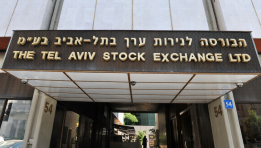
The Tel Aviv Stock Exchange’s TA-SME60 index ended Friday, October 9, at 1,218.87, gaining 8.28 points, or 0.68%,
