




- omer bar
- •
- 9 Min Read
- •
- 1 month ago


Key Points
- Nvidia is expanding beyond GPUs, with its Vera CPU positioning the company for a larger role in the server processor market dominated by AMD and Intel.
- Nvidia said it sees demand for approximately $20 billion in total server CPUs and expects its own CPU revenue to more than double in fiscal 2028.
- The competitive threat extends beyond processor specifications because Vera is integrated into Nvidia’s full AI infrastructure platform, potentially allowing the company to capture more value from each AI data center deployment.
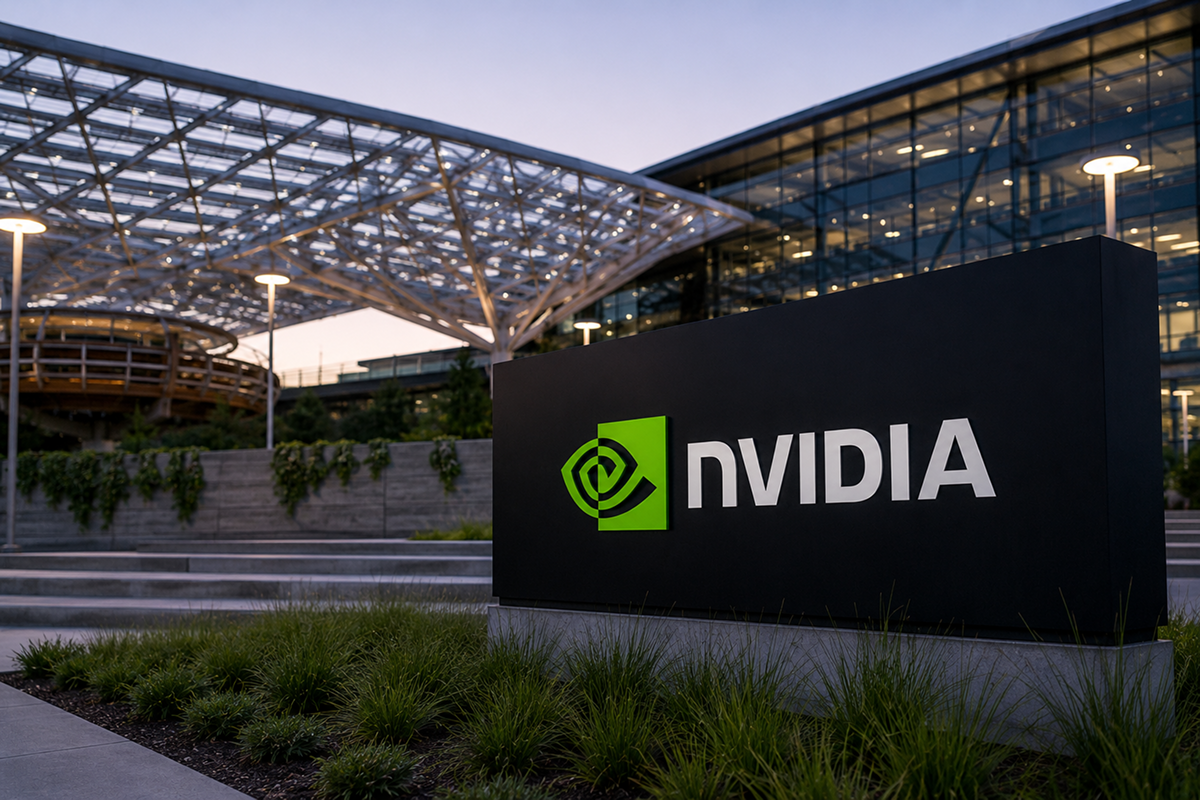
Nvidia’s latest earnings report contained a development that could have implications well beyond the company’s dominant position in AI accelerators. The introduction and rapid expansion of the Vera CPU is giving Nvidia an increasingly credible position in the server-processor market, potentially challenging the long-standing roles of AMD and Intel as AI infrastructure increasingly becomes a full-stack business.
Nvidia Is Turning the CPU Into a New Growth Engine
Nvidia reported $96.2 billion in fiscal second-quarter revenue, up 106% from a year earlier, while Data Center revenue reached $89 billion, an increase of 117%. Behind those headline figures, however, the company is building a second computing franchise around CPUs. Nvidia said its Grace CPU has already generated more than $5 billion in trailing 12-month revenue, while Vera is now in full production as a standalone product.
The more significant figure is Nvidia’s statement that it sees demand for approximately $20 billion in total server CPUs. The company also said its preliminary expectation is for CPU revenue to more than double in fiscal 2028, potentially positioning Nvidia among the world’s leading server CPU suppliers. Importantly, the $20 billion figure refers to the server-CPU demand opportunity Nvidia is addressing, rather than representing confirmed Vera revenue of that amount.
Why AMD and Intel Face a Different Kind of Competition
AMD and Intel remain deeply established in server processors, but Nvidia’s strategy differs from a conventional CPU market-share battle. Instead of competing solely on core counts or benchmark performance, Nvidia is incorporating Vera into the broader Vera Rubin AI factory architecture, combining CPUs, GPUs, networking and interconnect technologies into a single infrastructure platform.
Nvidia says Vera is designed specifically for agentic AI workloads and can complete agentic tasks 1.8 times faster on its stated benchmark while delivering five times the bandwidth per watt of other data-center CPUs. The company is also connecting Vera to Rubin GPUs through its NVLink-C2C technology, creating a tightly integrated CPU-GPU architecture.
That creates a different competitive dynamic for AMD and Intel. A hyperscaler purchasing a complete Nvidia rack-scale system may not need to separately select a conventional x86 server CPU for the same workload. The potential risk is therefore not necessarily that Nvidia immediately wins every CPU benchmark, but that platform integration reduces the number of CPU sockets available to competitors.
AMD and Intel Still Have Significant Defenses
The competitive picture is not one-sided. AMD’s Data Center segment generated $6.7 billion in second-quarter 2026 revenue, up 107% year over year, driven by strong demand for EPYC processors and Instinct GPUs. AMD also launched its Helios rack-scale platform and continues to expand its portfolio of data-center CPUs and accelerators.
AMD and Intel also retain large installed bases, long-standing enterprise relationships and extensive software compatibility. Nvidia’s Vera has 88 cores, while upcoming competing processors are expected to offer higher core counts, demonstrating that raw specifications alone will not determine the eventual market outcome.
The more important question is whether Nvidia can convert its AI infrastructure advantage into sustained CPU share. Its full-stack strategy gives it a potential distribution advantage because customers already purchasing Nvidia’s GPUs, networking and AI systems have an economic incentive to evaluate the CPU as part of the same architecture.
The AI Infrastructure Market Is Expanding the Addressable Opportunity
Nvidia’s CPU push comes as AI infrastructure spending continues to expand rapidly. The company said its revenue opportunity per gigawatt has increased from roughly $18 billion with Hopper to $25 billion with Blackwell and approximately $40 billion with Vera Rubin, reflecting the broader range of components incorporated into its latest AI factory platform.
Nvidia also said Vera Rubin production shipments began in August and that it had received purchase orders from every major hyperscaler, AI cloud provider and system OEM. Its fiscal third-quarter outlook calls for $108 billion in revenue, while the company expects Vera Rubin to account for approximately 20% of Data Center revenue in the quarter.
For investors in Israel and global markets, the significance extends beyond the three semiconductor companies. If AI data centers increasingly purchase integrated platforms rather than individual components, value could migrate toward companies capable of supplying more of the infrastructure stack. Nvidia’s expansion into CPUs is an early example of that shift.
The next critical test will be whether Nvidia can turn the initial demand signal into sustained CPU revenue growth while AMD and Intel defend their installed bases. Fiscal 2028 CPU guidance, adoption rates among hyperscalers and AI cloud providers, and the competitive performance of AMD’s next-generation EPYC and Intel’s server processors will be key indicators of whether Nvidia’s CPU expansion becomes a meaningful new industry structure or remains primarily an extension of its existing AI platform.
Comparison, examination, and analysis between investment houses
Leave your details, and an expert from our team will get back to you as soon as possible
* This article, in whole or in part, does not contain any promise of investment returns, nor does it constitute professional advice to make investments in any particular field.
To read more about the full disclaimer, click here
- Ronny Mor
- •
- 9 Min Read
- •
- ago 17 minutes
SKN | Oracle and Broadcom Credit Risk Hits Record Levels as AI Infrastructure Debt Raises Investor Concerns
Credit markets are sending a more cautious signal about the cost of financing the artificial intelligence boom, with Oracle
- ago 17 minutes
- •
- 9 Min Read

Credit markets are sending a more cautious signal about the cost of financing the artificial intelligence boom, with Oracle

- sagi habasov
- •
- 8 Min Read
- •
- ago 5 hours
SKN | S&P 500 Market Breadth Weakens: 85% of Stocks Fall at Least 10% From Their Highs Despite Index Gains
The U.S. stock market is showing a sharp divergence between the performance of its headline indexes and the experience
- ago 5 hours
- •
- 8 Min Read

The U.S. stock market is showing a sharp divergence between the performance of its headline indexes and the experience
- Ronny Mor
- •
- 8 Min Read
- •
- ago 19 hours
SKN | World’s 10 Largest Companies Reach $31.21 Trillion in Combined Market Value as Big Tech Dominates Global Markets
The combined market value of the world's 10 largest companies increased to approximately $31.21 trillion, according to the attached
- ago 19 hours
- •
- 8 Min Read

The combined market value of the world's 10 largest companies increased to approximately $31.21 trillion, according to the attached
- sagi habasov
- •
- 7 Min Read
- •
- ago 19 hours
SKN | S&P 500 Weekly Review: Constellation Energy Soars as AI Power Demand Reshapes Market Leadership
U.S. equities finished the week ended October 9, 2026, higher, but individual stock performance remained uneven across the S&P
- ago 19 hours
- •
- 7 Min Read

U.S. equities finished the week ended October 9, 2026, higher, but individual stock performance remained uneven across the S&P
