


- Lior mor
- •
- 6 Min Read
- •
- 4 months ago
Key Points
- France’s inflation held at 0.9% in November, below the forecast and signaling broad disinflation
- Services and manufactured goods drove the stabilization, offsetting energy’s smaller decline
- Outlook shows inflation drifting higher through 2026–2027, but demand softness remains a key risk

France’s inflation stabilized at 0.9% in November 2025, marking the second consecutive month below the 1% threshold and underscoring the country’s position as one of the Eurozone’s slowest-inflating economies. Preliminary data released Friday showed a further cooling in services and goods prices, offset only partially by a moderation in the decline in energy costs. The print, which came in below market forecasts, extends a trend of subdued consumer price pressures that is shaping expectations for both policymakers and investors heading into 2026.
A Disinflation Plateau Driven by Services and Manufactured Goods
The November data indicate that France’s disinflation is becoming increasingly broad-based. Services inflation — a key driver of sticky price dynamics — eased to 2.2% from 2.4%, with communication services leading the decline. The slowdown reflects both diminishing demand momentum and a normalization of post-pandemic pricing behavior.
Manufactured goods prices fell by 0.6%, deepening the previous month’s decline and highlighting the impact of softer household consumption. Lower retail demand, combined with easing supply chain pressures, has pushed retailers toward more aggressive discounting heading into the holiday shopping period.
These underlying shifts helped to offset a narrowing decline in energy prices, which fell 4.6% year-on-year compared with a 5.6% drop in October. Food inflation ticked slightly higher to 1.4%, though still far below 2022–2023 peaks. Tobacco prices, meanwhile, rose 4.1% — a reminder of France’s continued reliance on targeted excise adjustments.
On a monthly basis, CPI slipped 0.1%. The fall — driven by cheaper transportation, communication, and manufactured goods — underscores the caution creeping into consumer behavior as wages stabilize and savings buffers thin.
HICP and the European Context: A Region Moving in Sync
The EU-harmonized CPI (HICP) held at 0.87%, also below expectations. This aligns France with a broader Eurozone trend in which inflation has converged closer to 1% than 2%, raising questions about the durability of demand and the balance of risks facing the ECB.
The latest data place France well within the lower half of the region’s inflation distribution, reinforcing its role as a key anchor of Eurozone price stability. However, the pattern has also revived concerns about France’s tepid growth trajectory, as subdued consumer demand remains a central contributor to weak pricing power.
What the Outlook Signals for 2026 and Beyond
Trading Economics forecasts see France’s inflation edging back toward 1% by year-end and gradually rising toward 1.6% in 2026 and 2.1% in 2027. Economists caution that the projected rebound depends on an eventual pickup in consumption and energy price stabilization — both far from guaranteed.
For markets, the sharper-than-expected disinflation may strengthen expectations that the ECB will maintain a dovish tilt into early 2026, even as policymakers debate whether they have reached the endpoint of easing. Investors will be closely watching wage dynamics, energy market volatility, and the evolution of household purchasing power to assess whether France’s current price stability reflects resilience or the early signs of a more persistent stagnation.
Comparison, examination, and analysis between investment houses
Leave your details, and an expert from our team will get back to you as soon as possible
* This article, in whole or in part, does not contain any promise of investment returns, nor does it constitute professional advice to make investments in any particular field.
To read more about the full disclaimer, click here
- omer bar
- •
- 6 Min Read
- •
- ago 17 hours
SKN | APM Terminals Expands Rail Capacity at Port of Los Angeles: Supply Chain Efficiency Enters a New Phase
APM Terminals has completed a $73 million rail expansion project at the Port of Los Angeles, marking a significant
- ago 17 hours
- •
- 6 Min Read
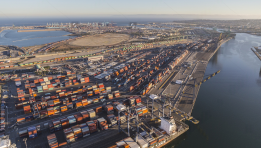
APM Terminals has completed a $73 million rail expansion project at the Port of Los Angeles, marking a significant

- orshu
- •
- 6 Min Read
- •
- ago 21 hours
SKN | Trump’s $2.2 Trillion Budget Plan: Defense Expansion Signals Strategic Shift in US Fiscal Policy
Former President Donald Trump’s proposed $2.2 trillion federal budget is drawing attention across global financial markets, as it combines
- ago 21 hours
- •
- 6 Min Read

Former President Donald Trump’s proposed $2.2 trillion federal budget is drawing attention across global financial markets, as it combines

- Ronny Mor
- •
- 10 Min Read
- •
- ago 1 day
SKN | Why Is Gasoline $15 in Hong Kong While U.S. Prices Hover Near $4?
As gasoline prices in the United States climb toward $4 per gallon, global disparities in fuel costs are becoming increasingly
- ago 1 day
- •
- 10 Min Read

As gasoline prices in the United States climb toward $4 per gallon, global disparities in fuel costs are becoming increasingly

- Lior mor
- •
- 9 Min Read
- •
- ago 1 day
SKN | Is the U.S. Labor Market Stabilizing After February’s Shock Decline?
The U.S. labor market is expected to regain some footing in March 2026, with forecasts pointing to a gain of
- ago 1 day
- •
- 9 Min Read

The U.S. labor market is expected to regain some footing in March 2026, with forecasts pointing to a gain of

