





- orshu
- •
- 7 Min Read
- •
- 4 minutes ago


Key Points
- The IMF and Argentina will continue discussions in the coming weeks with the aim of reaching a staff-level agreement on the third review of the country’s Extended Fund Facility program.
- The IMF says Argentina has made significant progress on inflation, fiscal discipline and external stability, including a shift from fiscal deficit to surplus.
- The next phase will focus on strengthening economic resilience and ensuring that growth broadens beyond energy, mining and agriculture.

The International Monetary Fund will continue negotiations with Argentina over the coming weeks as both sides seek a staff-level agreement on the third review of the country’s Extended Fund Facility program. The discussions come as President Javier Milei’s government seeks to consolidate a stabilization strategy that the IMF says has delivered progress on inflation, fiscal policy and the country’s external position.
IMF Review Enters Its Next Phase
An IMF technical mission visited Buenos Aires from September 21 to 29 as part of the latest review, according to IMF Communications Director Julie Kozack. The two sides have not yet reached a staff-level agreement, meaning discussions will continue before the review can advance through the IMF’s formal process.
The third review is significant because the Extended Fund Facility is designed to support Argentina’s longer-term economic stabilization while requiring the government to maintain policy commitments. Continued negotiations therefore provide a framework for assessing whether recent improvements have been sustained and whether the government remains on track with the program.
Kozack said Argentina has made significant progress in restoring macroeconomic stability despite a challenging economic environment. The IMF’s assessment places particular emphasis on the reduction in inflation, stronger external conditions and the implementation of fiscal discipline.
Fiscal Discipline and Reserves Strengthen the Stabilization Framework
According to the IMF, Argentina has moved from fiscal deficit toward fiscal surplus while also accumulating reserves. The improvement in the external position provides an important component of the stabilization strategy because stronger reserves can increase the economy’s ability to absorb external shocks and meet international financial obligations.
The decline in inflation is another central element of the adjustment. Argentina experienced exceptionally high inflation in recent years, making the reduction in price pressures an important indicator of whether the government’s stabilization measures are beginning to produce more durable results.
Kozack described these developments as an important foundation for sustainable economic growth. However, the IMF and Argentina recognize that stabilization remains an ongoing process rather than a completed adjustment.
Growth Needs to Broaden Beyond Key Export Sectors
The next challenge is ensuring that economic growth becomes broader and more evenly distributed across Argentina’s economy. Kozack said recent expansion has been concentrated in energy, mining and agriculture, sectors that are important sources of exports and foreign currency but do not encompass the entire domestic economy.
A broader growth base could strengthen Argentina’s resilience by reducing dependence on a limited number of industries and creating more diversified sources of economic activity. For investors monitoring the country, the ability to translate stabilization into wider private-sector growth will therefore be an important indicator of the durability of the recovery.
Debt Obligations Remain an Important Test
The IMF’s latest discussions also come ahead of a challenging period for Argentina’s finances. IMF Managing Director Kristalina Georgieva expressed confidence in July in Milei’s reforms and Argentina’s ability to navigate a debt repayment challenge in 2027, which could coincide with the country’s political cycle.
For investors in Israel and global markets, the next stage of the IMF review will therefore be closely linked to Argentina’s ability to preserve fiscal discipline, strengthen reserves and maintain lower inflation while supporting broader economic growth. The coming weeks of negotiations, followed by the outcome of the third review, should provide further evidence of whether the stabilization program can transition from crisis management toward a more durable growth framework.
Comparison, examination, and analysis between investment houses
Leave your details, and an expert from our team will get back to you as soon as possible
* This article, in whole or in part, does not contain any promise of investment returns, nor does it constitute professional advice to make investments in any particular field.
To read more about the full disclaimer, click here
- Ronny Mor
- •
- 7 Min Read
- •
- ago 4 minutes
SKN | Indian Rupee Hits Two-Month Low as Oil Prices and Global Bond Yields Intensify Pressure
The Indian rupee fell to a two-month low on Thursday as a renewed global bond selloff and higher oil
- ago 4 minutes
- •
- 7 Min Read

The Indian rupee fell to a two-month low on Thursday as a renewed global bond selloff and higher oil

- Arik Arkadi Sluzki
- •
- 7 Min Read
- •
- ago 4 minutes
SKN | Europe’s Defence Spending Gives a Shrinking Refining Sector an Unexpected Demand Boost
Europe’s expanding defence budgets are providing an unexpected source of support for the continent’s shrinking oil-refining industry, as military
- ago 4 minutes
- •
- 7 Min Read
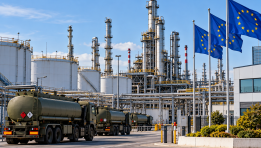
Europe’s expanding defence budgets are providing an unexpected source of support for the continent’s shrinking oil-refining industry, as military
- Ronny Mor
- •
- 6 Min Read
- •
- ago 25 minutes
SKN | Could New U.S. Sanctions on Iran’s Industrial Sectors Deepen Economic Pressure?
Washington Expands the Scope of Iran Sanctions The United States has expanded its sanctions campaign against Iran by targeting automotive,
- ago 25 minutes
- •
- 6 Min Read

Washington Expands the Scope of Iran Sanctions The United States has expanded its sanctions campaign against Iran by targeting automotive,

- Lior mor
- •
- 7 Min Read
- •
- ago 4 hours
SKN | EU Imports From China Rise at a Worrying Pace as Trade Imbalance Deepens
The European Union is facing increasing pressure from rapidly rising imports, with Chinese goods accounting for a significant share
- ago 4 hours
- •
- 7 Min Read

The European Union is facing increasing pressure from rapidly rising imports, with Chinese goods accounting for a significant share

