


- orshu
- •
- 7 Min Read
- •
- 3 months ago
Key Points
- Gold prices declined as a stronger U.S. dollar reduced the appeal of bullion for global investors.
- Geopolitical tensions involving Iran continue to support underlying safe-haven demand despite short-term price pressure.
- Markets are closely watching U.S. monetary policy signals, Middle East developments, and currency movements for gold’s next directional move.
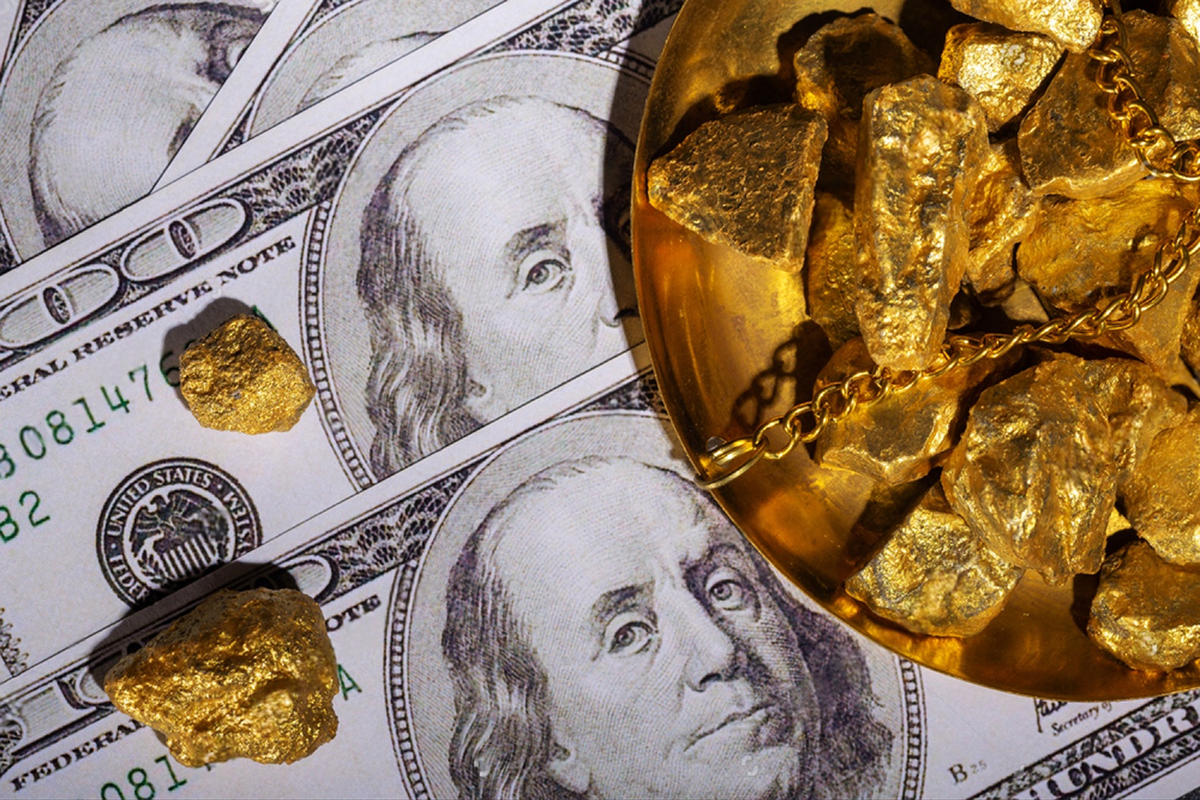
Gold prices edged lower in recent trading sessions as a firmer U.S. dollar weighed on the precious metal, offsetting safe-haven demand linked to ongoing geopolitical tensions involving Iran. The move highlights the delicate balance between macroeconomic forces and geopolitical risk that often drives global bullion markets. For investors, the current environment underscores how currency strength and geopolitical uncertainty can simultaneously influence gold’s trajectory.
Stronger Dollar Puts Pressure on Gold
One of the primary drivers behind the recent dip in gold prices has been the appreciation of the U.S. dollar. Because gold is typically priced in dollars on international markets, a stronger dollar makes bullion more expensive for buyers using other currencies. This dynamic tends to suppress demand, particularly from major gold-consuming regions such as Asia and emerging markets.
The strengthening of the dollar has been closely tied to expectations around U.S. interest rates and broader macroeconomic resilience. When Treasury yields and the dollar rise, gold often faces headwinds because the metal does not generate interest income. Investors frequently shift capital toward yield-bearing assets such as government bonds, reducing the relative attractiveness of holding physical gold.
However, the relationship between the dollar and gold is not always linear. In periods of heightened geopolitical uncertainty, gold can still attract inflows even if the dollar remains strong. This dynamic is particularly relevant given the current geopolitical backdrop in the Middle East.
Iran Tensions Sustain Safe-Haven Demand
Despite the downward pressure from currency movements, geopolitical tensions involving Iran continue to influence market sentiment. Any escalation involving Iran has the potential to disrupt energy markets, regional stability, and global trade routes, factors that often trigger increased demand for safe-haven assets such as gold.
Historically, geopolitical conflicts in the Middle East have played a significant role in shaping commodity markets. Investors often turn to gold during periods of political uncertainty because the metal is viewed as a store of value independent of government policies or currency fluctuations.
For Israel and other regional economies, developments surrounding Iran carry both geopolitical and economic implications. Escalating tensions can influence oil prices, currency volatility, and global risk sentiment, which in turn affects the performance of defensive assets including gold.
Global Market Implications and Investor Positioning
The recent decline in gold highlights the complex interplay between macroeconomic policy, currency markets, and geopolitical developments. While short-term movements may be driven by fluctuations in the U.S. dollar, longer-term trends often depend on broader structural factors such as inflation expectations, central bank policies, and sovereign debt dynamics.
Central banks have remained significant participants in the gold market in recent years, with several countries increasing their bullion reserves as part of diversification strategies. Continued central bank demand has provided a structural support layer for gold prices even during periods of market volatility.
At the same time, global financial markets remain sensitive to geopolitical developments. Investors often reassess portfolio allocations between risk assets such as equities and defensive instruments like gold depending on evolving global risks.
Looking ahead, market participants will likely monitor several key catalysts that could influence the next move in gold prices. These include upcoming signals from the U.S. Federal Reserve regarding interest rates, movements in the U.S. dollar index, and developments in the geopolitical situation involving Iran and the broader Middle East. Should geopolitical tensions escalate or financial market volatility intensify, safe-haven demand could re-emerge more strongly. Conversely, sustained dollar strength and rising yields may continue to exert downward pressure on bullion in the near term.
Comparison, examination, and analysis between investment houses
Leave your details, and an expert from our team will get back to you as soon as possible
* This article, in whole or in part, does not contain any promise of investment returns, nor does it constitute professional advice to make investments in any particular field.
To read more about the full disclaimer, click here
- orshu
- •
- 7 Min Read
- •
- ago 2 hours
SKN | Can Tel Aviv Markets Sustain Mixed Momentum as TA-90 Leads Divergence in Trading Session?
Israeli equity markets traded in a mixed pattern as investors balanced selective buying in mid-cap stocks against subdued performance in
- ago 2 hours
- •
- 7 Min Read

Israeli equity markets traded in a mixed pattern as investors balanced selective buying in mid-cap stocks against subdued performance in
- orshu
- •
- 8 Min Read
- •
- ago 7 hours
SKN | Global Markets Wrap: May 26, 2026 Performance Review and Outlook for May 27, 2026 as Risk Assets Slip Across Developed Markets Amid Holiday-Driven Liquidity Compression
Global markets ended May 26, 2026, on a weaker note, as risk sentiment deteriorated across major regions. Equities across the
- ago 7 hours
- •
- 8 Min Read

Global markets ended May 26, 2026, on a weaker note, as risk sentiment deteriorated across major regions. Equities across the

- sagi habasov
- •
- 7 Min Read
- •
- ago 9 hours
SKN | Governance Pressure Mounts at BP as Former Chairman Manifold Challenges Misconduct Allegations
BP is facing renewed corporate governance attention after reports that former chairman Manifold has challenged claims of wrongdoing connected to
- ago 9 hours
- •
- 7 Min Read

BP is facing renewed corporate governance attention after reports that former chairman Manifold has challenged claims of wrongdoing connected to

- omer bar
- •
- 12 Min Read
- •
- ago 10 hours
SKN | Asian Markets Trade Mixed on May 27 as South Korea and Japan Rally While India and China Face Pressure
Asian equity markets opened Wednesday, May 27 with mixed but generally constructive momentum across the region as investors continued rotating
- ago 10 hours
- •
- 12 Min Read

Asian equity markets opened Wednesday, May 27 with mixed but generally constructive momentum across the region as investors continued rotating


