


- omer bar
- •
- 7 Min Read
- •
- 16 seconds ago
Key Points
- The KOSPI Composite Index (^KS11) recorded a massive 8.01% weekly expansion, shaking off mid-week lows to close at a new 52-week high of 8,476.15.
- Following a sharp gap-down near the May 28th session, the South Korean benchmark engineered a dramatic V-shaped recovery, adding a substantial 3.55% (290.86 points) on Friday alone.
- For global asset allocators and Israeli investment portfolios, this tech-heavy rally offers robust valuation expansion, though it must be carefully weighed against rising geopolitical premiums and persistent currency volatility.

The KOSPI Composite Index (^KS11) delivered an exceptionally robust performance this week, securing an 8.01% expansion over the five-day trading period to close at an unprecedented 8,476.15. The benchmark concluded the week with a powerful daily surge of 290.86 points, or 3.55%, effectively closing at the absolute peak of its 52-week range. As the South Korean market navigates shifting global supply chains and complex regional growth dynamics, this aggressive upward trajectory underscores a highly concentrated allocation of cross-border risk capital into export-driven Asian equities.
Deconstructing the V-Shaped Technical Breakout
A granular examination of the five-day chart reveals a pronounced V-shaped recovery that tested the resolve of institutional allocators. After opening the period near the 8,083 level and drifting lower through May 27th, the KOSPI experienced a sharp drawdown on May 28th, plunging well below the 8,000 threshold. This dip was immediately met by aggressive institutional buying, catalyzing a violent upward repricing that propelled the index through multiple resistance levels. While the benchmark’s ability to close at its 52-week high of 8,476.15 suggests overwhelming near-term demand, the steepness of the ascent introduces a rising probability of horizontal consolidation as market participants digest these rapid, condensed gains.
Macroeconomic Tailwinds and Embedded Vulnerabilities
While the index’s dramatic weekly advance paints a picture of profound structural strength, sophisticated asset managers remain highly focused on embedded systemic vulnerabilities within the broader Asian capital market. The South Korean economy is heavily leveraged to the global semiconductor cycle and export velocity, making it acutely sensitive to ambiguous international fiscal outlooks and fluctuating consumer demand in Western markets. If major central banks maintain rigidly restrictive policy parameters, the resulting compression of global liquidity could precipitate a sudden structural pullback in export-dependent valuations. Furthermore, compounding geopolitical premiums in the Asia-Pacific region continue to threaten supply chain continuity, dictating a highly probability-based approach to forecasting long-term capital flows.
Strategic Implications for the Israeli Ecosystem
For institutional allocators in Israel, the performance of the KOSPI serves as a vital leading indicator for global technology hardware and semiconductor health. South Korea remains a pivotal node in the global tech supply chain, directly influencing the operational costs and component availability for hardware and defense firms listed on the Tel Aviv Stock Exchange (TASE). Nevertheless, local portfolio managers must carefully navigate the associated currency volatility between the South Korean Won (KRW), the U.S. Dollar, and the Shekel (ILS). As cross-border yield differentials fluctuate, implementing robust, delta-neutral hedging strategies becomes essential to insulate international equity returns from sudden foreign exchange depreciations.
Looking ahead, the primary strategic focus will center on whether the KOSPI can build a durable structural floor above the 8,400 level or if it will succumb to downward mean-reversion following its aggressive parabolic advance. The probability of heightened near-term volatility remains elevated as market participants balance overbought technical conditions against high-frequency regional export data. Proactive investors should maintain a highly disciplined posture, balancing selective opportunities for portfolio diversification with robust liquidity buffers designed to withstand sudden macroeconomic shocks. Monitoring global semiconductor demand and regional geopolitical developments will be paramount in determining whether this current advance broadens into a sustained multi-quarter growth phase or transitions into a volatile correction.
Comparison, examination, and analysis between investment houses
Leave your details, and an expert from our team will get back to you as soon as possible
* This article, in whole or in part, does not contain any promise of investment returns, nor does it constitute professional advice to make investments in any particular field.
To read more about the full disclaimer, click here
- Lior mor
- •
- 7 Min Read
- •
- ago 20 minutes
SKN | Does the Euro Index’s 0.37% Weekly Advance Signal a Structural Shift or a Transitory Reprieve?
The Euro Currency Index (^XDE) navigated a shifting macroeconomic landscape this week to secure a 0.37% advance, concluding the
- ago 20 minutes
- •
- 7 Min Read

The Euro Currency Index (^XDE) navigated a shifting macroeconomic landscape this week to secure a 0.37% advance, concluding the

- Arik Arkadi Sluzki
- •
- 7 Min Read
- •
- ago 42 minutes
SKN | Does the FTSE 100’s 0.33% Weekly Retreat Signal Structural Weakness or a Temporary Consolidation?
The FTSE 100 Index (^FTSE) recorded a highly measured pullback this week, shedding 0.33% to settle at 10,409.28. The
- ago 42 minutes
- •
- 7 Min Read
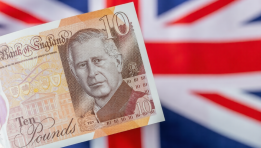
The FTSE 100 Index (^FTSE) recorded a highly measured pullback this week, shedding 0.33% to settle at 10,409.28. The

- sagi habasov
- •
- 7 Min Read
- •
- ago 55 minutes
SKN | Does the CAC 40’s 0.83% Weekly Advance Signal European Resilience or a Transitory Rebound?
The CAC 40 Index (^FCHI) delivered a resilient performance this week, securing a 0.83% expansion over the five-day trading
- ago 55 minutes
- •
- 7 Min Read

The CAC 40 Index (^FCHI) delivered a resilient performance this week, securing a 0.83% expansion over the five-day trading

- orshu
- •
- 6 Min Read
- •
- ago 1 hour
SKN | Does the DAX’s Volatile Consolidation Signal European Market Fatigue or a Strategic Pause?
The DAX Index (^GDAXI) delivered a highly volatile performance this week, absorbing persistent selling pressure before establishing a tentative
- ago 1 hour
- •
- 6 Min Read

The DAX Index (^GDAXI) delivered a highly volatile performance this week, absorbing persistent selling pressure before establishing a tentative


